Web Visitor Identification for Ecommerce


Many online stores have a gap in how they understand buyer intent. Shoppers explore products, compare pricing, review policies, and abandon carts across multiple visits, yet those actions remain disconnected until an email or purchase finally appears.
Web visitor identification creates this continuity. It links anonymous behaviour across visits and devices, so intent accumulates instead of resetting. This makes it easier to recognize high-intent shoppers earlier, personalize follow-ups based on real behavior, and attribute revenue to the actions that actually influenced conversion.
This guide explains how ecommerce visitor identification works, how identity resolution is implemented on-site, and how ecommerce teams use it to recover abandoned carts, personalize lifecycle flows, and improve attribution using person-level data.
What is visitor identification software?
Visitor identification software helps you know who is on your site while they are still browsing.
It connects real people to real sessions, so your website visitors don’t stay invisible until checkout or sign-up. You see individual shoppers, their on-site behaviour, and their intent, tied to a usable identity.
For ecommerce and DTC brands, this solves a very specific problem. Most website visitors show intent long before they ever share an email or complete a purchase.
Visitor identification software captures that moment. You can recognize:
- Which visitors are active right now
- Which pages they view and in what order
- Which actions signal buying intent
- Which visitors are worth following up with
All of this happens at the person level, not as anonymous traffic or disconnected sessions.
How it works: Online visitor identification beyond Google Analytics
Online visitor identification works by recognizing individual visitors as they interact with your site and turning that activity into usable profiles you can act on.
When a visitor lands on your website, a tracking layer records their behavior across key pages such as product views, cart actions, and checkout steps. This behaviour is analyzed in real time to understand intent, not just activity.
As the session unfolds, the system attempts to match the visitor to consented identity data. When a match is available, the visitor is resolved into a real person and enriched with relevant context, such as contact details and on-site behavior.
That profile is then pushed directly into your CRM the moment it’s created. From there, you can:
- Trigger workflows while the visitor is still considering a purchase
- Run timely follow-ups instead of delayed campaigns
- Prioritize high-intent and high-value visitors
- Measure outcomes against real people, not anonymous sessions
Why is visitor identification important for e-commerce?
Visitor identification matters in ecommerce because most buying decisions start long before checkout. Shoppers browse products, compare prices, read policies, and evaluate trust signals. If you only recognize them after they convert or sign up, you miss the highest-intent part of the journey.
Visitor identification lets you act earlier, with relevance and context Identified visitors can then be activated through eCommerce marketing automation platforms across email, SMS, and ads. That directly impacts conversion rates, marketing ROI, and how efficiently your team works.
Increase conversions
When you know who a visitor is, personalization stops being generic. Instead of showing the same site experience to everyone, you can tailor:
- Product recommendations based on browsing history
- On-site messages tied to past behavior
- Email or SMS content aligned with what they actually viewed
- Offers based on intent, not assumptions
This is important because ecommerce conversions rarely occur in a single session.
Proactive outreach
High-intent behavior is visible if you look for it.
Visitors who view pricing pages, shipping information, return policies, or the same product multiple times are actively evaluating whether to buy. Visitor identification allows you to recognize these signals in real time and act on them before the session ends.
You can:
- Flag visitors showing strong buying intent.
- Trigger timely outreach while interest is high.
- Prioritize high-value shoppers over casual browsers.
- Reveal revenue opportunities that would otherwise remain invisible.
This shortens the path from interest to purchase. You can engage shoppers at the moment they are deciding, not after they have moved on. For ecommerce teams, that timing is often the difference between recovered revenue and a lost sale.
Implementing ecommerce visitor identification on your site
Implementing ecommerce visitor identification is not a long or complex project. The key is to set it up in a way that integrates directly with how your team already works.
Visitor identification software for ecommerce delivers value only when it connects behavior, identity, and action without friction. Below is a strategic approach that ecommerce teams can apply without rebuilding their stack.
1. Start with clear identification goals
Before installing anything, define what success looks like. You should decide:
- Which visitor actions matter most for revenue
- When a visitor becomes high-intent
- What action do you want to take once someone is identified
For most ecommerce brands, the priority use cases are:
- Recovering abandoned carts from unidentified visitors
- Identifying shoppers evaluating pricing or shipping
- Capturing repeat product views across sessions
- Feeding high-intent visitor data into existing flows
This ensures the data you collect is usable, compliant, and ready to act on.
2. Deploy visitor identification software for ecommerce
Once goals are clear, install visitor identification software for ecommerce across your site. With Tie, implementation typically takes under an hour using Shopify, Google Tag Manager, or a lightweight script, no engineering sprint required.
Tie resolves visitors server-side and in real time, capturing consented signals during the session rather than waiting for form fills or checkout completion. This allows identity to be established while purchase intent is still active.
Prioritize pages where decisions actually happen:
- High-traffic product pages
- Cart and checkout steps
- Pricing, shipping, and returns pages
- Account or login pages
Tie listens for high-intent behaviors on these pages and only resolves visitors when the signal is strong enough to be useful. Identified profiles are then pushed immediately into tools like Klaviyo, Attentive, Meta CAPI, and Google Ads, making the data actionable instead of letting it sit idle.
This approach ensures ecommerce visitor identification is tied to real buying intent, not passive pageviews, so recovered carts, retargeting, and lifecycle flows activate while the shopper is still deciding.
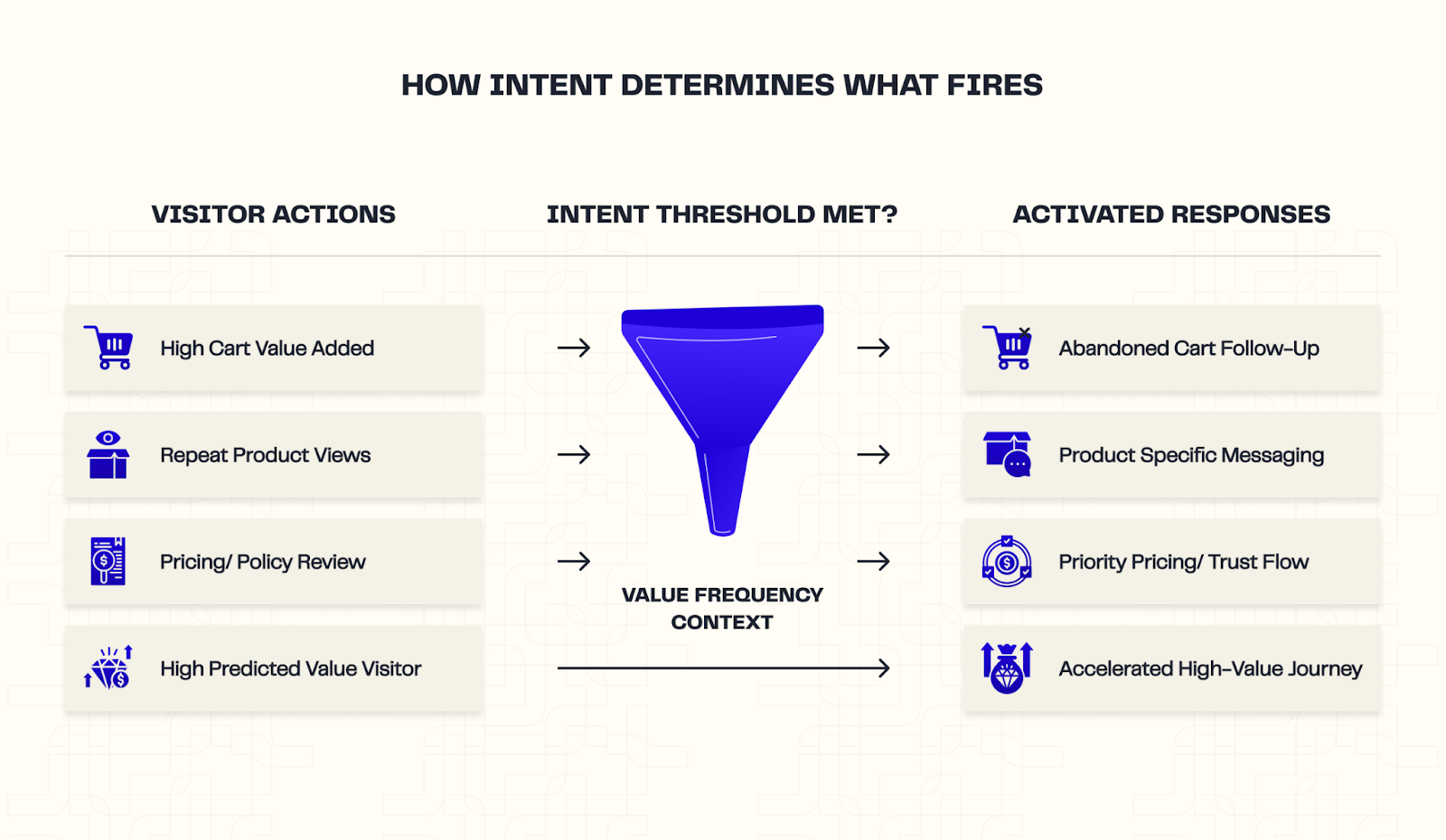
3. Define intent signals before activating workflows
Before activating automations, you need to be explicit about which behaviors actually justify outreach. Not every visit carries intent, and activating too early is how identity and lifecycle programs lose precision.
High-confidence ecommerce intent signals typically include:
- Repeated views of the same product or variant
- Adding items to the cart above a set value
- Visiting pricing or policy pages
- Returning to the site within a short time window
These signals define who becomes eligible for identification and activation. They determine which visitors are resolved into profiles, which enter follow-up flows, and how quickly those workflows should fire.
When intent thresholds are set upfront, visitor identification stays selective, and lifecycle automation stays effective. You stop reacting to traffic volume and start responding to decision-making behavior.
4. Connect identified visitors to your CRM in real time
Visitor identification only works when it feeds into the systems you already rely on. Connect your identification tool to your CRM, email marketing platforms, automation and workflow tools, and internal notification systems
Once connected, visitor data flows in real time. That allows you to trigger workflows, prioritisz high-intent visitors, and act while interest is still high.
5. Activate focused, intent-based workflows
Now activate workflows tied to the intent signals you defined earlier. Some examples include:
- Abandoned cart follow-ups triggered by cart value
- Product-specific messaging after repeat views
- Priority flows for visitors reviewing pricing or policies
- High-value segments routed into accelerated journeys
Keep these workflows narrow. Each one should respond to a specific behavior with a specific action.
6. Review, refine, and tighten continuously
After launch, review performance weekly. You should track:
- Which intent signals lead to conversion
- How quickly identified visitors convert
- Which workflows drive measurable revenue
- Where friction still causes a drop-off
Use this data to tighten thresholds, adjust follow-ups, and focus on visitors that actually convert. This step turns ecommerce visitor identification from passive data collection into a working system that supports revenue.
Choose a tool and install a tracking pixel
Start tool selection with a single question: where does identified visitor data go the moment it’s resolved?
If the data does not flow into your CRM, email platform, or automation workflows in real time, identification stalls long before action. Prioritize tools that push profiles directly into the systems you already use to drive revenue.
Once selected, deploy the tracking layer across your site. For most teams, this is done via Google Tag Manager or direct script installation. The method matters less than consistency. The tracking must load reliably on every page and session.
Next, configure tracking to capture behaviors that signal intent. Focus on decision-making moments, not passive browsing:
- Product detail pages where comparison happens
- Cart and checkout steps where hesitation appears
- Pricing, shipping, and returns pages that influence trust
- Account and login pages tied to repeat customers
Before moving forward, validate that events fire correctly across devices, browsers, and sessions. Gaps here break behavioral continuity and weaken identity resolution. Clean, reliable event capture is what makes downstream activation (cart recovery, retargeting, and lifecycle flows) actually work.
Ensure privacy compliance
Visitor identification only works long-term if it’s built on consent and transparency.
If you serve EU visitors, you must operate within GDPR requirements. That means identification should rely on first-party signals and consented data from the moment tracking begins.
You should:
- Connect visitor identification to your consent management platform.
- Honor consent states before any identification attempt.
- Store and process visitor data with clear usage rules.
- Work only with tools that use verified, opted-in data sources.
This is not just another legal formality. Privacy compliance directly affects data quality. Visitors who trust your site engage more, return more often, and convert at higher rates.
When consent rules are enforced at the tracking layer, your visitor identification system remains stable as traffic scales. You avoid data gaps, prevent retroactive fixes, and keep identification aligned with how modern ecommerce brands are expected to operate.
Integrate with the marketing stack to act on identified visitors
Integration is where visitor identification turns into revenue. Once a visitor is identified, that data must move instantly into the tools you already use to convert and retain customers. If it stays isolated, you lose timing, context, and intent.
Your goal is simple: move intent into action without delay. You can structure this setup around the two systems that control execution:
Sync identified visitors into your CRM
Start with your CRM. When visitor profiles sync in real time, you create continuity across sessions and channels. Each shopper carries their browsing and cart behaviour with them instead of starting from zero every visit.
Use CRM integration to:
- Attach on-site behavior to individual profiles
- Update existing contacts when a new intent appears
- Maintain a single record across devices and visits
- Track outcomes against real people, not sessions
This gives you a working system of record for intent, not just contact storage.
Activate email using real behavior
The email should respond to what a visitor has already done.
With visitor identification feeding your email platform, you can trigger messages based on live behavior rather than delayed events.
Set up email activation to:
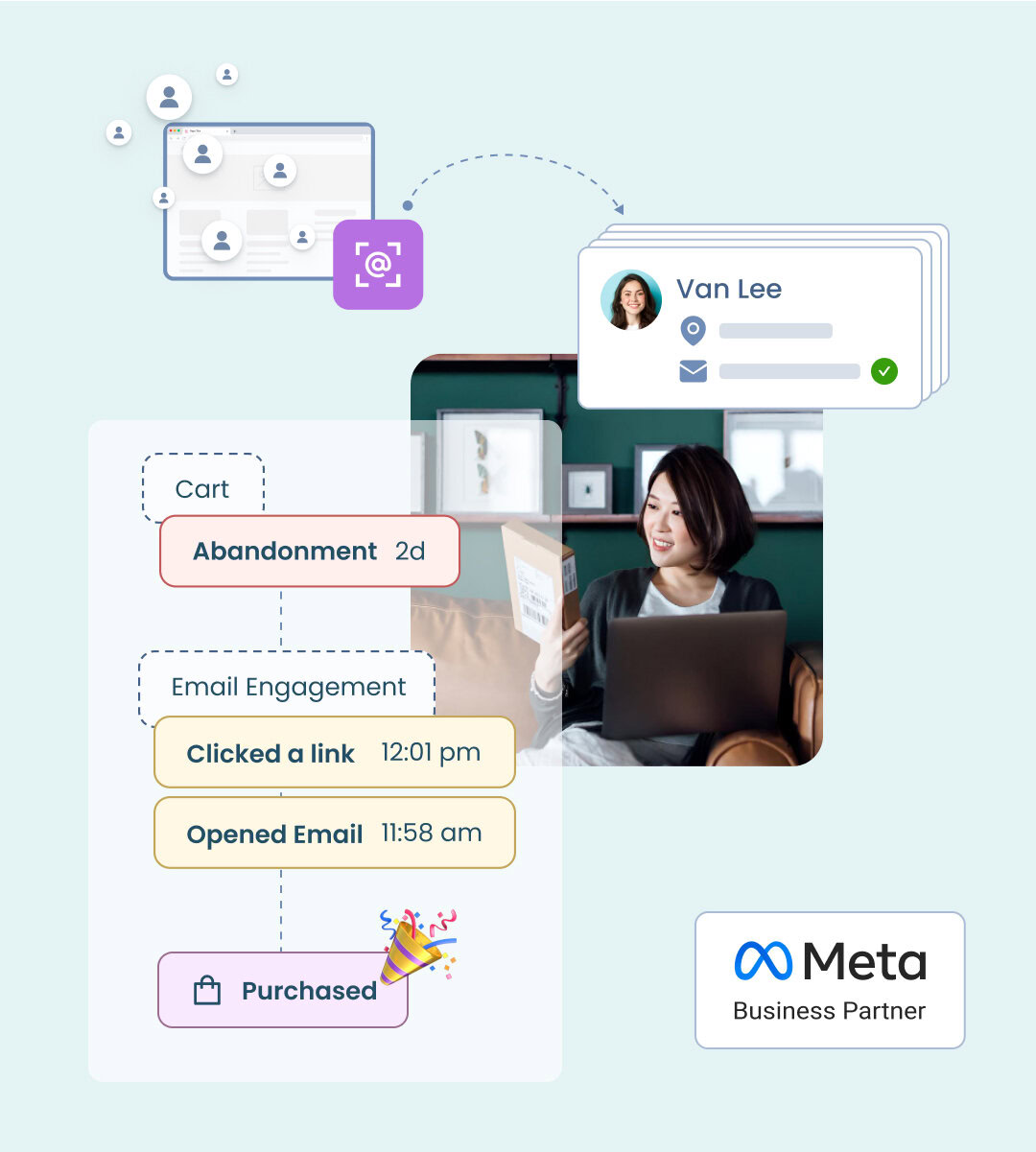
- Trigger abandoned cart emails for identified visitors
- Personalize recommendations using viewed and carted items
- Time follow-ups based on how recent the activity was
- Suppress low-intent visitors from aggressive campaigns
This keeps email relevant, controlled, and tied to real buying signals.
Top website visitor identification tools for e-commerce
The best website visitor identification tools don’t just identify anonymous website visitors. They turn traffic into contactable shoppers your team can actually act on.
For ecommerce, the difference isn’t feature depth. It’s whether the tool reliably connects visitor behavior to real profiles that marketing and sales teams can use without adding friction to their workflow.
Here are some of the best website visitor identification tools for e-commerce:
Identity resolution tools
Identity resolution tools focus on identifying anonymous visitors and enriching them with contact information so you can run follow-ups, remarketing, and revenue-linked marketing campaigns.
Tie
Tie (formerly Revenue Roll) is built for ecommerce brands that need person-level website visitor identification with clean attribution and strong data enrichment.
It identifies anonymous visitors in real time and enriches them with verified contact data such as emails and phone numbers. That data syncs directly into CRM systems like Salesforce and into email, ads, Slack, and internal workflows through native integrations and API access.
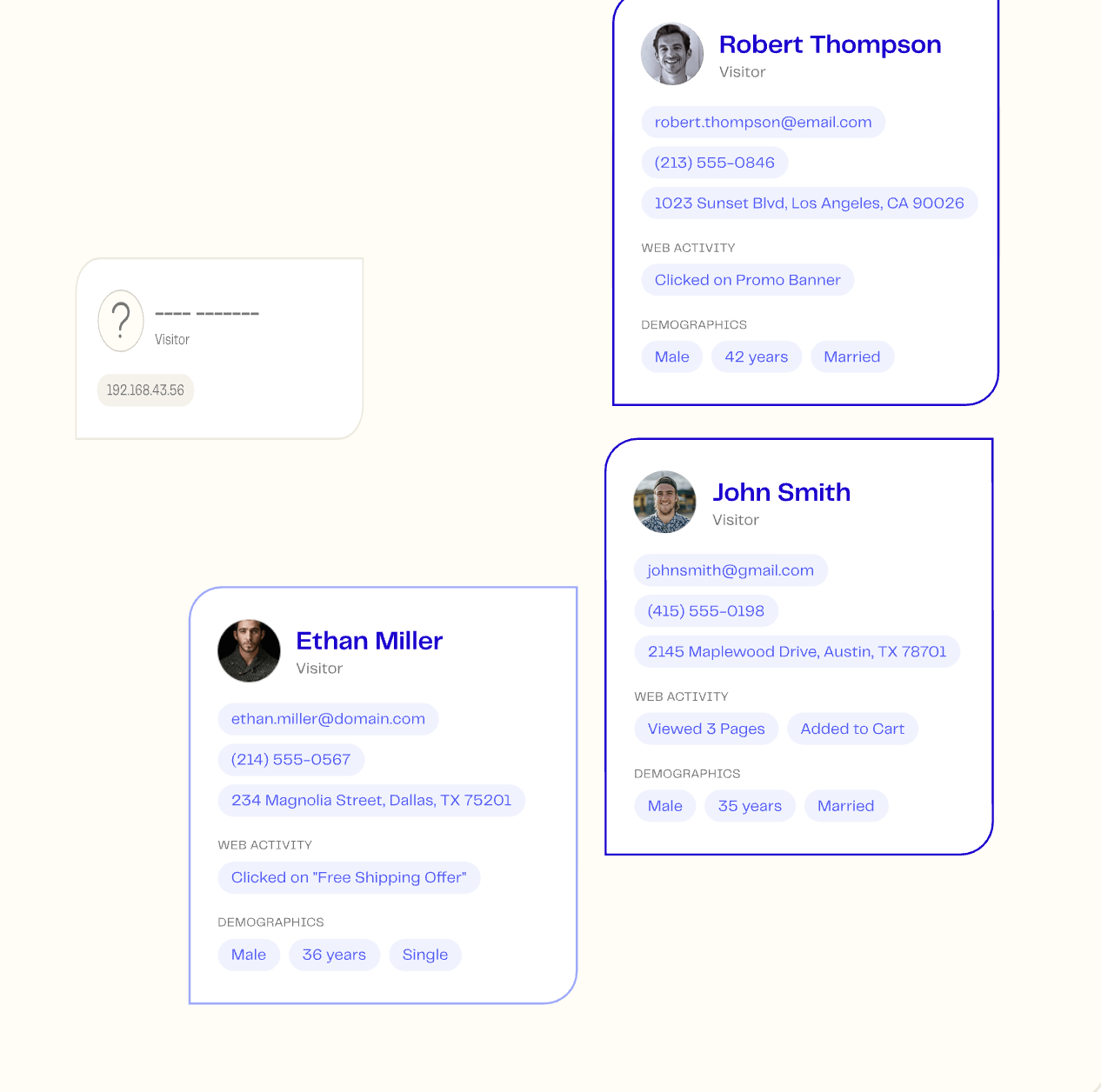
Use Tie when you want to:
- Resolve anonymous visitors into real shoppers
- Enrich profiles with intent data and visitor behavior
- Push data into CRM, email, and marketing campaigns instantly
- Measure attribution against real people, not sessions
- Stay compliant with GDPR and CCPA at scale
These use cases make it easier to align marketing strategies, lead scoring, and optimization around revenue rather than surface-level metrics.
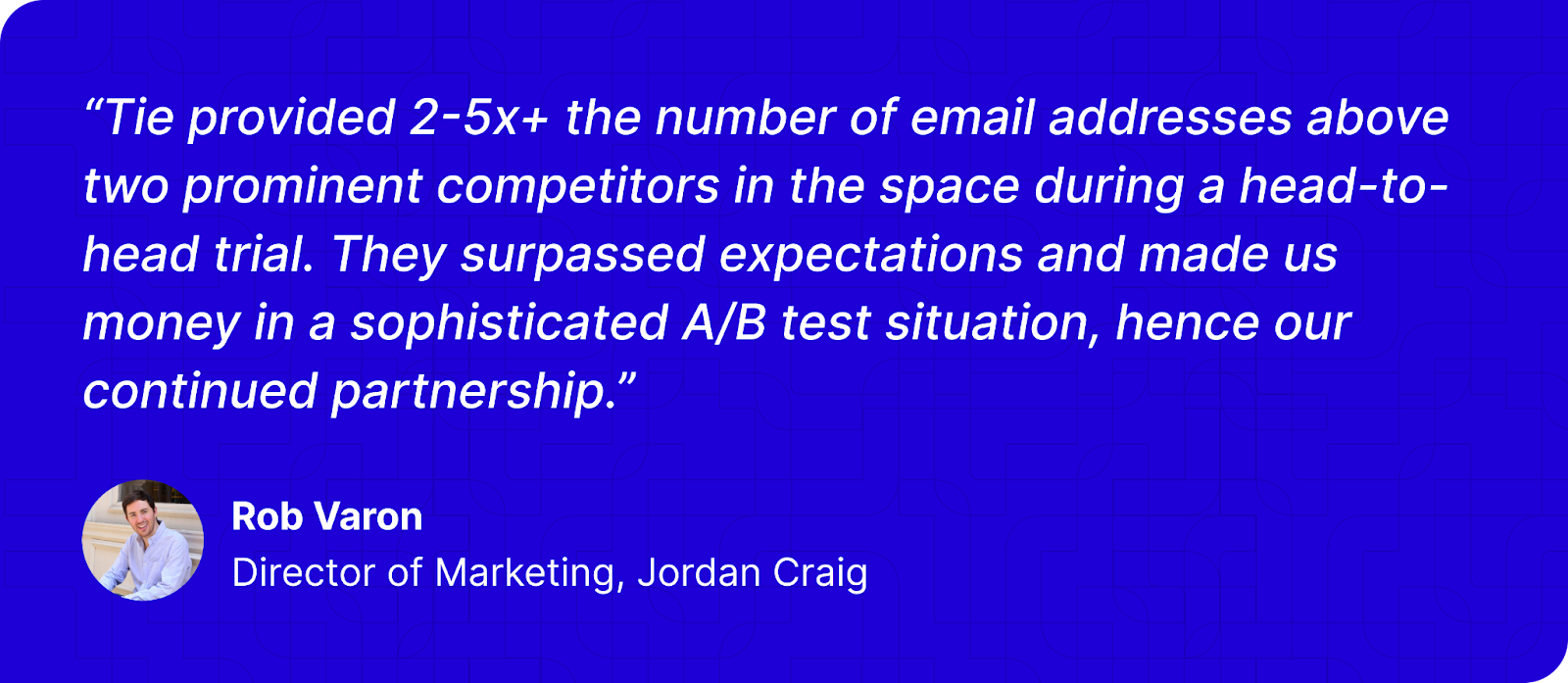
For example, Jordan Craig, a fashion ecommerce brand, used Tie to increase onsite visitor identification by 46%. The team retargeted both existing subscribers and newly identified shoppers using real-time intent signals tied to specific pages.
This resulted in $70K+ in incremental revenue from website traffic that would have otherwise remained anonymous and unreachable.
Customers.ai
Customers.ai helps you identify anonymous visitors and surface contact data for remarketing and outbound workflows. Ecommerce teams commonly use it for visitor tracking tied to specific pages and early-stage lead generation.
Use it to:
- Capture emails from anonymous website visitors
- Enrich visitor data with basic intent signals
- Feed contact data into email and outbound tools
- Support list growth and simple attribution
It fits teams focused on volume and outreach, with optimization driven by how the data is activated downstream.
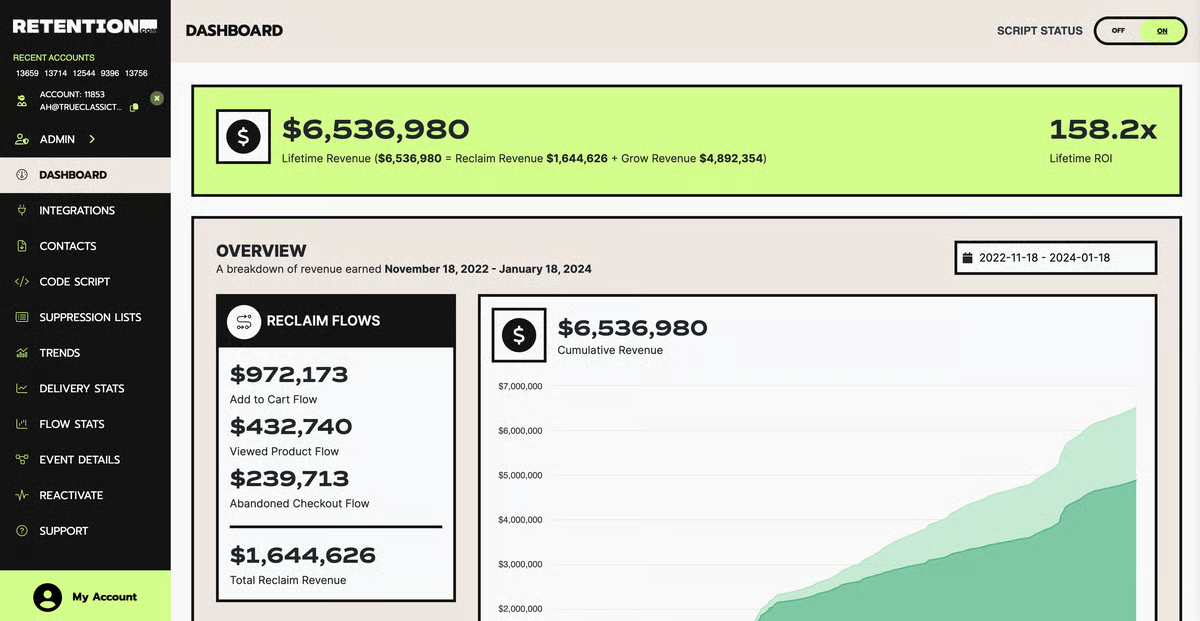
Retention.com
Retention.com is used to capture emails from anonymous traffic and support abandoned cart and browse recovery. It connects visitor behavior to contact information that flows into email platforms.
Teams use it to:
- Identify anonymous visitors across high-intent pages
- Power email remarketing and lead generation
- Support basic enrichment and segmentation
- Run attribution tied to recovered revenue
It works best when email is the primary activation channel and workflows stay tightly scoped.
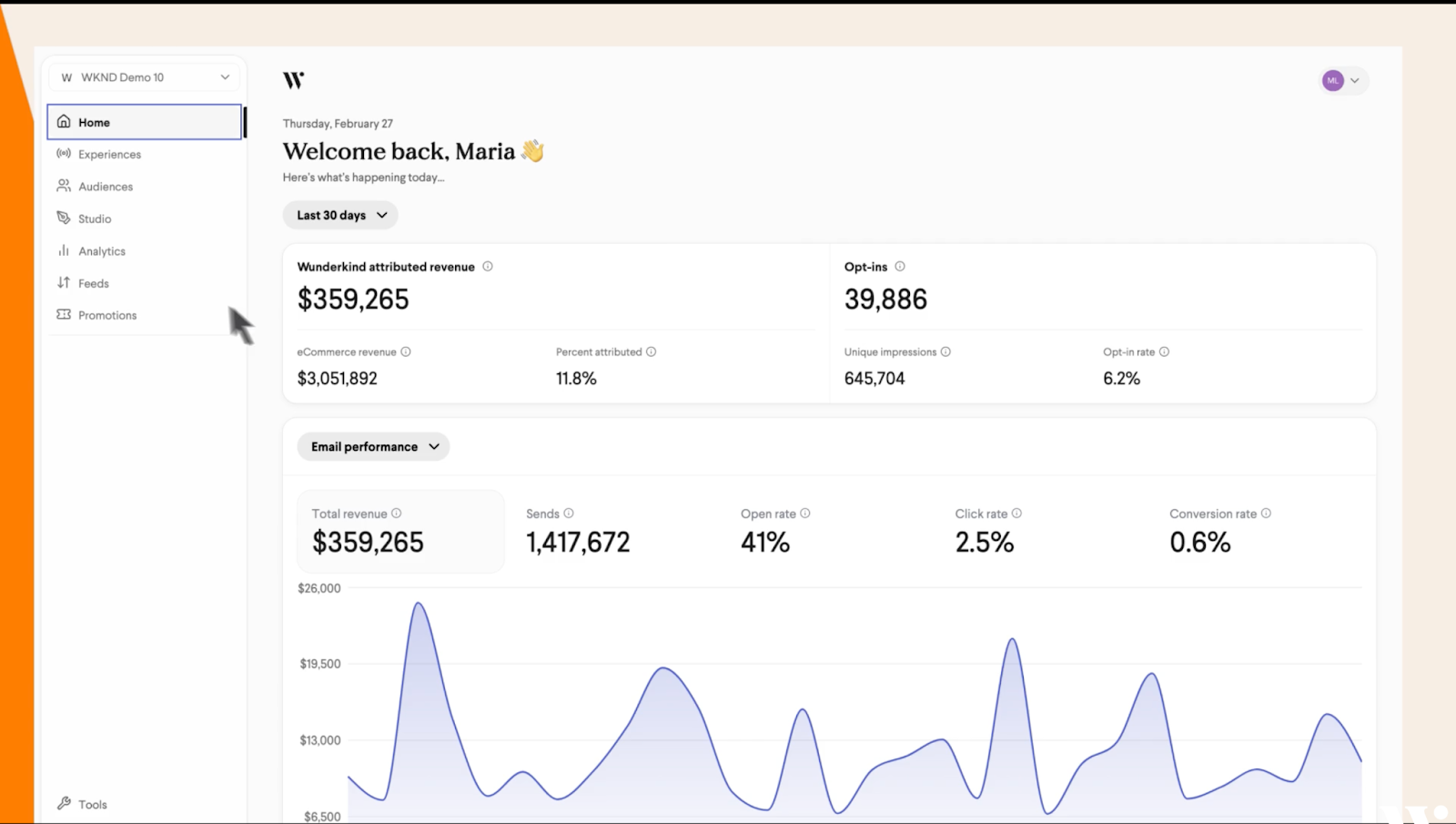
Wunderkind
Wunderkind operates at enterprise scale. It combines visitor identification, on-site messaging, and automation to support large ecommerce teams managing high volumes of website traffic.
Brands typically use it when:
- Traffic volume is very high.
- Multiple marketing teams run concurrent campaigns.
- Real-time messaging and orchestration matter.
- Advanced automation drives optimization.
It suits organizations with mature stacks and dedicated ownership across channels.
Analytics & CRM suites
Some platforms combine website visitor tracking with light identification features.
Tools like HubSpot Visitor ID and GA4 Enhanced Measurement help marketing teams understand visitor behavior, traffic sources, and performance metrics. They are useful for optimization, reporting, and attribution at a high level.
However, these tools generally focus on sessions, IP addresses, and aggregated behavior. They support analytics and dashboards more than direct outreach, lead scoring, or contact-level activation.
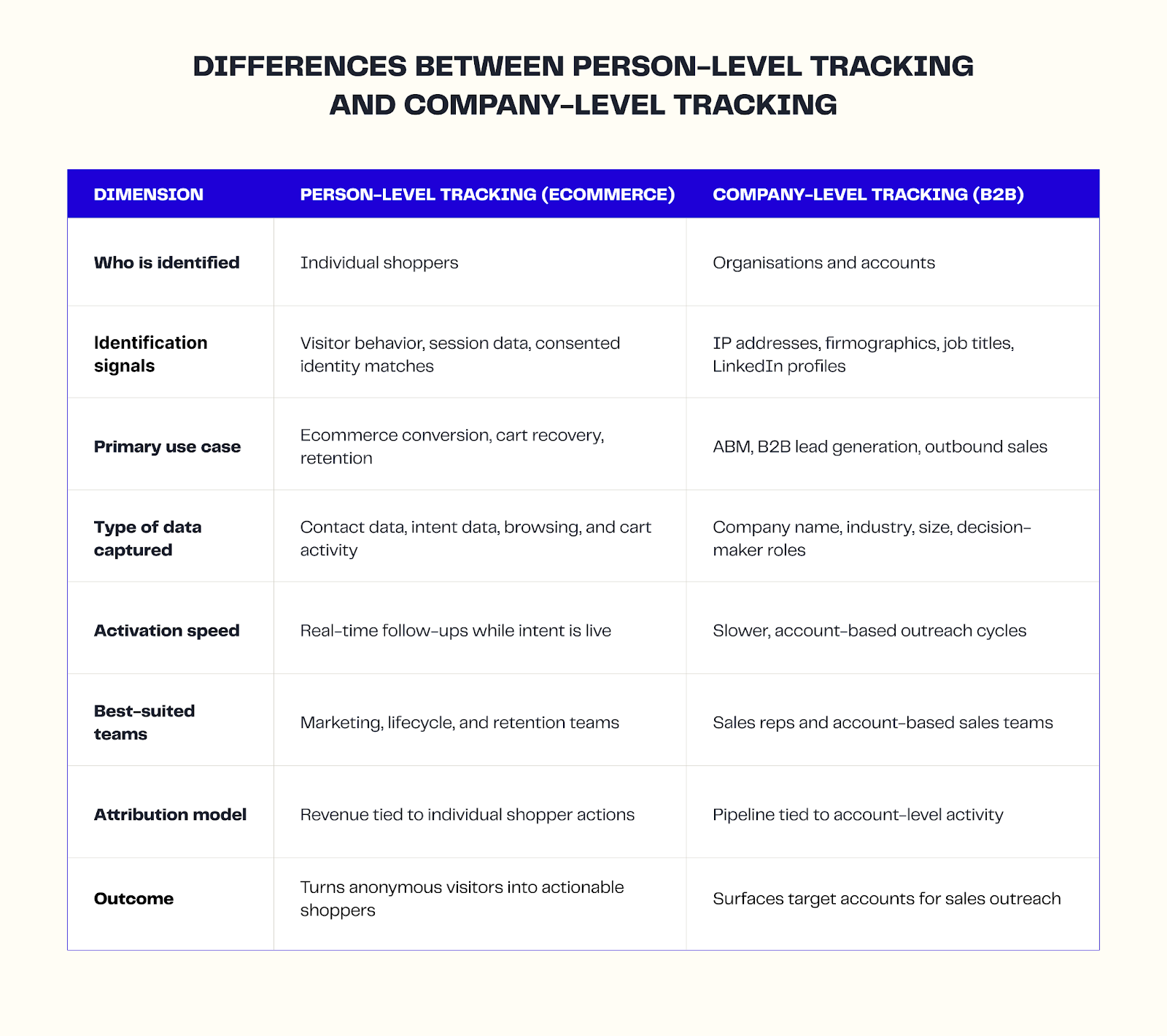
Person-level vs company-level tracking
Choosing the right approach comes down to who you need to identify.
Company-level tracking identifies the organization behind a visit using signals such as IP addresses, firmographics, job titles, and LinkedIn profiles. Teams use it for ABM programs and B2B lead workflows, where sales reps focus on reaching specific decision-makers within a defined ICP account.
Ecommerce works on a different buying model.
Person-level website visitor identification focuses on identifying the individual shopper behind each session. It connects visitor behavior on specific pages to a real person and enriches that profile with usable contact data.
This enables you to:
- Score leads based on actual on-site intent
- Run faster, more relevant follow-ups
- Attribute revenue to real customer actions
- Build marketing campaigns that reflect how shoppers buy
For ecommerce brands, person-level identification is what converts anonymous visitors into actionable profiles. It supports cleaner metrics, stronger attribution, and sustainable growth without relying on higher traffic volume.
Ready to turn anonymous traffic into identifiable revenue
Most ecommerce brands already have the traffic they need. What they lack is visibility into who that traffic belongs to and how to act on it consistently.
Identity resolution gives you that visibility. By stitching sessions, devices, and on-site behavior together, you get complete shopper profiles, including visitors who never log in or leave their details. That clarity improves targeting, personalization, and lifecycle execution across your marketing stack.
Tie matches upto 90% of anonymous visitors in real time and enriches customer profiles with deep demographic, intent, and behavioral attributes. This lets you build tighter segments, run more accurate email flows, and connect attribution directly to revenue, instead of fragmented sessions and guesswork.
When your data carries forward across visits, your marketing compounds naturally.
See what changes when identity resolution actually works. Book a demo with Tie to understand how it improves acquisition, retargeting, and retention using your own traffic.





Identity, intent and inbox placement for ecommerce brands, inside the tools you already run.
Klaviyo Preferred Tech Partner