
← All articles

AI Shopper Segmentation

·

3

min read

How AI Search is Changing BFCM Traffic for Ecommerce Brands

Learn how AI search influences BFCM traffic, product discovery, and conversions, and how ecommerce brands can prepare for AI-driven shopping.

Rabah Rahil

Rabah Rahil

CMO

, Tie ·

October 8, 2026

How AI Search is Changing BFCM Traffic for Ecommerce Brands

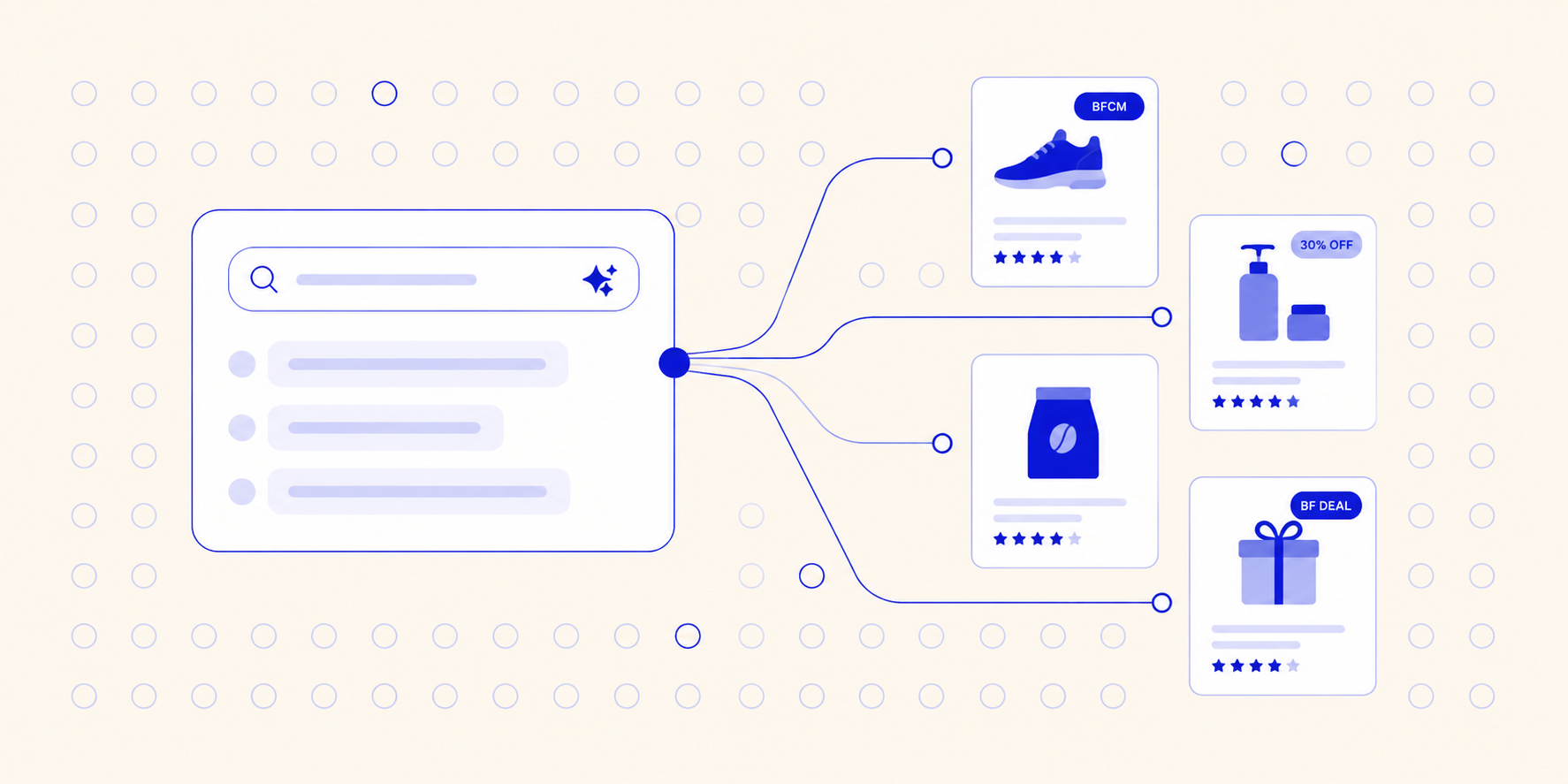
Shoppers are now using AI to research products, compare brands, find deals, and decide what to buy. Instead of searching Google and choosing from a list of results, shoppers can ask an AI tool to recommend products based on their budget, preferences, or specific needs.

For ecommerce brands, this creates an additional opportunity for product discovery, which is especially valuable as BFCM approaches. A shopper could encounter your products through an AI-generated recommendation before visiting a traditional search results page.

But it also changes the path shoppers take to your site. AI recommendations can influence which products shoppers consider before they ever visit your store, giving brands less visibility into how those shoppers discovered them and what they were looking for.

To be visible on AI search, you need to make it easy for AI systems to understand your products, pricing, customer experience, and offers. That means keeping product information clear, accurate, and consistent across the sources AI systems use to generate recommendations.

In this guide, we'll look at how AI search can influence BFCM traffic, what signals can increase your chances of appearing in AI recommendations, and how to prepare your store before BFCM. 

How search is changing this year during BFCM

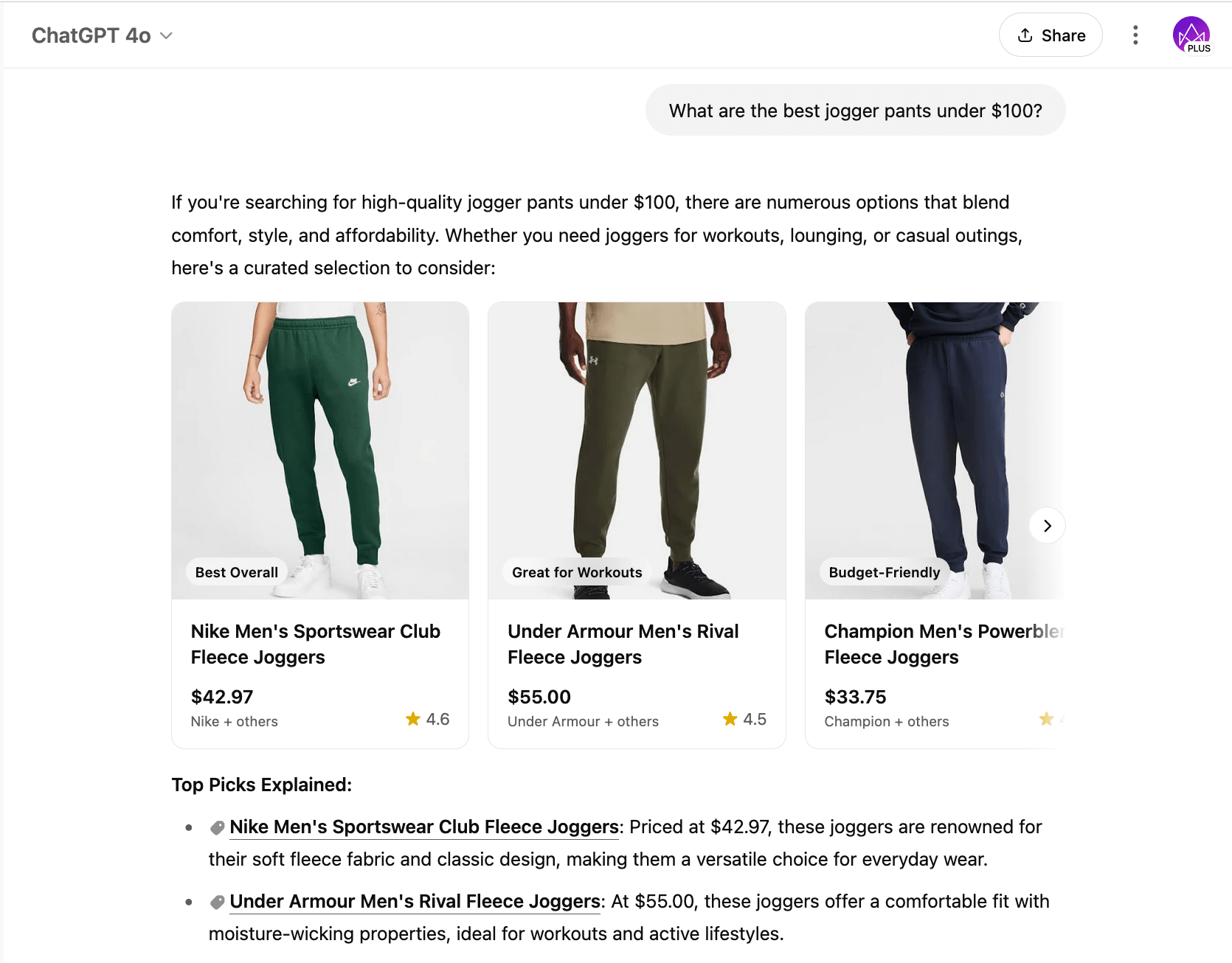
Shoppers aren't using search engines alone to research what they want to buy. AI assistants are already part of the product research process, with shoppers using tools such as ChatGPT, Gemini, Claude, and Perplexity to compare products and narrow down their options.

Adobe's 2026 AI and Digital Trends report also found that 1 in 4 customers already use AI-powered platforms as their primary source for information, purchase decisions, or recommendations. 

The shopping journey also looks different when AI is involved. A shopper can ask an AI assistant which running shoes are best for a specific budget, which skincare products suit their needs, or where to find the best BFCM deal. The tool can then narrow the options and recommend specific products or brands.

This gives your ecommerce team a new visibility problem to solve during BFCM. Which products appear when shoppers ask AI what to buy, and what information shapes those recommendations?
How AI search influences your BFCM traffic

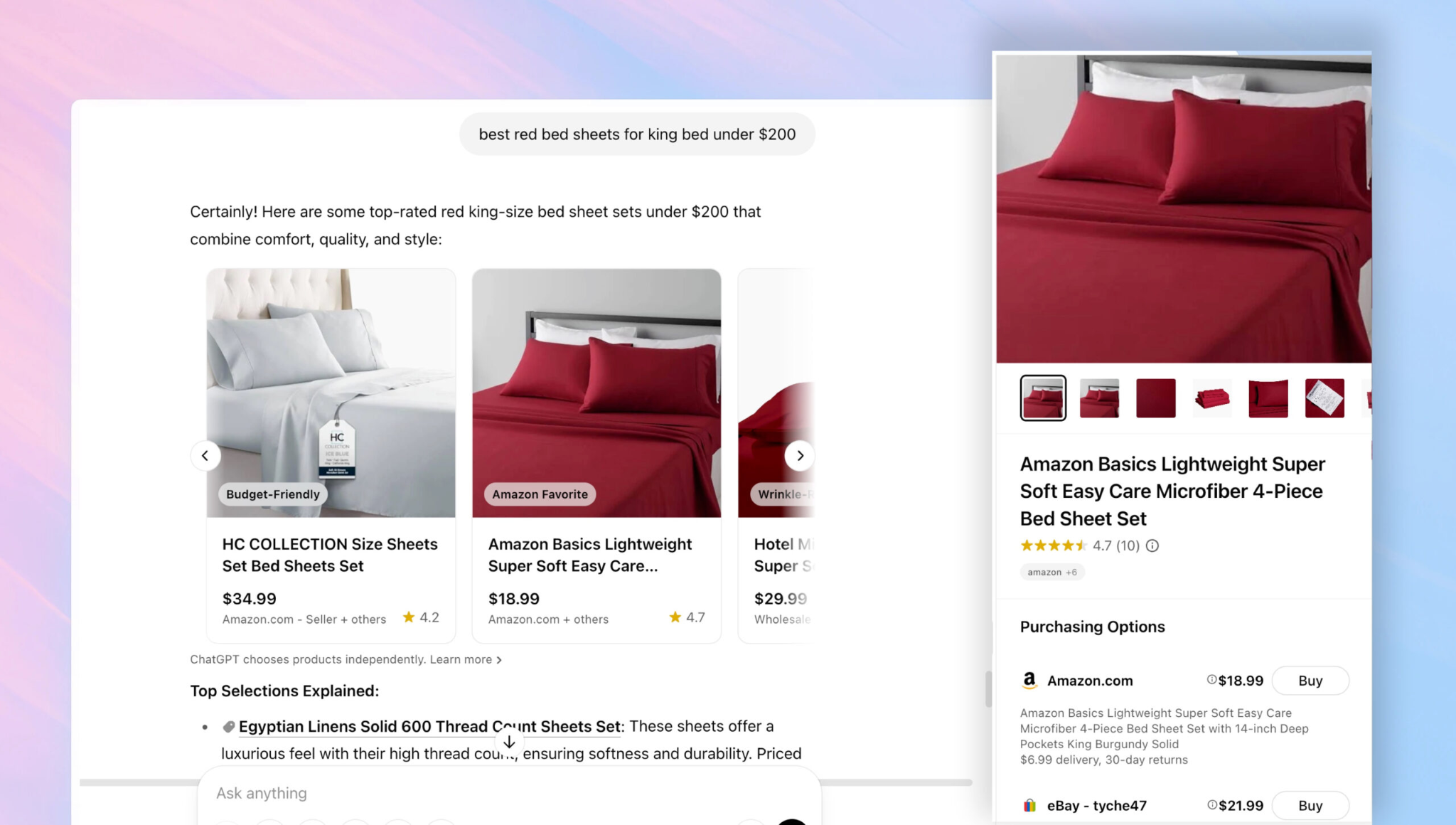
AI search can change how shoppers discover your products, which products they consider, where those shoppers land on your site, and how they compare BFCM offers. 

Here’s how these changes could affect your BFCM traffic.

Shoppers  start with questions, not keywords

Traditional search often starts with a product name, category, or a few keywords. AI search gives shoppers more flexibility to describe what they want in plain language.

A shopper could ask:

  • “What’s the best running shoe under $100 this Black Friday?”
  • “Which skincare brand has the best BFCM deal?”
  • “What should I buy for someone who loves coffee?”

The AI tool can use the details in the question to narrow down relevant products and brands. That means shoppers could discover your product before they ever search for your brand by name.

AI  influences which products shoppers consider

AI tools can pull together product information, compare options, and recommend products based on what the shopper is looking for. Instead of working through a long list of search results, the shopper may start with a shorter list of products to consider.

This means that your products need to be represented accurately in the information AI systems use to make recommendations.

AI recommendations change referral traffic

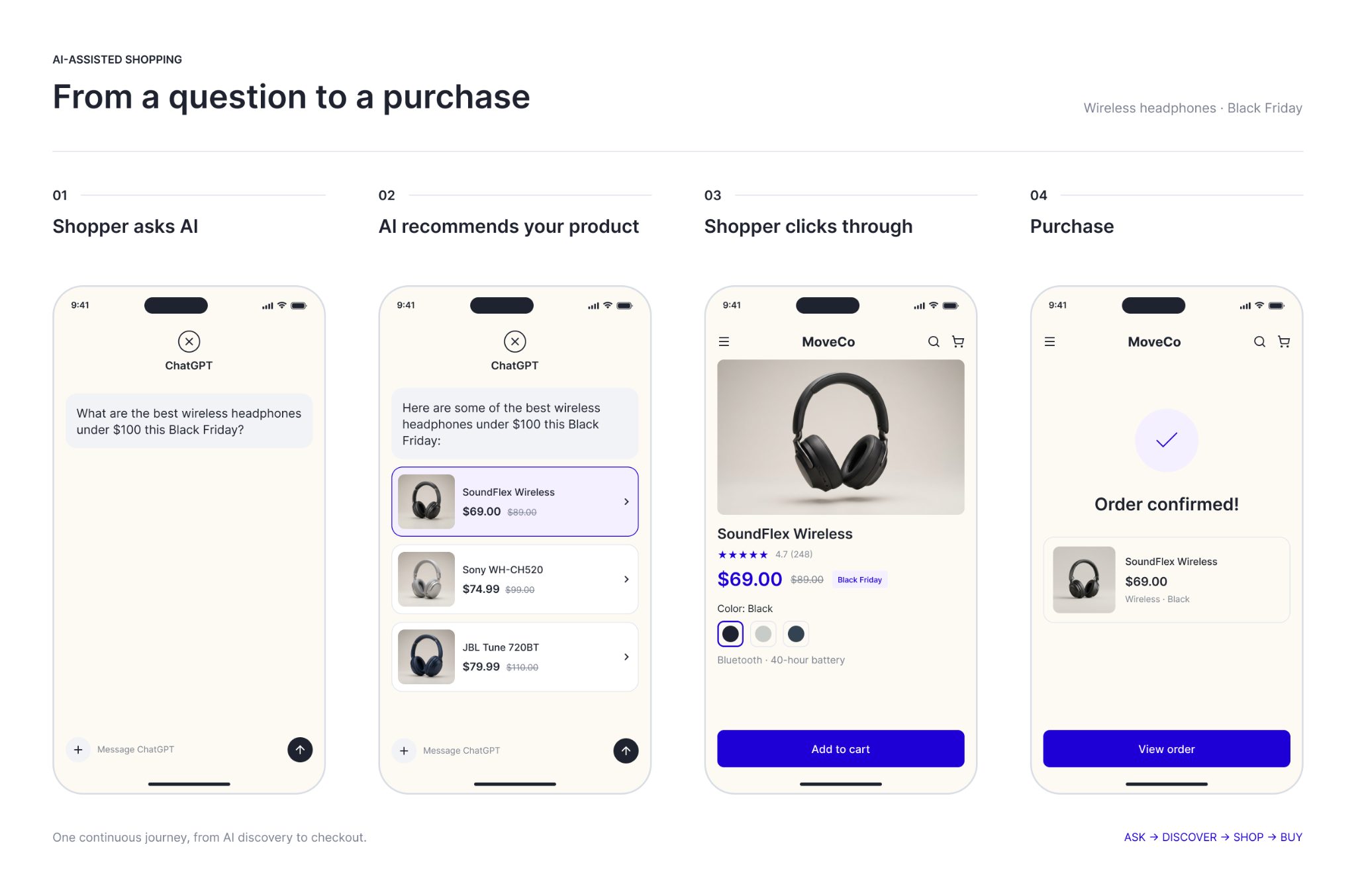
When an AI tool recommends a product, it can send the shopper directly to a product page, collection page, or another relevant page on your site.

Your team should track this traffic correctly where your analytics setup supports it. Look at AI-referred sessions, engagement, conversions, and revenue to understand how these visitors behave differently from your traditional organic traffic.
BFCM deals become part of the discovery experience

Shoppers can also use AI to compare BFCM offers across brands. Your discounts, product availability, shipping, bundles, and other offer details can influence how these comparisons present your products.

That makes accurate product and promotional information important beyond your own website. If your BFCM offer changes, make sure the information available to AI systems reflects the current offer.

What makes an ecommerce brand more discoverable in AI search?

If you want AI systems to recommend your products, they need enough reliable information to understand what you sell, who your products are for, and how they compare with other options. Your product pages, supporting content, and brand presence across other sources all contribute to that.

Focus on these areas to make your products easier for AI systems to understand and recommend:

Make product information easy to understand
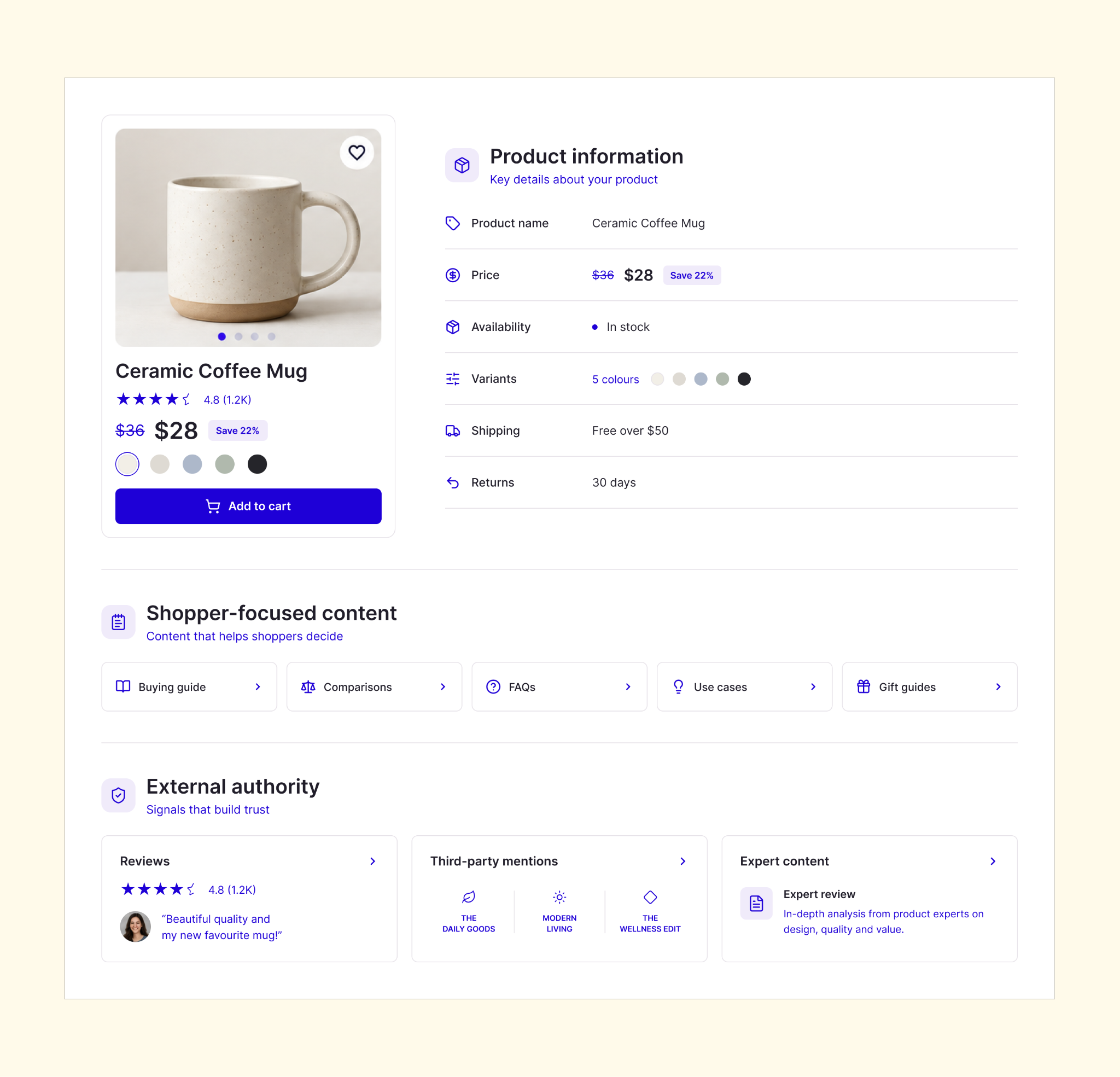
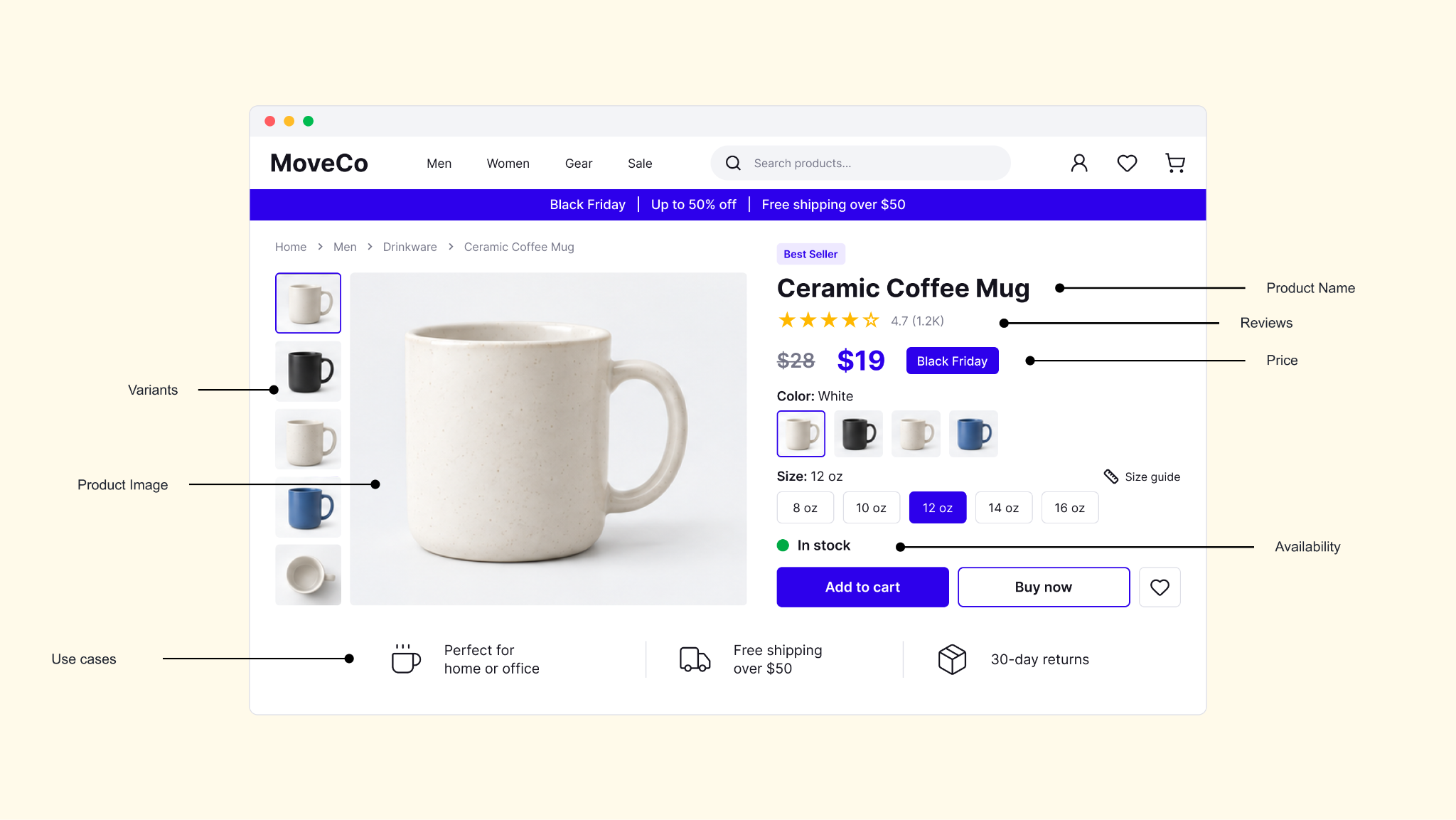
Keep your product information clear and specific. Your product pages should clearly cover:

  • Product features
  • Sizes and variants
  • Pricing
  • Availability
  • Use cases
  • Shipping and returns

Don’t rely on images or vague marketing copy to communicate information that shoppers need to make a decision. Clear, specific text helps AI systems understand what your product does and when it might be relevant.
Create content that answers real shopper questions

Look at the questions your customers ask before they buy to build content around them. Comparisons, buying guides, FAQs, use-case content, and product education give AI systems more context about your products, the problems they solve, and when they fit a shopper’s needs.

For BFCM, that could include questions such as:

  • What’s the best [product/category] under $X?
  • Which [product] is best for [specific need or use case]?
  • What’s the best gift for [type of person] under $X?
  • Which [product] should I buy for [specific occasion/use case]?
  • Where can I find the best BFCM deal on [product/category]?
  • How does [product] compare with [alternative]?

Build a consistent presence beyond your website

Your website isn’t the only source AI systems use to learn about your products. Reviews, third-party mentions, expert content, and product comparisons provide additional information about your brand and products.

Make sure that information about your products is consistent across these sources. Authentic customer reviews and credible third-party coverage can give AI systems more context when comparing your products with other options.

How to prepare your ecommerce site for AI-driven BFCM traffic

When preparing for BFCM this year, you need to make sure your product information, promotional details, and landing pages are ready for AI-driven discovery and traffic. 

Focus on four areas before the BFCM rush:

Audit your product and promotional information

Before BFCM, audit the information that shoppers and AI systems see about your products to keep it accurate and consistent. Review:

  • Pricing and discounts
  • Product availability
  • Sizes and variants
  • Shipping and return policies
  • Promotional claims
  • Seasonal pages

Check your website and other public channels for conflicting or outdated information about your products or offers.
Build BFCM content before the rush

Create buying guides, gift guides, product comparisons, FAQs, and deal-focused content around specific purchase questions.

For example:

  • Which [product] is best for [use case]?
  • What’s the best [product/category] under $X?
  • Which [product A] is better than [product B]?
  • What’s the best [product] for [specific type of shopper]?

Add links to relevant products and collections mentioned in the content. Make sure shoppers can move directly from a buying guide, comparison, or FAQ to the relevant product or collection.

Make high-traffic landing pages conversion-ready

Identify the pages most likely to receive traffic from AI recommendations and review them before BFCM.

  • Keep load times low, especially on mobile.
  • Put the BFCM price, discount, and any eligibility rules near the product price.
  • Make key product details, variants, shipping, and returns easy to find.
  • Keep reviews close to the product information shoppers use to decide.
  • Remove unnecessary steps from mobile checkout.
  • Update stock levels and promotional copy as offers change during BFCM.

Measure AI search traffic separately

You need to know whether AI-referred visitors are worth more or less than traffic from your other acquisition channels. Isolate AI referrals in your analytics and track what those visitors do after they land. Track:

  • AI-referred sessions
  • Conversion rate
  • Revenue
  • Revenue per visitor
  • AOV
  • Products driving conversions and revenue

Compare performance during and after BFCM against your baseline and other acquisition channels to understand whether AI-referred traffic is becoming a meaningful source of revenue.

Checklist to prepare your ecommerce brand for AI search

Use this checklist before BFCM to make your products easier to discover and your site ready for AI-referred

Audit product titles, descriptions, variants, pricing, availability, shipping, and returns.
Keep BFCM pricing, discounts, bundles, and promotional details updated and consistent across public channels.
Publish content that answers specific product and buying questions.
Add buying guides, gift guides, comparisons, FAQs, and other content that answers specific product and buying questions.
Link relevant products and collections to the content you’ve created.
Keep product reviews and other credible third-party information up to date.
Review key product and collection pages for mobile speed, product details, social proof, and checkout friction.
Set up analytics to identify AI-referred sessions and track their conversion and revenue.
Track which products and pages receive traffic from AI recommendations.

Ready to optimize your ecommerce store for AI search?

As AI becomes a bigger part of the shopping journey, brands that are easy for AI systems to understand and shoppers to evaluate have more opportunities to be visible to shoppers.

BFCM is a good time to start paying attention to where those recommendations send shoppers, which products they surface, and how those visits contribute to revenue.

Written by

Rabah Rahil

CMO

, Tie

Rabah leads marketing at Tie and has previously led growth and marketing initiatives for brands like Fermat and Triple Whale through a blend of analytics, attribution, and data-driven marketing.

Maya K. identified · score 9Jordan R. synced to KlaviyoSana P. landed in PrimaryDani N. ready to buy

See what Tie finds on your site.

A 20-minute walkthrough on your own traffic — positive ROI within 30 days.

Book a demoSee pricing
October 8, 2026

How AI Search is Changing BFCM Traffic for Ecommerce Brands

Written by
Rabah Rahil
CMO
Rabah leads marketing at Tie and has previously led growth and marketing initiatives for brands like Fermat and Triple Whale through a blend of analytics, attribution, and data-driven marketing.

Shoppers are now using AI to research products, compare brands, find deals, and decide what to buy. Instead of searching Google and choosing from a list of results, shoppers can ask an AI tool to recommend products based on their budget, preferences, or specific needs.

For ecommerce brands, this creates an additional opportunity for product discovery, which is especially valuable as BFCM approaches. A shopper could encounter your products through an AI-generated recommendation before visiting a traditional search results page.

But it also changes the path shoppers take to your site. AI recommendations can influence which products shoppers consider before they ever visit your store, giving brands less visibility into how those shoppers discovered them and what they were looking for.

To be visible on AI search, you need to make it easy for AI systems to understand your products, pricing, customer experience, and offers. That means keeping product information clear, accurate, and consistent across the sources AI systems use to generate recommendations.

In this guide, we'll look at how AI search can influence BFCM traffic, what signals can increase your chances of appearing in AI recommendations, and how to prepare your store before BFCM. 

How search is changing this year during BFCM

Shoppers aren't using search engines alone to research what they want to buy. AI assistants are already part of the product research process, with shoppers using tools such as ChatGPT, Gemini, Claude, and Perplexity to compare products and narrow down their options.

Adobe's 2026 AI and Digital Trends report also found that 1 in 4 customers already use AI-powered platforms as their primary source for information, purchase decisions, or recommendations. 

The shopping journey also looks different when AI is involved. A shopper can ask an AI assistant which running shoes are best for a specific budget, which skincare products suit their needs, or where to find the best BFCM deal. The tool can then narrow the options and recommend specific products or brands.

This gives your ecommerce team a new visibility problem to solve during BFCM. Which products appear when shoppers ask AI what to buy, and what information shapes those recommendations?

How AI search influences your BFCM traffic

AI search can change how shoppers discover your products, which products they consider, where those shoppers land on your site, and how they compare BFCM offers. 

Here’s how these changes could affect your BFCM traffic.

Shoppers  start with questions, not keywords

Traditional search often starts with a product name, category, or a few keywords. AI search gives shoppers more flexibility to describe what they want in plain language.

A shopper could ask:

  • “What’s the best running shoe under $100 this Black Friday?”
  • “Which skincare brand has the best BFCM deal?”
  • “What should I buy for someone who loves coffee?”

The AI tool can use the details in the question to narrow down relevant products and brands. That means shoppers could discover your product before they ever search for your brand by name.

AI  influences which products shoppers consider

AI tools can pull together product information, compare options, and recommend products based on what the shopper is looking for. Instead of working through a long list of search results, the shopper may start with a shorter list of products to consider.

This means that your products need to be represented accurately in the information AI systems use to make recommendations.

AI recommendations change referral traffic

When an AI tool recommends a product, it can send the shopper directly to a product page, collection page, or another relevant page on your site.

Your team should track this traffic correctly where your analytics setup supports it. Look at AI-referred sessions, engagement, conversions, and revenue to understand how these visitors behave differently from your traditional organic traffic.

BFCM deals become part of the discovery experience

Shoppers can also use AI to compare BFCM offers across brands. Your discounts, product availability, shipping, bundles, and other offer details can influence how these comparisons present your products.

That makes accurate product and promotional information important beyond your own website. If your BFCM offer changes, make sure the information available to AI systems reflects the current offer.

What makes an ecommerce brand more discoverable in AI search?

If you want AI systems to recommend your products, they need enough reliable information to understand what you sell, who your products are for, and how they compare with other options. Your product pages, supporting content, and brand presence across other sources all contribute to that.

Focus on these areas to make your products easier for AI systems to understand and recommend:

Make product information easy to understand

Keep your product information clear and specific. Your product pages should clearly cover:

  • Product features
  • Sizes and variants
  • Pricing
  • Availability
  • Use cases
  • Shipping and returns

Don’t rely on images or vague marketing copy to communicate information that shoppers need to make a decision. Clear, specific text helps AI systems understand what your product does and when it might be relevant.

Create content that answers real shopper questions

Look at the questions your customers ask before they buy to build content around them. Comparisons, buying guides, FAQs, use-case content, and product education give AI systems more context about your products, the problems they solve, and when they fit a shopper’s needs.

For BFCM, that could include questions such as:

  • What’s the best [product/category] under $X?
  • Which [product] is best for [specific need or use case]?
  • What’s the best gift for [type of person] under $X?
  • Which [product] should I buy for [specific occasion/use case]?
  • Where can I find the best BFCM deal on [product/category]?
  • How does [product] compare with [alternative]?

Build a consistent presence beyond your website

Your website isn’t the only source AI systems use to learn about your products. Reviews, third-party mentions, expert content, and product comparisons provide additional information about your brand and products.

Make sure that information about your products is consistent across these sources. Authentic customer reviews and credible third-party coverage can give AI systems more context when comparing your products with other options.

How to prepare your ecommerce site for AI-driven BFCM traffic

When preparing for BFCM this year, you need to make sure your product information, promotional details, and landing pages are ready for AI-driven discovery and traffic. 

Focus on four areas before the BFCM rush:

Audit your product and promotional information

Before BFCM, audit the information that shoppers and AI systems see about your products to keep it accurate and consistent. Review:

  • Pricing and discounts
  • Product availability
  • Sizes and variants
  • Shipping and return policies
  • Promotional claims
  • Seasonal pages

Check your website and other public channels for conflicting or outdated information about your products or offers.

Build BFCM content before the rush

Create buying guides, gift guides, product comparisons, FAQs, and deal-focused content around specific purchase questions.

For example:

  • Which [product] is best for [use case]?
  • What’s the best [product/category] under $X?
  • Which [product A] is better than [product B]?
  • What’s the best [product] for [specific type of shopper]?

Add links to relevant products and collections mentioned in the content. Make sure shoppers can move directly from a buying guide, comparison, or FAQ to the relevant product or collection.

Make high-traffic landing pages conversion-ready

Identify the pages most likely to receive traffic from AI recommendations and review them before BFCM.

  • Keep load times low, especially on mobile.
  • Put the BFCM price, discount, and any eligibility rules near the product price.
  • Make key product details, variants, shipping, and returns easy to find.
  • Keep reviews close to the product information shoppers use to decide.
  • Remove unnecessary steps from mobile checkout.
  • Update stock levels and promotional copy as offers change during BFCM.

Measure AI search traffic separately

You need to know whether AI-referred visitors are worth more or less than traffic from your other acquisition channels. Isolate AI referrals in your analytics and track what those visitors do after they land. Track:

  • AI-referred sessions
  • Conversion rate
  • Revenue
  • Revenue per visitor
  • AOV
  • Products driving conversions and revenue

Compare performance during and after BFCM against your baseline and other acquisition channels to understand whether AI-referred traffic is becoming a meaningful source of revenue.

Checklist to prepare your ecommerce brand for AI search

Use this checklist before BFCM to make your products easier to discover and your site ready for AI-referred

Audit product titles, descriptions, variants, pricing, availability, shipping, and returns.
Keep BFCM pricing, discounts, bundles, and promotional details updated and consistent across public channels.
Publish content that answers specific product and buying questions.
Add buying guides, gift guides, comparisons, FAQs, and other content that answers specific product and buying questions.
Link relevant products and collections to the content you’ve created.
Keep product reviews and other credible third-party information up to date.
Review key product and collection pages for mobile speed, product details, social proof, and checkout friction.
Set up analytics to identify AI-referred sessions and track their conversion and revenue.
Track which products and pages receive traffic from AI recommendations.

Ready to optimize your ecommerce store for AI search?

As AI becomes a bigger part of the shopping journey, brands that are easy for AI systems to understand and shoppers to evaluate have more opportunities to be visible to shoppers.

BFCM is a good time to start paying attention to where those recommendations send shoppers, which products they surface, and how those visits contribute to revenue.

On this page
Stay Connected to the Latest
New articles delivered to your inbox—no strings attached.