
← All articles

AI Shopper Segmentation

·

5

min read

Segmentation During BFCM to Maximize Conversions

Learn how to build a customer segmentation strategy for BFCM using customer behavior, purchase history, engagement, and intent to drive more conversions.

John Levis

John Levis

Director of Product Marketing

, Tie ·

October 6, 2026

Segmentation During BFCM to Maximize Conversions

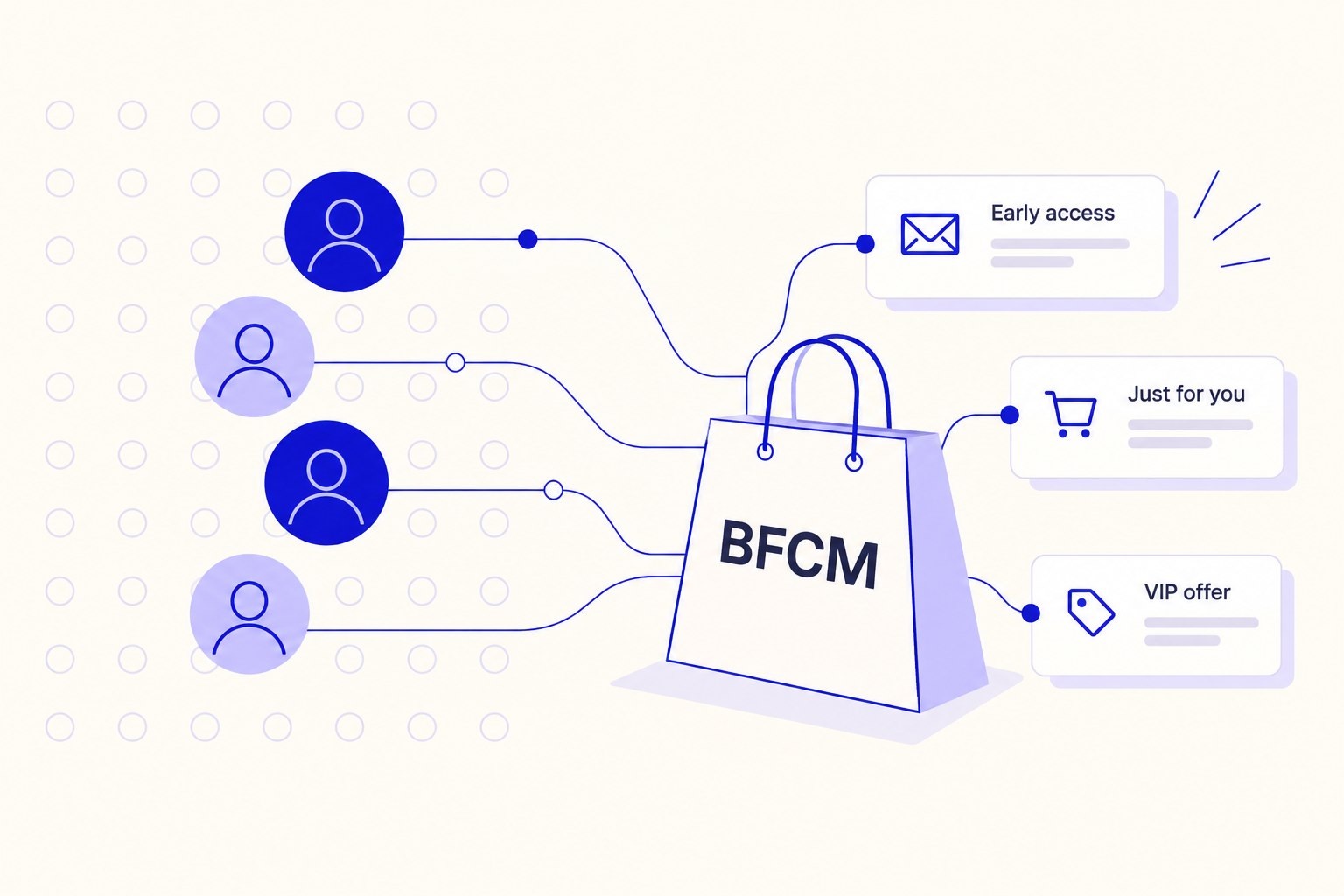
Your customer segmentation strategy during Black Friday Cyber Monday influences more than who receives your campaigns. It determines which offer shoppers see, how often you contact them, and when they should stop receiving acquisition-focused messaging.

During BFCM, shopper behavior can change quickly. Someone who was inactive before BFCM may start browsing, a subscriber may show strong product interest without purchasing, or a customer may convert and no longer belong in a promotional campaign. Your segments need to account for those changes.

In this guide, you'll learn how to build a BFCM segmentation strategy that helps you prioritize high-intent shoppers, match offers to customer behavior, and adapt your audiences throughout the sale.

Why segmentation during BFCM needs to be planned

Higher campaign volume makes audience selection more important. Sending every campaign to your entire list is one of the biggest mistakes you can make. Your shoppers have different levels of interest, making some campaigns irrelevant to different audiences. Recent purchasers may receive acquisition offers, inactive subscribers may receive repeated promotions, while high-intent shoppers may get the same treatment as everyone else.

This reduces engagement and increases unsubscribes, hurting your email performance. Instead of relying on higher volume to drive results, segmentation helps you make each send more intentional by deciding which shoppers should receive which campaigns and offers. 

Planning your segmentation gives you a framework to decide how different shoppers should be treated throughout the sale. 

But shopper intent can change quickly during BFCM. Someone who looked inactive before the sale may start actively browsing, while a shopper who was highly engaged may purchase and no longer need the same promotional messaging. 

Purchase history, browsing behavior, email engagement, and buying intent can help you account for those changes and determine who receives each campaign, which offer they see, and who should be suppressed.
How to build a dynamic, measurable BFCM segmentation strategy

Your BFCM segments need to change as shoppers move from browsing to purchase, re-engagement, or inactivity. Build them around real-time customer data and measure each segment by the revenue it generates.

Here’s how to build and manage those segments throughout BFCM:

Test deliverability and inbox placement before planning segmented campaigns

Sending more campaigns during BFCM puts more pressure on your sender reputation. Run a deliverability audit to decide which audiences to expand, which to limit, and when to pull back:

  • Track bounce rates, unsubscribes, spam complaints, engagement, and inbox placement as BFCM volume increases.
  • Start with your highest-priority audiences and expand reach when inbox placement and reputation remain stable.
  • If deliverability scores start to decline, reduce sending to lower-intent audiences first rather than pulling back across the entire program.
  • Use Open Intent to help control how far each campaign reaches as volume increases.
  • Compare revenue per recipient and inbox placement across segments to understand whether additional reach is generating enough value to justify the volume.

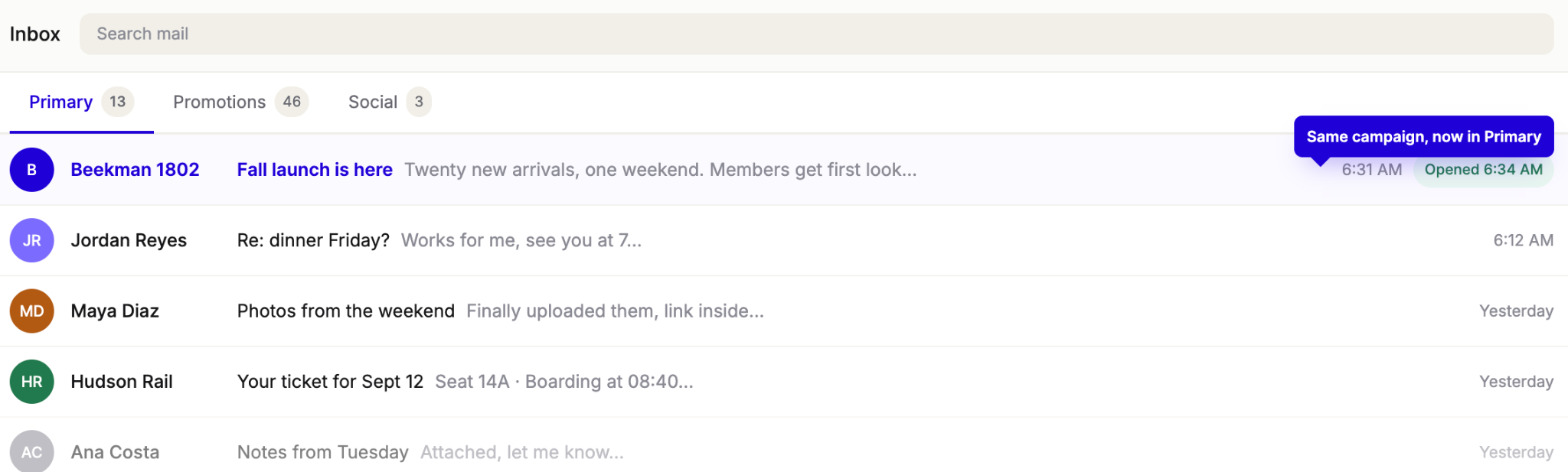
Tie Priority monitors sender reputation and inbox placement as sending volume increases, and adjusts audience eligibility and warmup intensity when those signals change. During reputation recovery, it can use Predict scores to prioritize shoppers more likely to engage.
Use real-time behavior to adapt segments

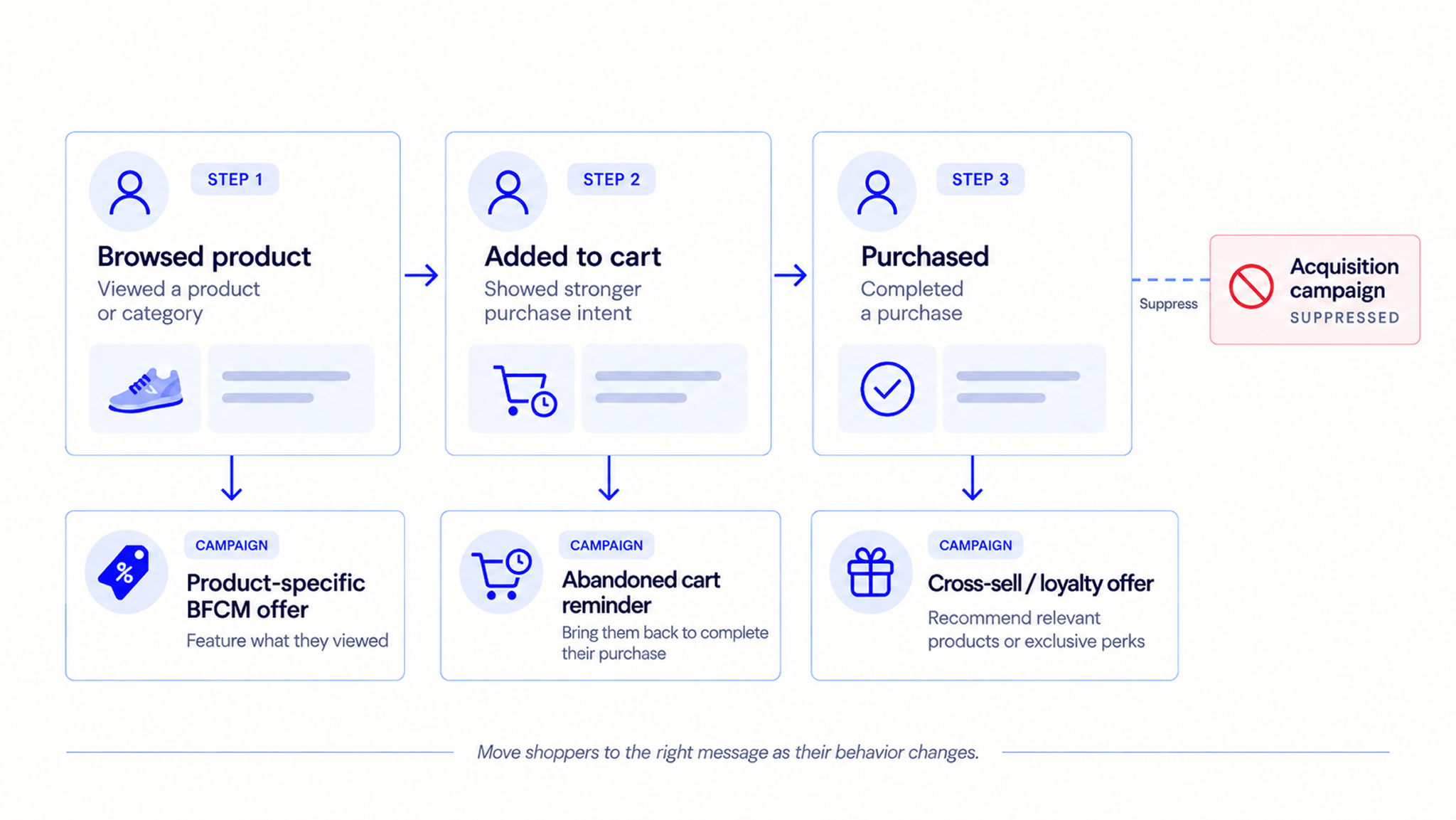
Your pre-BFCM audiences shouldn't remain fixed throughout the sale. Update them as shoppers browse, click, abandon carts, purchase, and engage with your emails, using those signals to decide who moves between audiences:

  • Update audiences as intent changes: Rebuild segments based on current shopper behavior and intent.
  • Prioritize shoppers showing strong buying signals: Give your highest-value BFCM campaigns to shoppers with clear signs of purchase intent.
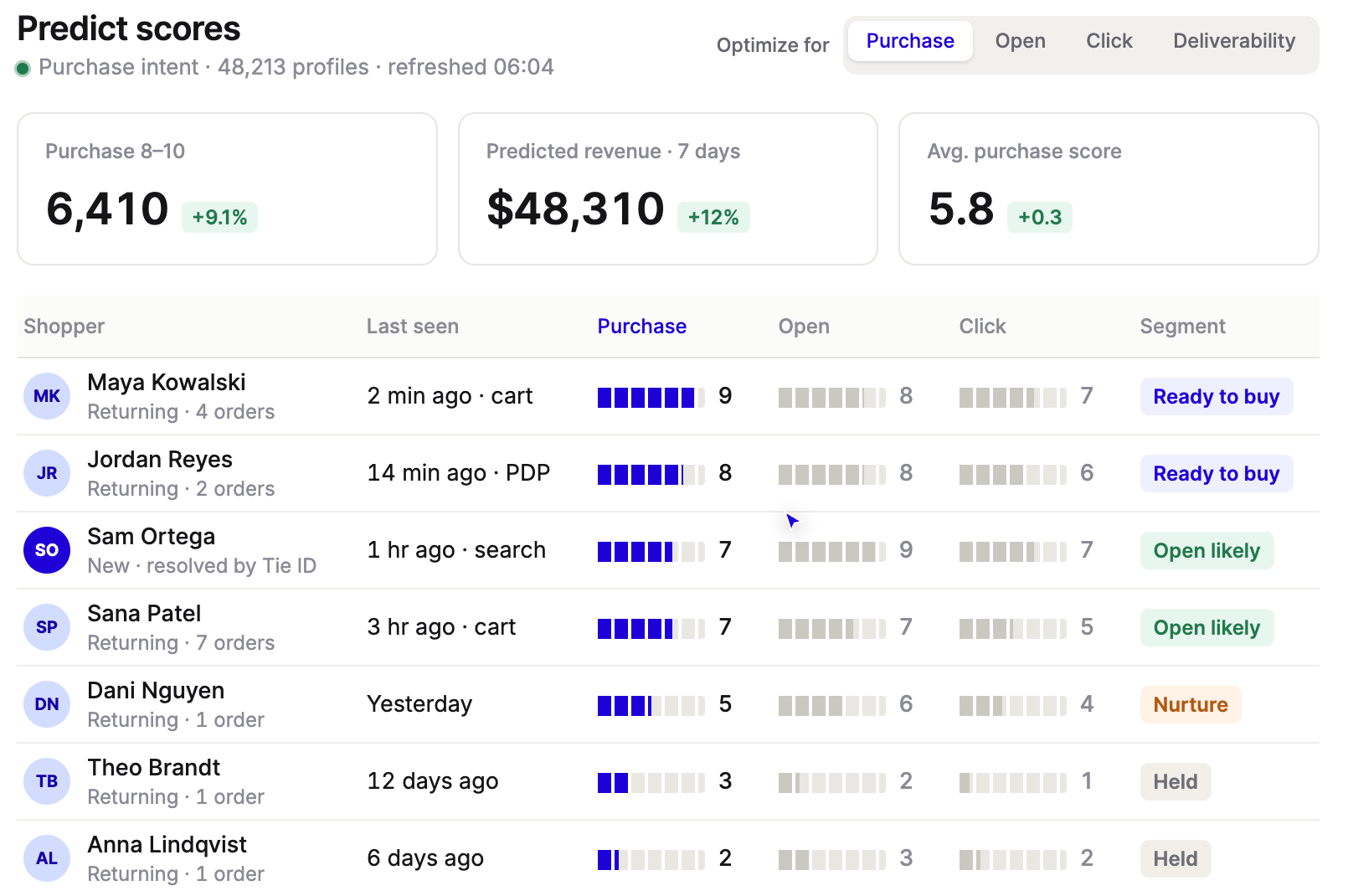
  • Use Tie Predict to prioritize shoppers based on purchase and engagement signals: Its Purchase, Open, and Click Intent scores refresh daily, helping you identify shoppers whose current intent may not be reflected in engagement segments that rely on past behavior. 
  • Exclude customers as soon as they purchase: Remove them from acquisition-focused campaigns and update your lists as they convert.
  • Route high-intent first-time buyers into a second-purchase flow: After BFCM, use current intent to determine who should move into the next stage of the customer journey.
  • Use Click Intent rather than open history to determine continued promotional engagement: Low Click Intent can be a signal to sunset a shopper from promotional messaging. 
Match the offer to customer intent

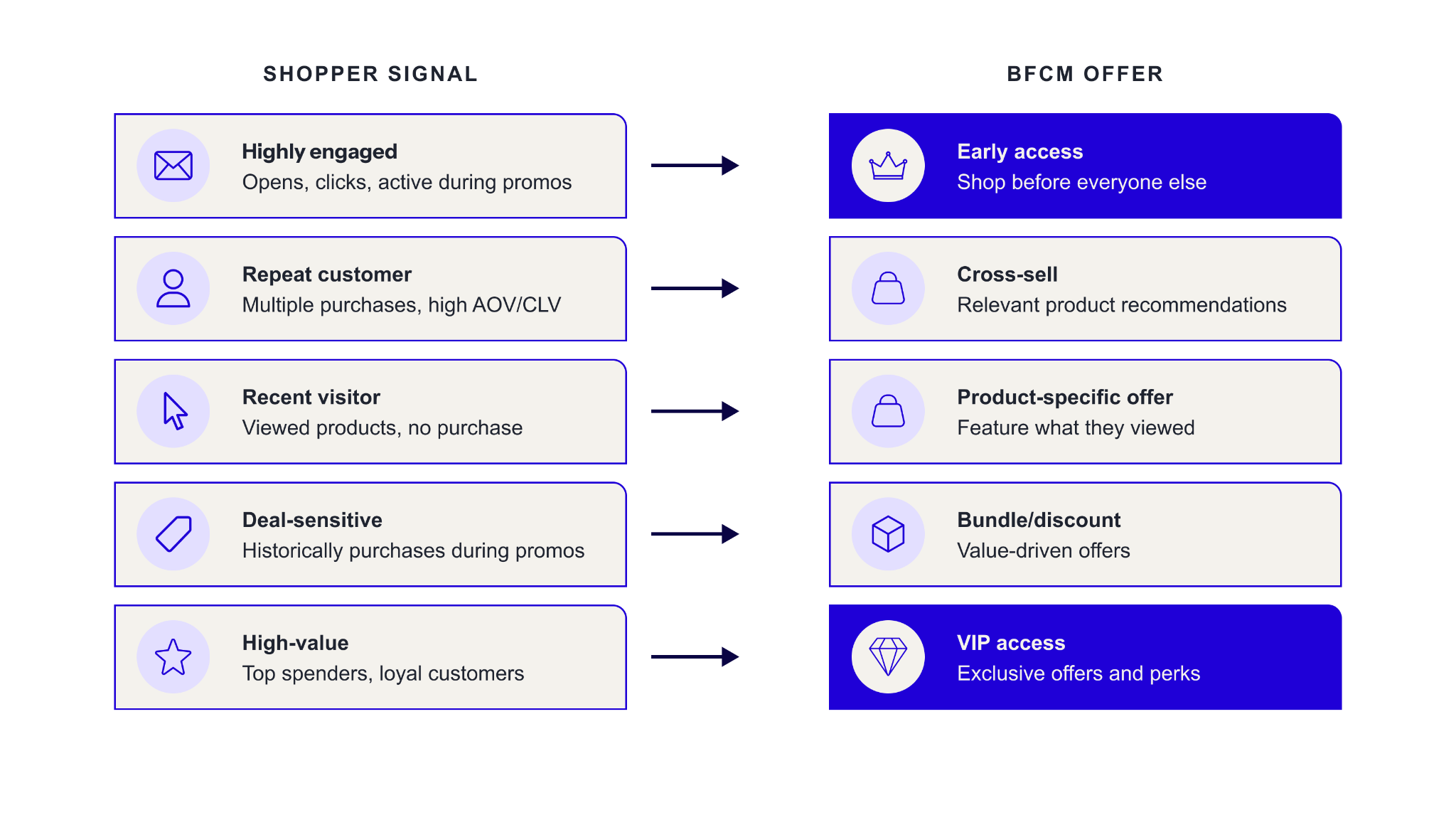
Use customer behavior and history to determine where an incentive can influence the purchase and where it’s unnecessary. For example, purchase history and previous promotional behavior can help you distinguish between customers who need an incentive and those who are likely to purchase without one.

Use those signals to determine which offer fits each segment:

  • Early access: Give loyal customers or highly engaged subscribers first access before the main sale.
  • Percentage discounts: Use this for audiences that respond well to percentage-based savings.
  • Dollar-off offers: Set a clear savings threshold for shoppers with a defined spending range.
  • Product-specific promotions: Promote products based on browsing behavior or purchase history.
  • Bundles: Pair relevant products for repeat customers or shoppers who have shown interest in multiple products.
  • Free shipping: Use when shipping cost is likely to be a purchase barrier.
  • VIP or exclusive offers: Reserve stronger perks for high-value customers, repeat customers, or loyalty program members.

Review how each segment has responded to previous promotions before assigning an offer. If a customer regularly purchases without a discount, you don't need to give up margin on a sale they were already likely to make.
Diversify channels to reach high-intent shoppers

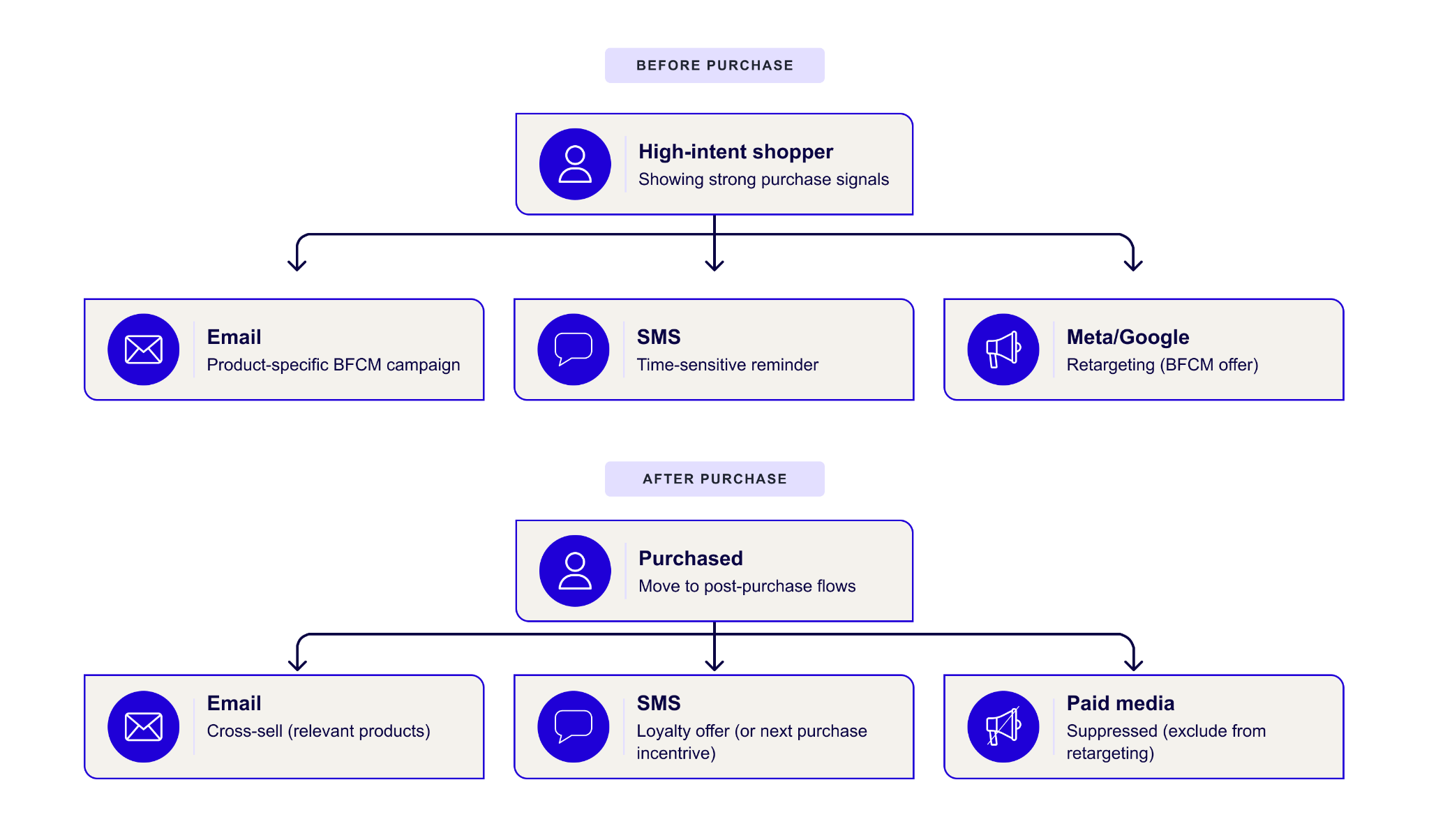
Don't treat email, SMS, Meta, and Google Ads as separate ways to reach the same audience. Use behavioral and purchase signals to decide which channel makes the most sense for each shopper.

  • Match channels to shopper behavior: If someone consistently ignores email but regularly responds to SMS, shift their communication toward the channel where they're more likely to engage.
  • Use SMS for high-intent, time-sensitive shoppers: Reserve urgent reminders and limited-time offers for shoppers who have already shown strong purchase signals.
  • Use paid media to re-engage shoppers who aren't responding to email: Build retargeting audiences based on recent browsing, product interest, or other relevant behavior.
  • Change the channel mix after purchase: Move customers into cross-sell emails, SMS offers, loyalty campaigns, or other post-purchase audiences based on what they bought and their customer value.
  • Keep the experience consistent across channels: Align offers, timing, and customer status so shoppers don't receive conflicting messages or acquisition offers after they've already purchased.
  • Exclude purchasers across channels: Update audiences across email, SMS, and paid media as shoppers convert to avoid unnecessary messaging and ad spend.
Measure segment and channel performance

Don't evaluate your BFCM segments on engagement alone. Measure how each audience and channel contributes to revenue and whether additional reach is worth the volume.

Track:

  • Conversion rate
  • Revenue per recipient
  • Revenue per email
  • AOV
  • Purchase rate
  • Unsubscribe rate
  • Incremental revenue
  • Revenue by channel

Compare performance across segments to understand where segmentation reduces wasted sends and increases revenue per recipient. For example, a smaller high-intent audience may generate more revenue per recipient than a broader audience, even if the broader campaign produces more total clicks or revenue.

Track incremental revenue separately to distinguish campaign-driven sales from purchases that would have happened anyway. Use these results to adjust your audiences, offers, and channel mix while BFCM is still running, and then carry those learnings into your next promotional campaign.

Segments to prioritize for BFCM (along with messaging strategies)

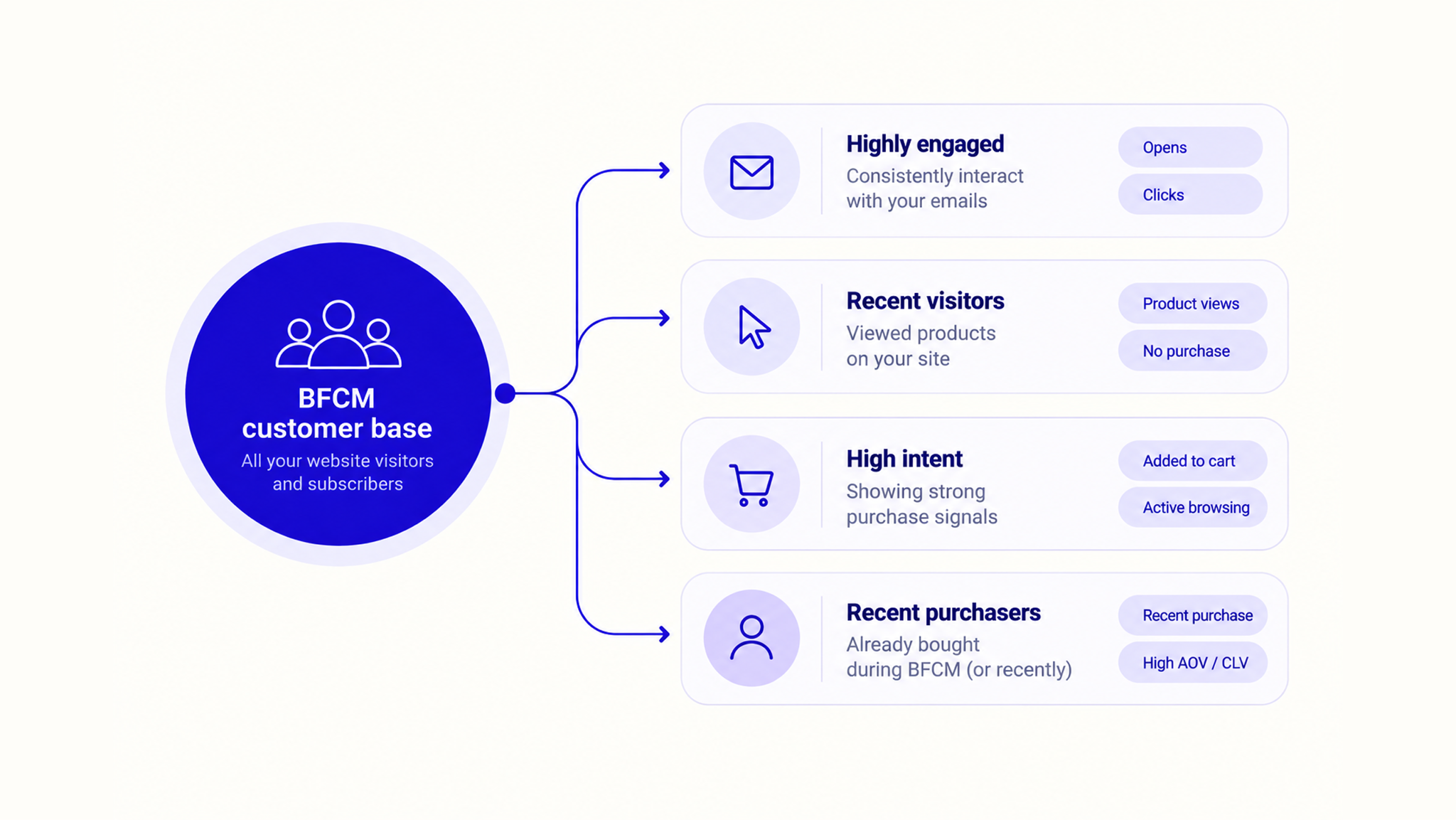
Build your BFCM audiences around purchase history, browsing behavior, email engagement, customer value, and promotional response. These signals help you decide which shoppers to prioritize and how to tailor your messaging.

Here are the key BFCM segments to consider and how to approach your messaging strategy for each:

Highly engaged subscribers

Start with subscribers who consistently open and click your emails. They're a strong audience for early access, major announcements, and time-sensitive promotions.

  • Give early access or first notification of deals: Let this audience shop before the offer reaches your wider customer base.
  • Prioritize them for major promotions: Use this segment first for limited-time offers and flash sales where early engagement matters.

Recent website visitors

Recent website activity gives you a specific product or category to work with, even when a shopper hasn't purchased. Identify recent website visitors and use their browsing history to make your campaign more relevant.

  • Feature products they viewed: Bring the products or categories they browsed into the BFCM campaign instead of leading with a generic sitewide offer.
  • Match the offer to their browsing behavior: If a shopper repeatedly views a product or category, build the message around that interest and the relevant BFCM offer.

Abandoned cart shoppers

Cart abandoners have already shown clear purchase intent, so your follow-up should focus on completing that purchase rather than introducing unrelated offers or products. Keep the message tied to the cart and use the BFCM deadline where it adds urgency:

  • Remind them about the products they left behind: Keep the subject line and message focused on the cart.
  • Use the BFCM deadline to create urgency: Make the end date for your offer clear.
  • Test a stronger incentive for non-converters: If the first reminder doesn't convert, test a different or stronger offer.

Recent purchasers

If a shopper has purchased before BFCM, don't treat them like a prospect during the sale. Use their recent purchase to determine whether there's a relevant reason to engage them again.

  • Move recent purchasers out of acquisition campaigns: Avoid sending them first-purchase offers or promotions for the product they just bought.
  • Shift the next message toward what they bought: Use their purchase as the starting point for relevant recommendations, education, or next-step offers.
  • Recommend the next relevant purchase: Use what they bought to identify complementary products, replenishment opportunities, or products that make sense as their next purchase.

High-value customers

Use repeat purchases, average order value (AOV), customer lifetime value (CLV), and other customer value signals to identify your highest-value customers. Give this segment access and offers that reflect its value:

  • Give VIP access or early shopping windows: Let high-value customers shop before everyone else.
  • Create exclusive offers: Give them perks or products that aren't part of your standard BFCM messaging.
  • Focus on retention marketing: Use relevant cross-sells, bundles, or loyalty program benefits to encourage another purchase.

Lapsed customers

Lapsed customers need a different approach from shoppers who are already actively engaging. Use their past purchases and engagement to understand what they were interested in and what could give them a reason to return.

  • Use past behavior to shape messaging: Look at what previously drove purchases or engagement to shape the message and offer you use to win them back.
  • Test stronger reactivation offers: Test a deeper discount, free shipping, or a product-specific incentive against your standard BFCM offer to give them a stronger reason to return.
  • Reference relevant products or categories: Use purchase history to recommend products they've bought or shown interest in rather than promoting your entire catalog.

Deal-sensitive shoppers

Some customers wait for promotions before they purchase. Identify these shoppers from their purchase and promotional history, then use relevant demographic, psychographic, and preference attributes to refine the segment further.

  • Lead with savings, bundles, or limited-time offers: Make the financial benefit clear.
  • Use past promotional behavior to shape the offer: Look at which discount levels, products, or campaign types have previously driven purchases.
  • Hold back discounts where they aren't needed: If a customer regularly purchases without an incentive, don't automatically give them your strongest BFCM offer.

Ready to maximize conversions during BFCM?

Effective segmentation during BFCM is about making better decisions about who you send to, what you offer them, and when their behavior calls for a different approach. The more current your customer and intent data is, the more precisely you can make those decisions.

Tie helps you act on these signals across your email, website, and paid channels.

  • Tie ID recognizes anonymous website visitors and enriches shopper profiles with 200+ demographic, psychographic, and preference attributes, giving you more context to build segments across Klaviyo, Shopify, and your marketing channels.
  • Tie Predict adds daily-refreshed scores based on 55+ signals to identify shoppers more likely to open, click, or purchase, including high-intent shoppers that your engagement-based segments may miss.
  • Tie Priority helps your BFCM emails land in Gmail’s Primary inbox instead of Promotions, so more of your campaigns reach shoppers where they’re most likely to see them. Its agents continuously monitor inbox placement and sender reputation, adjust warm-up and audience eligibility when performance changes, and measure incremental revenue against a control group.

Planning your BFCM campaigns? Book a demo to see how Tie can help you build a more responsive segmentation strategy,
Written by

John Levis

Director of Product Marketing

, Tie

John leads product marketing at Tie, where he focuses on positioning, messaging, and helping ecommerce brands make better use of customer identity and behavioral data.

Maya K. identified · score 9Jordan R. synced to KlaviyoSana P. landed in PrimaryDani N. ready to buy

See what Tie finds on your site.

A 20-minute walkthrough on your own traffic — positive ROI within 30 days.

Book a demoSee pricing
October 6, 2026

Segmentation During BFCM to Maximize Conversions

Written by
John Levis
Director of Product Marketing
John leads product marketing at Tie, where he focuses on positioning, messaging, and helping ecommerce brands make better use of customer identity and behavioral data.

Your customer segmentation strategy during Black Friday Cyber Monday influences more than who receives your campaigns. It determines which offer shoppers see, how often you contact them, and when they should stop receiving acquisition-focused messaging.

During BFCM, shopper behavior can change quickly. Someone who was inactive before BFCM may start browsing, a subscriber may show strong product interest without purchasing, or a customer may convert and no longer belong in a promotional campaign. Your segments need to account for those changes.

In this guide, you'll learn how to build a BFCM segmentation strategy that helps you prioritize high-intent shoppers, match offers to customer behavior, and adapt your audiences throughout the sale.

Why segmentation during BFCM needs to be planned

Higher campaign volume makes audience selection more important. Sending every campaign to your entire list is one of the biggest mistakes you can make. Your shoppers have different levels of interest, making some campaigns irrelevant to different audiences. Recent purchasers may receive acquisition offers, inactive subscribers may receive repeated promotions, while high-intent shoppers may get the same treatment as everyone else.

This reduces engagement and increases unsubscribes, hurting your email performance. Instead of relying on higher volume to drive results, segmentation helps you make each send more intentional by deciding which shoppers should receive which campaigns and offers. 

Planning your segmentation gives you a framework to decide how different shoppers should be treated throughout the sale. 

But shopper intent can change quickly during BFCM. Someone who looked inactive before the sale may start actively browsing, while a shopper who was highly engaged may purchase and no longer need the same promotional messaging. 

Purchase history, browsing behavior, email engagement, and buying intent can help you account for those changes and determine who receives each campaign, which offer they see, and who should be suppressed.

How to build a dynamic, measurable BFCM segmentation strategy

Your BFCM segments need to change as shoppers move from browsing to purchase, re-engagement, or inactivity. Build them around real-time customer data and measure each segment by the revenue it generates.

Here’s how to build and manage those segments throughout BFCM:

Test deliverability and inbox placement before planning segmented campaigns

Sending more campaigns during BFCM puts more pressure on your sender reputation. Run a deliverability audit to decide which audiences to expand, which to limit, and when to pull back:

  • Track bounce rates, unsubscribes, spam complaints, engagement, and inbox placement as BFCM volume increases.
  • Start with your highest-priority audiences and expand reach when inbox placement and reputation remain stable.
  • If deliverability scores start to decline, reduce sending to lower-intent audiences first rather than pulling back across the entire program.
  • Use Open Intent to help control how far each campaign reaches as volume increases.
  • Compare revenue per recipient and inbox placement across segments to understand whether additional reach is generating enough value to justify the volume.

Tie Priority monitors sender reputation and inbox placement as sending volume increases, and adjusts audience eligibility and warmup intensity when those signals change. During reputation recovery, it can use Predict scores to prioritize shoppers more likely to engage.

Use real-time behavior to adapt segments

Your pre-BFCM audiences shouldn't remain fixed throughout the sale. Update them as shoppers browse, click, abandon carts, purchase, and engage with your emails, using those signals to decide who moves between audiences:

  • Update audiences as intent changes: Rebuild segments based on current shopper behavior and intent.
  • Prioritize shoppers showing strong buying signals: Give your highest-value BFCM campaigns to shoppers with clear signs of purchase intent.
  • Use Tie Predict to prioritize shoppers based on purchase and engagement signals: Its Purchase, Open, and Click Intent scores refresh daily, helping you identify shoppers whose current intent may not be reflected in engagement segments that rely on past behavior. 
  • Exclude customers as soon as they purchase: Remove them from acquisition-focused campaigns and update your lists as they convert.
  • Route high-intent first-time buyers into a second-purchase flow: After BFCM, use current intent to determine who should move into the next stage of the customer journey.
  • Use Click Intent rather than open history to determine continued promotional engagement: Low Click Intent can be a signal to sunset a shopper from promotional messaging. 

Match the offer to customer intent

Use customer behavior and history to determine where an incentive can influence the purchase and where it’s unnecessary. For example, purchase history and previous promotional behavior can help you distinguish between customers who need an incentive and those who are likely to purchase without one.

Use those signals to determine which offer fits each segment:

  • Early access: Give loyal customers or highly engaged subscribers first access before the main sale.
  • Percentage discounts: Use this for audiences that respond well to percentage-based savings.
  • Dollar-off offers: Set a clear savings threshold for shoppers with a defined spending range.
  • Product-specific promotions: Promote products based on browsing behavior or purchase history.
  • Bundles: Pair relevant products for repeat customers or shoppers who have shown interest in multiple products.
  • Free shipping: Use when shipping cost is likely to be a purchase barrier.
  • VIP or exclusive offers: Reserve stronger perks for high-value customers, repeat customers, or loyalty program members.

Review how each segment has responded to previous promotions before assigning an offer. If a customer regularly purchases without a discount, you don't need to give up margin on a sale they were already likely to make.

Diversify channels to reach high-intent shoppers

Don't treat email, SMS, Meta, and Google Ads as separate ways to reach the same audience. Use behavioral and purchase signals to decide which channel makes the most sense for each shopper.

  • Match channels to shopper behavior: If someone consistently ignores email but regularly responds to SMS, shift their communication toward the channel where they're more likely to engage.
  • Use SMS for high-intent, time-sensitive shoppers: Reserve urgent reminders and limited-time offers for shoppers who have already shown strong purchase signals.
  • Use paid media to re-engage shoppers who aren't responding to email: Build retargeting audiences based on recent browsing, product interest, or other relevant behavior.
  • Change the channel mix after purchase: Move customers into cross-sell emails, SMS offers, loyalty campaigns, or other post-purchase audiences based on what they bought and their customer value.
  • Keep the experience consistent across channels: Align offers, timing, and customer status so shoppers don't receive conflicting messages or acquisition offers after they've already purchased.
  • Exclude purchasers across channels: Update audiences across email, SMS, and paid media as shoppers convert to avoid unnecessary messaging and ad spend.

Measure segment and channel performance

Don't evaluate your BFCM segments on engagement alone. Measure how each audience and channel contributes to revenue and whether additional reach is worth the volume.

Track:

  • Conversion rate
  • Revenue per recipient
  • Revenue per email
  • AOV
  • Purchase rate
  • Unsubscribe rate
  • Incremental revenue
  • Revenue by channel

Compare performance across segments to understand where segmentation reduces wasted sends and increases revenue per recipient. For example, a smaller high-intent audience may generate more revenue per recipient than a broader audience, even if the broader campaign produces more total clicks or revenue.

Track incremental revenue separately to distinguish campaign-driven sales from purchases that would have happened anyway. Use these results to adjust your audiences, offers, and channel mix while BFCM is still running, and then carry those learnings into your next promotional campaign.

Segments to prioritize for BFCM (along with messaging strategies)

Build your BFCM audiences around purchase history, browsing behavior, email engagement, customer value, and promotional response. These signals help you decide which shoppers to prioritize and how to tailor your messaging.

Here are the key BFCM segments to consider and how to approach your messaging strategy for each:

Highly engaged subscribers

Start with subscribers who consistently open and click your emails. They're a strong audience for early access, major announcements, and time-sensitive promotions.

  • Give early access or first notification of deals: Let this audience shop before the offer reaches your wider customer base.
  • Prioritize them for major promotions: Use this segment first for limited-time offers and flash sales where early engagement matters.

Recent website visitors

Recent website activity gives you a specific product or category to work with, even when a shopper hasn't purchased. Identify recent website visitors and use their browsing history to make your campaign more relevant.

  • Feature products they viewed: Bring the products or categories they browsed into the BFCM campaign instead of leading with a generic sitewide offer.
  • Match the offer to their browsing behavior: If a shopper repeatedly views a product or category, build the message around that interest and the relevant BFCM offer.

Abandoned cart shoppers

Cart abandoners have already shown clear purchase intent, so your follow-up should focus on completing that purchase rather than introducing unrelated offers or products. Keep the message tied to the cart and use the BFCM deadline where it adds urgency:

  • Remind them about the products they left behind: Keep the subject line and message focused on the cart.
  • Use the BFCM deadline to create urgency: Make the end date for your offer clear.
  • Test a stronger incentive for non-converters: If the first reminder doesn't convert, test a different or stronger offer.

Recent purchasers

If a shopper has purchased before BFCM, don't treat them like a prospect during the sale. Use their recent purchase to determine whether there's a relevant reason to engage them again.

  • Move recent purchasers out of acquisition campaigns: Avoid sending them first-purchase offers or promotions for the product they just bought.
  • Shift the next message toward what they bought: Use their purchase as the starting point for relevant recommendations, education, or next-step offers.
  • Recommend the next relevant purchase: Use what they bought to identify complementary products, replenishment opportunities, or products that make sense as their next purchase.

High-value customers

Use repeat purchases, average order value (AOV), customer lifetime value (CLV), and other customer value signals to identify your highest-value customers. Give this segment access and offers that reflect its value:

  • Give VIP access or early shopping windows: Let high-value customers shop before everyone else.
  • Create exclusive offers: Give them perks or products that aren't part of your standard BFCM messaging.
  • Focus on retention marketing: Use relevant cross-sells, bundles, or loyalty program benefits to encourage another purchase.

Lapsed customers

Lapsed customers need a different approach from shoppers who are already actively engaging. Use their past purchases and engagement to understand what they were interested in and what could give them a reason to return.

  • Use past behavior to shape messaging: Look at what previously drove purchases or engagement to shape the message and offer you use to win them back.
  • Test stronger reactivation offers: Test a deeper discount, free shipping, or a product-specific incentive against your standard BFCM offer to give them a stronger reason to return.
  • Reference relevant products or categories: Use purchase history to recommend products they've bought or shown interest in rather than promoting your entire catalog.

Deal-sensitive shoppers

Some customers wait for promotions before they purchase. Identify these shoppers from their purchase and promotional history, then use relevant demographic, psychographic, and preference attributes to refine the segment further.

  • Lead with savings, bundles, or limited-time offers: Make the financial benefit clear.
  • Use past promotional behavior to shape the offer: Look at which discount levels, products, or campaign types have previously driven purchases.
  • Hold back discounts where they aren't needed: If a customer regularly purchases without an incentive, don't automatically give them your strongest BFCM offer.

Ready to maximize conversions during BFCM?

Effective segmentation during BFCM is about making better decisions about who you send to, what you offer them, and when their behavior calls for a different approach. The more current your customer and intent data is, the more precisely you can make those decisions.

Tie helps you act on these signals across your email, website, and paid channels.

  • Tie ID recognizes anonymous website visitors and enriches shopper profiles with 200+ demographic, psychographic, and preference attributes, giving you more context to build segments across Klaviyo, Shopify, and your marketing channels.
  • Tie Predict adds daily-refreshed scores based on 55+ signals to identify shoppers more likely to open, click, or purchase, including high-intent shoppers that your engagement-based segments may miss.
  • Tie Priority helps your BFCM emails land in Gmail’s Primary inbox instead of Promotions, so more of your campaigns reach shoppers where they’re most likely to see them. Its agents continuously monitor inbox placement and sender reputation, adjust warm-up and audience eligibility when performance changes, and measure incremental revenue against a control group.

Planning your BFCM campaigns? Book a demo to see how Tie can help you build a more responsive segmentation strategy,

On this page
Stay Connected to the Latest
New articles delivered to your inbox—no strings attached.