
.png)
Key Takeaways
- A large share of your website visitors leave without converting, but their behavior shows clear buying intent that you can capture.
- Website visitor identification turns anonymous website traffic into contactable profiles inside your CRM.
- Modern website visitor tracking tools connect visitor behavior with real people and push that data into your marketing workflows.
- Revenue grows when you activate high-value visitors through email, SMS, and personalized campaigns.
Most of your website visitors leave without taking action. They browse products, check pricing, compare options, and then drop off. You can see the sessions, but you can’t see who those visitors are, making it tricky to follow up with them.
This creates a gap in your growth system. Despite investing in traffic, only a small percentage leave their details. The rest of that traffic never enters your CRM, never reaches your email or SMS flows, and never becomes part of your lifecycle marketing.
Website visitor identification changes how you use that traffic. It connects anonymous website visitors to real people, adds contact information and enrichment data, and sends those profiles into tools like Klaviyo or Postscript. This gives you a way to run targeted campaigns, prioritize high-value visitors, and improve attribution across your funnel.
In this guide, you will learn how website visitor identification works, which methods and tools are available, and how to turn anonymous website traffic into qualified leads and measurable revenue.
Why identifying website visitors is important
Within your funnel, the biggest drop does not happen at checkout. It happens before a visitor ever becomes a lead. Most of your website traffic never enters your CRM, which means it never becomes part of your campaigns, flows, or retention strategy.
Website visitor identification fixes this gap by capturing visitor data at the moment intent shows up. Instead of waiting for form submissions, you identify shoppers based on their behavior across key pages like product listings, collections, or pricing. This gives you access to contact information, intent signals, and enrichment data while the visitor is still in the decision phase.
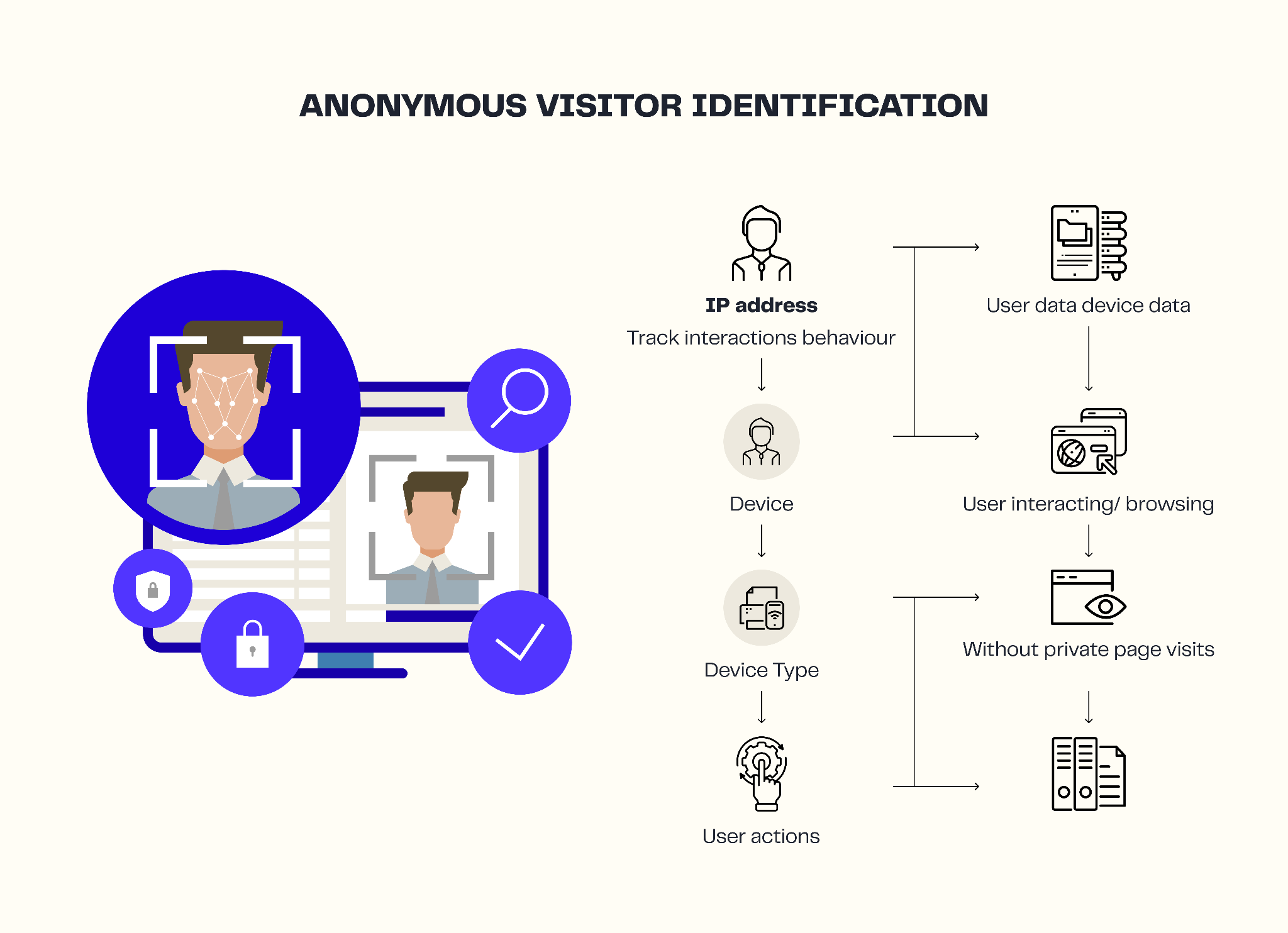
What does identifying website visitors enable?
Being able to identify anonymous visitors changes how you run your marketing. You move from reacting to conversions to actively engaging shoppers based on their behavior and intent.
Your team can build flows around real visitor activity, personalize campaigns, and focus on users who are most likely to convert. This creates a more efficient system where your existing traffic drives more revenue.
A few main benefits of this approach are:
- Real-time CRM enrichment and activation: Identified visitors flow into your CRM with behavior, intent signals, and enrichment data, allowing you to trigger email and SMS flows based on actual activity.
- Stronger list growth and audience building: Capture contact information from high-value visitors and grow your email and SMS lists with users who already show purchase intent.
- Clear attribution across channels: Connect visitor data to traffic sources, campaigns, and conversions, giving you accurate attribution and better visibility into what drives revenue.
- Faster conversion through intent signals: Identify visitors who engage with specific pages, such as pricing or product details, and re-engage them with timely, relevant messaging.
- Cookieless retargeting with first-party data: Build audiences using identified users and activate them across email, SMS, and ad platforms while staying compliant with evolving data standards.
- Higher conversion rates from existing traffic: Personalize messaging based on visitor behavior and intent data, which improves engagement and increases conversion rates without increasing acquisition spend.
Is identifying website visitors legal?
Yes. Website visitor identification is legal when it complies with consent-based data practices and regulations such as GDPR (EU) and CCPA (California).
Platforms like Tie rely on verified opt-in data sources, first-party data signals, and consent-aware data collection to process visitor data responsibly. You can operate across regions by integrating with your consent management platform and respecting user permissions throughout the process.
6 types of anonymous website visitors
Your website traffic is not the same. Each visitor arrives with a different level of intent, and that intent shows through their behavior. When you analyze visitor behavior instead of just page views, you start to see clear intent signals. Time spent on a product, repeat visits, cart actions, and scroll depth show which shoppers are close to converting and which ones need more context before they take action.
Website visitor tracking tools help you map these patterns across sessions and pages. They show how shoppers move through your site, what they engage with, and how their interest builds over time. This allows you to prioritize high-value visitors, personalize campaigns, and guide more of your traffic toward conversion.
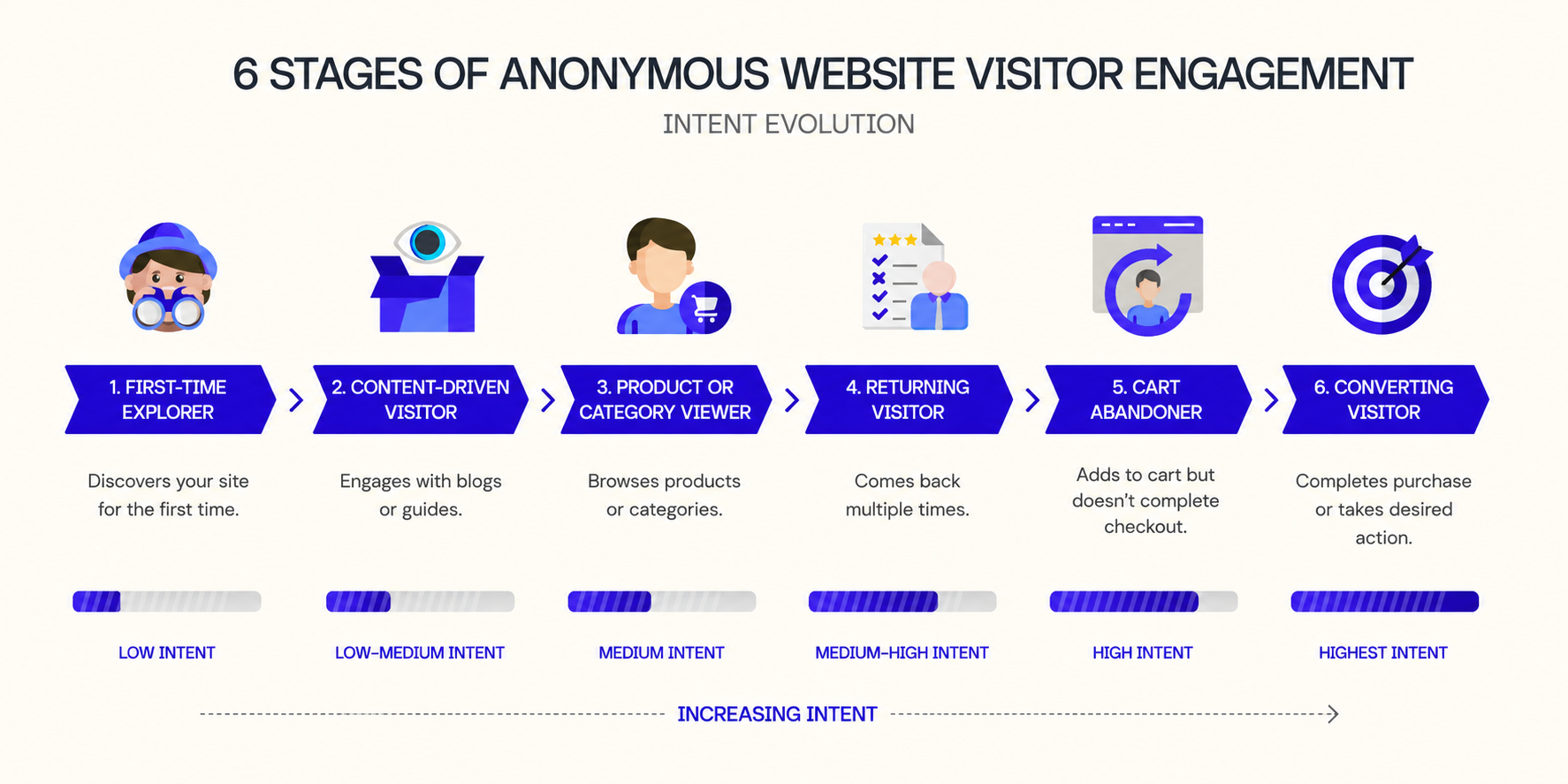
A few common types of anonymous website visitors are:
- First-time explorers: These visitors land on your site through ads, search, or social and interact with a few pages before leaving. They generate early visitor data but show limited intent. You can capture these shoppers and introduce your brand through welcome flows and light-touch messaging.
- Content-driven visitors: These visitors engage with blogs, guides, or educational pages before exploring products. They build context before making a decision. You can guide them toward products with relevant content, product education, and gradual exposure across email or on-site messaging.
- Product or category viewers: These visitors spend time on product pages or collections and compare options. Their behavior reflects active evaluation. When you track these interactions through website visitor tracking, you can trigger follow-up campaigns tied to the exact products or categories they explored.
- Returning visitors across sessions: These visitors come back over time and build intent gradually. Their behavior shows continued interest, even if each session is light. When you connect these visits into a single profile, you can track how their engagement evolves and move them into structured nurture workflows or CRM follow-up.
- Cart abandoners: These visitors add products to the cart and leave before completing checkout. Their actions show immediate buying intent. You can use their visitor data and contact information to trigger recovery workflows and improve conversion rates.
Each of these visitor types reflects a different stage in your funnel. When you align visitor identification tools with these behaviors, you can capture intent early, enrich profiles with relevant data, and move more of your website traffic into qualified leads and revenue.
How website visitor identification works
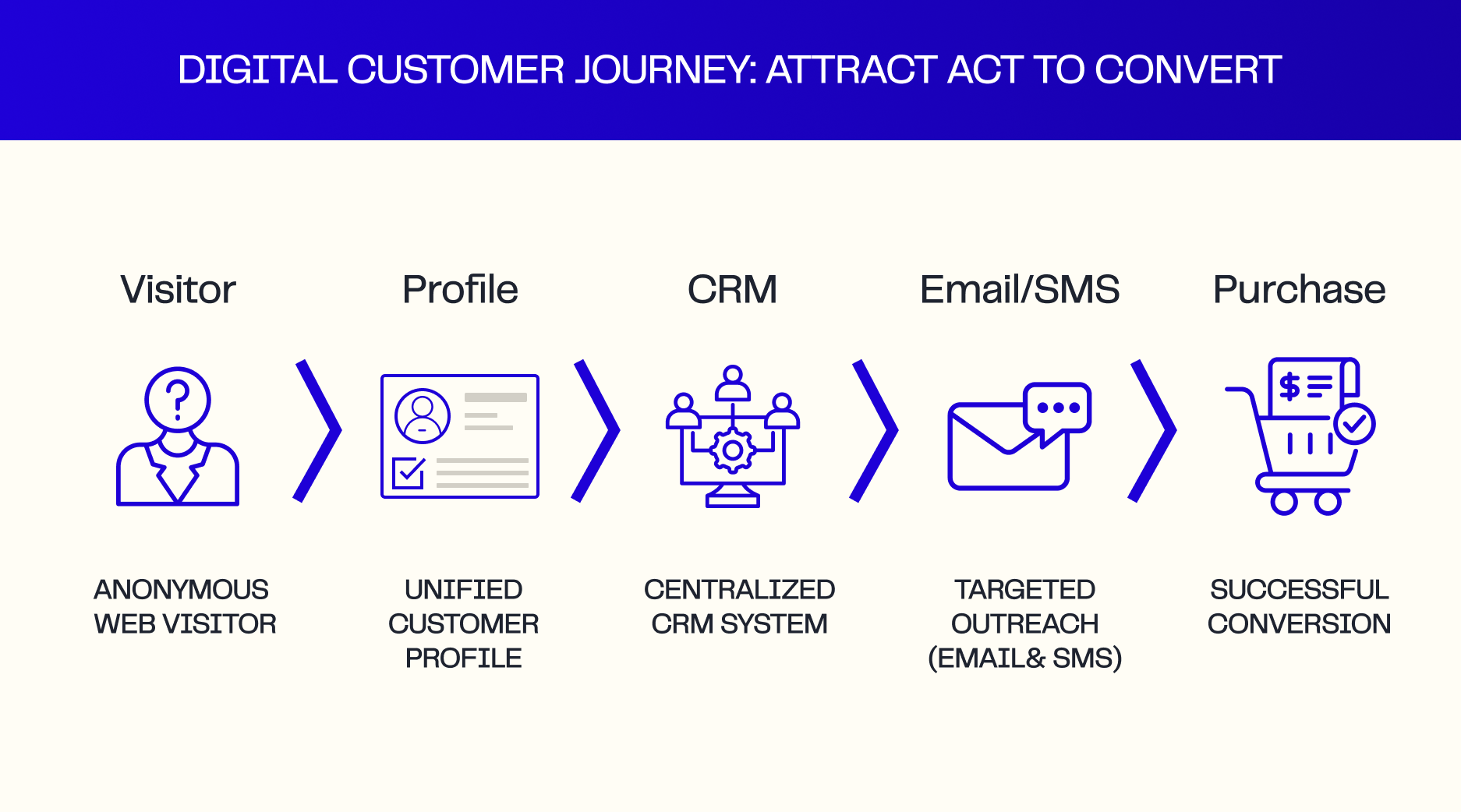
Website visitor identification connects visitor behavior to real people and moves that data into your marketing flows. You capture intent while the visitor is still active on your site, turn that activity into identifiable profiles, and push it into your CRM so you can act without delay.
This process relies on structured data collection, strong data sources, and tight integrations with tools like Klaviyo, Braze, and Postscript. When set up correctly, it helps you grow your lists, improve attribution, and engage shoppers based on real behavior across email, SMS, and paid channels.
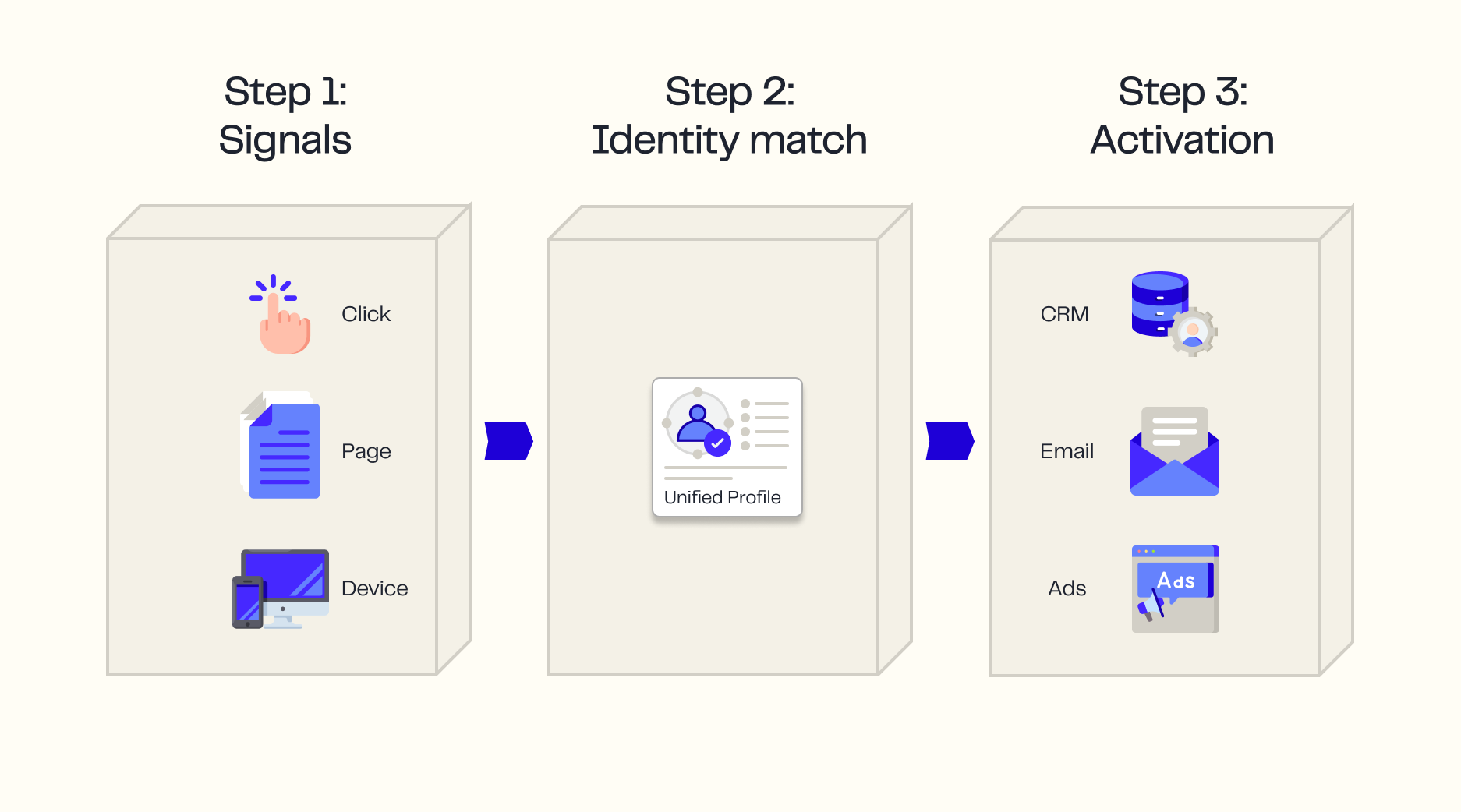
Below is a detailed step-by-step breakdown of how website visitor identification works:
Step 1: Capturing anonymous visitor signals
Every website visit generates signals that show how a shopper interacts with your site. Website visitor tracking tools capture this data across key touchpoints, including:
- Page views across specific pages like product, category, or pricing pages
- Time spent and navigation patterns
- Device type and browser
- IP address and location signals
- Click behavior and engagement depth
This visitor data reveals intent. For example, a visitor who lands on your homepage but exits quickly shows low engagement. Similarly, a visitor who moves across product pages, returns multiple times, or interacts with key sections signals stronger buying intent.
These intent signals form the base of website visitor identification. They allow you to understand which visitors qualify as high-value and where they sit in your funnel.
Step 2: Resolving identities with data networks
Once you capture visitor behavior, the next step is to connect those signals to real identities. Identity resolution solutions use multiple data sources to match anonymous website visitors with person-level profiles.
This process uses a combination of:
- IP address matching and network data
- Hashed identifiers such as emails
- Device and browser signals
- Cross-device identity graphs
- External data sources similar to Clearbit or Leadfeeder
When a match is established, the visitor becomes a known customer profile. You can see purchase history, browsing behavior across sessions, product interests and intent signals, and engagement across channels.
At this stage, profiles can be synced into your marketing tools and customer platforms. This allows you to trigger personalized flows based on real behavior, retarget high-intent visitors across channels, segment shoppers more accurately, and build lifecycle campaigns that reflect actual customer activity.
Instead of treating traffic as anonymous sessions, you’re working with identifiable customers, making every touchpoint more relevant and more likely to convert.
Step 3: Enriching profiles for marketing activation
After identification, enrichment adds the context needed to act on each profile. This step turns raw matches into usable customer profiles based on real behavior and preferences.
Enrichment includes:
- Contact information, such as email and phone numbers
- Firmographic and demographic data
- Engagement history and purchase intent
- On-site behavior across sessions
These enriched profiles sync into your CRM, email platforms, and ad channels through direct integrations. You can trigger email and SMS flows, build more precise audience segments, and personalize campaigns based on what each shopper has shown interest in.
This is where website visitor identification creates the most impact. Each enriched profile becomes a new opportunity to engage, convert, and retain customers based on real behavior.
Methods for identifying website visitors
There are several ways to identify website visitors, but each method gives you a different level of visibility and control. As third-party cookies phase out, website visitor tracking needs to move beyond sessions and connect visitor behavior to real people you can act on.
Below are the main methods used to identify visitors and how each one helps you capture, understand, and convert your website traffic.
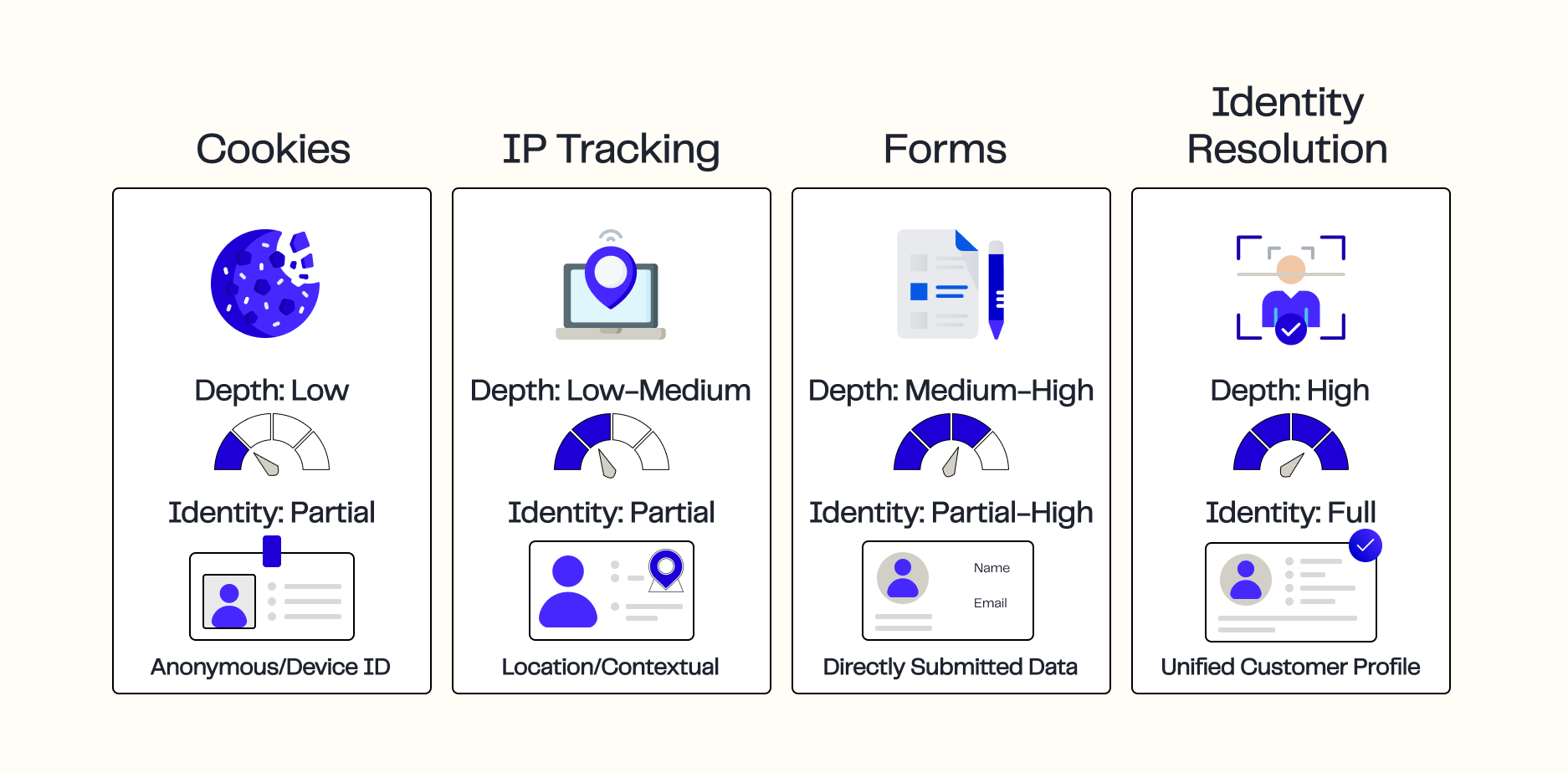
Cookies and first-party tracking
First-party tracking captures visitor behavior on your site through cookies. It records page views, navigation paths, and engagement across specific pages, giving you a clear view of how shoppers move through your site.
This helps you understand visitor behavior and build basic workflows. However, cookies track sessions, not individuals. When shoppers switch devices or clear cookies, you lose continuity. This limits how much of that data you can push into your CRM or use for consistent follow-up.
IP-based identification
IP-based identification uses a visitor’s IP address to estimate location and basic geographic signals. This helps you understand where your website traffic is coming from and how visitors are distributed across regions.
You can use this data for location-based targeting, regional segmentation, and campaign personalization. For example, you can adjust messaging, offers, or shipping details based on where a visitor is browsing from.
The data remains directional. Network conditions such as shared IPs, mobile usage, or VPNs affect accuracy, and this method does not provide reliable person-level identification or contact information.
Form submissions and logins
Forms and logins identify visitors when they choose to share their details. This includes email signups, account creation, and checkout data.
This method gives you high-quality, verified data. Once captured, the visitor becomes part of your CRM and lifecycle marketing system. You can use it to trigger email and SMS flows, personalize campaigns, and segment users based on behavior and purchase history.
The limitation comes from volume. Most visitors leave without filling out a form, which means a large share of your website traffic never becomes identifiable. This creates a gap between total traffic and the users you can actively engage through your marketing channels.
Identity resolution platforms
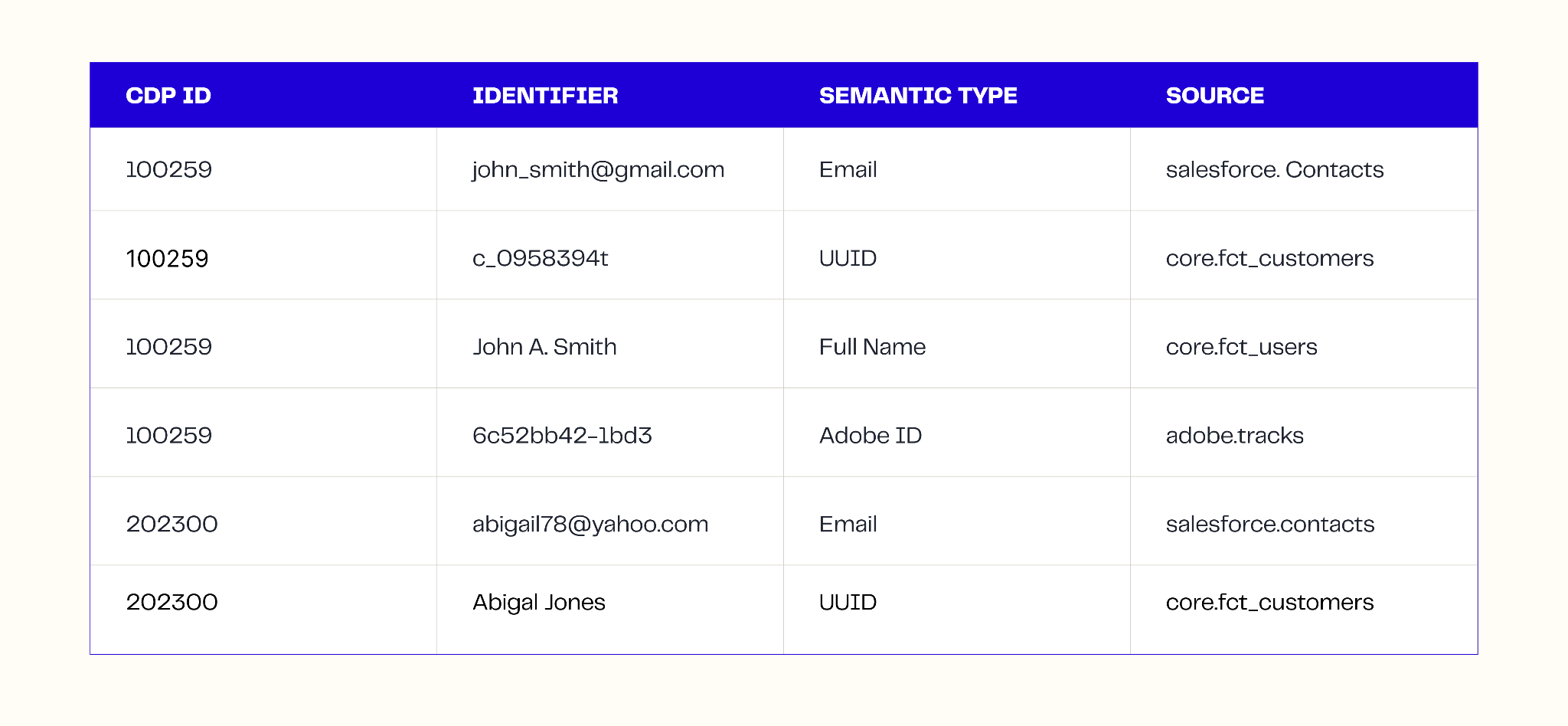
Identity resolution platforms, like Tie, connect anonymous website visitors to real profiles using multiple data sources and persistent identifiers. They combine device signals, IP data, hashed identifiers, and enrichment layers to build a complete view of each visitor.
This allows you to track shoppers across sessions and devices while capturing person-level data tied to real behavior. You get access to contact information, location, and engagement signals that show what each shopper is interested in and how close they are to purchasing.
Benefits of identifying anonymous website visitors
Most of your website traffic leaves without converting. Visitor identification lets you capture that intent, turn it into profiles, and activate it across your marketing channels. You generate more revenue from the same traffic without increasing acquisition spend.
The core benefits of identifying anonymous visitors are:
- Recover revenue from non-converting visitors: Capture high-intent shoppers who browse products or abandon carts and bring them back through targeted flows that drive purchases.
- Grow your email and SMS lists with qualified users: Identified visitors flow directly into your CRM with verified contact details, giving you a steady stream of high-intent subscribers.
- Improve ad targeting and retargeting performance: Build audiences based on real shoppers instead of anonymous sessions, increasing match rates and reducing wasted spend.
- Increase conversion rates through personalization: Tailor messaging based on behavior such as products viewed or time spent, which leads to more relevant campaigns and higher engagement.
- Maximize ROI from existing traffic: Extract more value from the visitors you already paid to acquire, improving overall marketing efficiency and lowering customer acquisition cost.
Challenges and limitations to be aware of
Visitor identification increases how much of your website traffic you can act on, but it does not cover every session. A portion of visitors will always remain outside your CRM due to limited engagement or consent restrictions.
What matters is the quality of the visitors you do identify. High-value shoppers who interact with key pages and show clear buying intent are far more likely to be matched and activated. These profiles give you usable data to personalize campaigns, trigger flows, and improve how you engage across email, SMS, and paid channels.
Privacy requirements shape how this system operates. Regulations like GDPR and CCPA define how data collection works and what data can be used. This sets the boundaries for identification coverage while keeping your visitor data compliant and reliable for long-term use.
How to identify website visitors
Identifying website visitors works best when you treat it as a structured system tied to revenue. Each step builds toward turning traffic into identifiable profiles and activating them across your marketing channels.
Here’s how you can set this up within your own marketing stack:
- Define revenue and marketing goals: Start with what you want to achieve, such as email revenue, list growth, or retargeting performance. Clear goals help you decide which visitors to prioritize and how to activate them once identified.
- Evaluate tools and methods: Choose a setup that connects behavior to real profiles at scale. Look for website visitor tracking tools that capture session signals, resolve identities, and sync data directly into your marketing stack.
- Ensure compliance: Set up consent management and data handling processes that align with GDPR, CCPA, and other privacy regulations. This defines what data you can use and keeps your identification system reliable across regions.
- Integrate with CRM, email, and ads: Connect your identification system to platforms like Klaviyo, your CRM, and ad channels. This allows identified visitors to flow directly into campaigns, audiences, and lifecycle messaging.
- Measure and optimize: Track how many visitors are identified, how they convert, and how much revenue they generate. Use this data to refine targeting, improve flows, and increase the value you capture from your traffic.
Turn anonymous traffic into growth
A large share of your website traffic already shows intent but never enters your pipeline. Visitor identification gives you a way to capture that intent, turn it into real profiles, and convert it through lifecycle marketing.
Tie’s visitor identification software supports this by identifying a significant portion of your visitors, enriching them with contact and behavioral data, and pushing them directly into your CRM, email, and ad channels in real time. This lets you trigger flows, build audiences, and personalize campaigns based on actual behavior, turning passive traffic into active revenue.
If you want to see how much revenue your anonymous traffic can generate, book a demo with Tie.