Meet Tie Predict: The Next Evolution of Tie
.png)
.png)
Tie started with a simple goal: helping ecommerce brands recognize who was visiting their website.
Identity resolution solved a real problem. It allowed brands to recognize anonymous visitors, build complete shopper profiles, and turn traffic they couldn't see into shoppers they could engage. That problem still exists, and identity is still the foundation of everything Tie does.
But recognizing a shopper is only the beginning.
Once a brand knows who's on its site, a more important question follows: which of these shoppers is actually ready to engage, and which ones should be left alone? Answering that is what turns identity into action.
That is why we built Tie Predict.
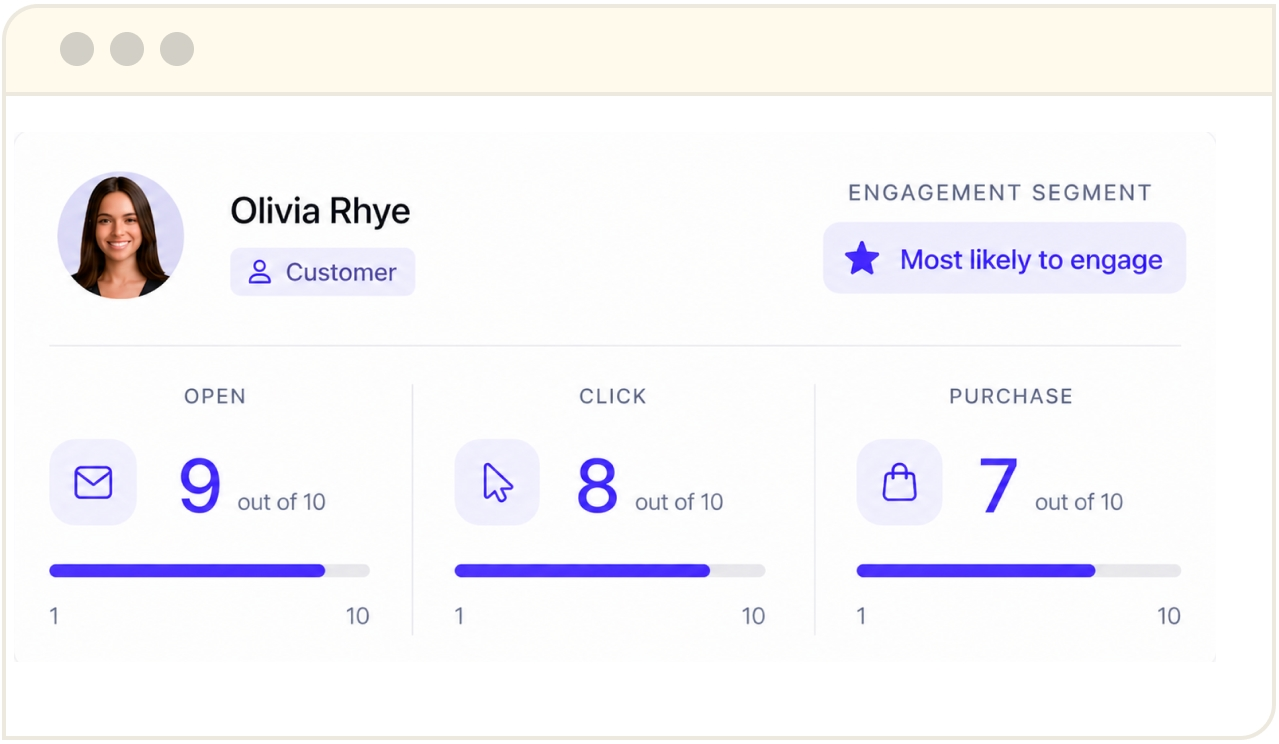
Predict helps marketers understand not just who a shopper is, but how likely they are to engage, click, or purchase next. By scoring shoppers based on forward-looking intent signals, teams can prioritize high-intent audiences, reduce unnecessary sends, and make smarter lifecycle decisions.
It's the biggest step in Tie's evolution since we started, and it's what moves Tie from an identity solution to a shopper intelligence platform for ecommerce.
Most ecommerce and DTC marketing platforms tell you what shoppers did. Tie helps you know who they are, what they want, and when they're ready to engage. As marketing becomes more complex, the brands that win won't be the ones reaching the most shoppers. They are the ones getting better at prioritizing the right ones.
What has changed in ecommerce marketing
For a decade, growth followed a familiar playbook: grow the list, send more campaigns, segment on engagement, and buy traffic to keep the funnel full.
That approach worked when inboxes were less crowded, advertising costs were lower, and opens and clicks provided a reasonable picture of customer interest.
Over time, however, that approach became more difficult to sustain.
Promotional emails became easier to ignore, acquisition costs increased, privacy changes weakened targeting signals, and customer journeys became harder to track. As a result, ecommerce teams needed stronger signals to make decisions.
Opens, clicks, and site visits help explain what happened in the past, but they offer limited insight into who is most likely to engage, convert, or purchase next. At the same time, teams are under growing pressure to improve efficiency, driving more growth without constantly increasing spend or headcount.
AI has accelerated this shift.
Brands are using AI to automate campaigns, build audiences, personalize experiences, and improve operational efficiency. But AI only works as well as the data behind it. Identity, behavioral context, purchase signals, and shopper attributes create the foundation for better predictions and smarter automation.
Success now comes from prioritizing high-intent shoppers, sending fewer and more relevant campaigns, and focusing effort where it drives the greatest return.
That requires understanding not just who a shopper is, but how likely they are to engage next.
That is what led us to build Tie Predict.
From identity to intelligence
Identity resolution is still core to Tie. Our platform still recognizes shoppers that brands would otherwise never see. What changed is what ecommerce teams needed in order to grow.
For years, recognizing more shoppers was enough. If a brand could identify previously anonymous visitors, it could trigger more welcome flows, recover more carts, and bring more people into owned channels.
Tie ID makes that possible. It helps brands recognize anonymous visitors (including those who never log in or fill out a form), connect browsing behavior to known profiles, and enrich those profiles with demographic, preference, and intent data. It integrates directly with ESPs like Klaviyo, allowing brands to activate these insights within their existing workflows without replatforming.
For example, Beekman 1802 used Tie ID to identify 80,000+ existing subscribers they would’ve otherwise missed, driving over $500,000 in revenue from adding those shoppers to the appropriate lifecycle flows.
But then the challenge changed.
As teams got access to more shopper data, the problem shifted to deciding which of those shoppers actually deserved attention.
Recognition told them who was there, but it didn't tell them who deserved attention right now.
Marketers still needed strong identity, but they also needed forward-looking signals to understand who was most likely to engage, convert, or buy next.
Tie ID answers the question, "Who are my shoppers?"
Tie Predict answers the next one: "Which of them are ready to engage right now?"
The first made the second possible.
Everything Tie Predict does is built on the same identity graph that powers shopper recognition: more than 280 million U.S. consumers and billions of behavioral, demographic, and intent signals.
That foundation gives Predict a broader view of each shopper, uncovering signals and patterns that ESPs and standalone AI segmentation tools cannot see on their own.
How Tie Predict works
Most segmentation relies on what a shopper did in the past. Tie Predict helps marketers understand who is most likely to engage next.
Powered by Tie's identity graph, Predict scores every shopper daily based on their likelihood to open, click, or purchase. It draws on signals that extend beyond what an ESP can see on its own and updates as shopper behavior changes, including for shoppers who are brand new to the list.
This helps teams move beyond broad engagement-based segmentation and focus on the shoppers most likely to drive results.
A few of the ways brands put Predict to work:
- Prioritize campaigns around the shoppers most likely to engage, while suppressing low-intent audiences to reduce fatigue and improve revenue per send.
- Recover high-intent shoppers that traditional engagement rules would have excluded by identifying subscribers who are ready to buy despite appearing inactive.
- Build stronger paid media audiences using purchase propensity instead of historical engagement alone.
Each score syncs directly into Klaviyo as a profile property, making it easy to activate within existing workflows and segmentation strategies.
The result is a simple shift in how teams operate. Instead of sending more messages to more people, brands can focus their efforts where it is most likely to create value.
For example, SharperImage.com used Predict to move away from broad, list-wide campaigns and focus on the subscribers most likely to convert, increasing revenue per recipient by 41% while sending 22% fewer emails.
Completing the platform: Priority and Protect
Smarter targeting only makes an impact if the message actually reaches the shopper. Two additional capabilities round out the platform by helping those messages reach the inbox and perform over time.
Tie Priority uses AI agents to reach Gmail's Primary inbox instead of Promotions, continuously optimizing inbox placement as Gmail's filtering algorithms evolve.
Since inbox placement changes over time, Priority is designed to adapt alongside those changes, helping brands maintain visibility rather than relying on one-time deliverability improvements.
After adopting Priority, OluKai saw campaigns reach the Primary inbox within 24 hours, contributing to a 55% lift in revenue per send.
Tie Protect continuously monitors sender reputation and automatically adjusts warming and audience eligibility to help brands maintain healthy inbox placement over time.
Fair Harbor used Protect to improve inbox performance while scaling sends, resulting in a 139% increase in click-through rate during testing.
What stays the same
Tie's evolution reflects how ecommerce marketing actually works today, but the core of the platform remains the same.
Brands can still use Tie to:
- Recognize anonymous visitors across sessions and devices.
- Enrich shopper profiles with demographic, behavioral, and preference data.
- Activate shopper intelligence directly within Klaviyo and Shopify.
- Create relevant experiences across email, SMS, advertising, and onsite channels.
- Generate more value from the traffic they already acquire.
The same identity graph that powers recognition now powers prediction. The foundation didn't change. What marketers can do with it did.
Instead of simply identifying more shoppers, brands can now understand which shoppers deserve attention, prioritize marketing effort more effectively, and make smarter decisions across the customer lifecycle.
None of this requires teams to rethink their strategy or replace the tools they already rely on. Tie integrates with the existing stack, helping brands get more value from the systems, channels, and workflows they already run.
Building the future of smarter ecommerce marketing
Ecommerce teams have more data, more channels, and more technology than ever. The challenge is turning that into better decisions.
Growth becomes easier when you know which shoppers deserve attention, what they care about, and when they're ready to engage.
Tie started by helping brands recognize anonymous shoppers. With Tie Predict, that same foundation now helps marketers understand which of those shoppers are ready to act, allowing them to prioritize the opportunities that matter most and avoid wasting effort on the ones that don't.
That is the future we're building toward: helping ecommerce teams move beyond identifying shoppers to understanding intent and acting on it with confidence.
Whether you already use Tie or you're looking for better ways to understand and engage your shoppers, we'd love to show you what Predict can do.