Cart Abandonment Software, Rethought: Identification for Higher Recovery


Cart abandonment software is often thought of as a simple fix: track an abandonment event, fire off a few recovery emails, maybe add SMS or push notifications, and you’ll win the sale back.
But if you run an ecommerce brand, you already know the problem: those flows only reach shoppers you’ve already identified. If someone adds a product to their cart and bounces without leaving an email or phone number, they disappear.
Traditional cart abandonment recovery workflows can’t touch them. That’s why, even with strong automation, most ecommerce brands only ever recover a fraction of their lost carts.
In this guide, you’ll see how leading ecommerce brands are rethinking cart abandonment software by:
- Capturing identifiers earlier with save-cart prompts, exit intent offers, and progressive checkout capture.
- Growing email lists at the point of intent, not just checkout.
- Protecting deliverability so abandoned cart emails land in inboxes.
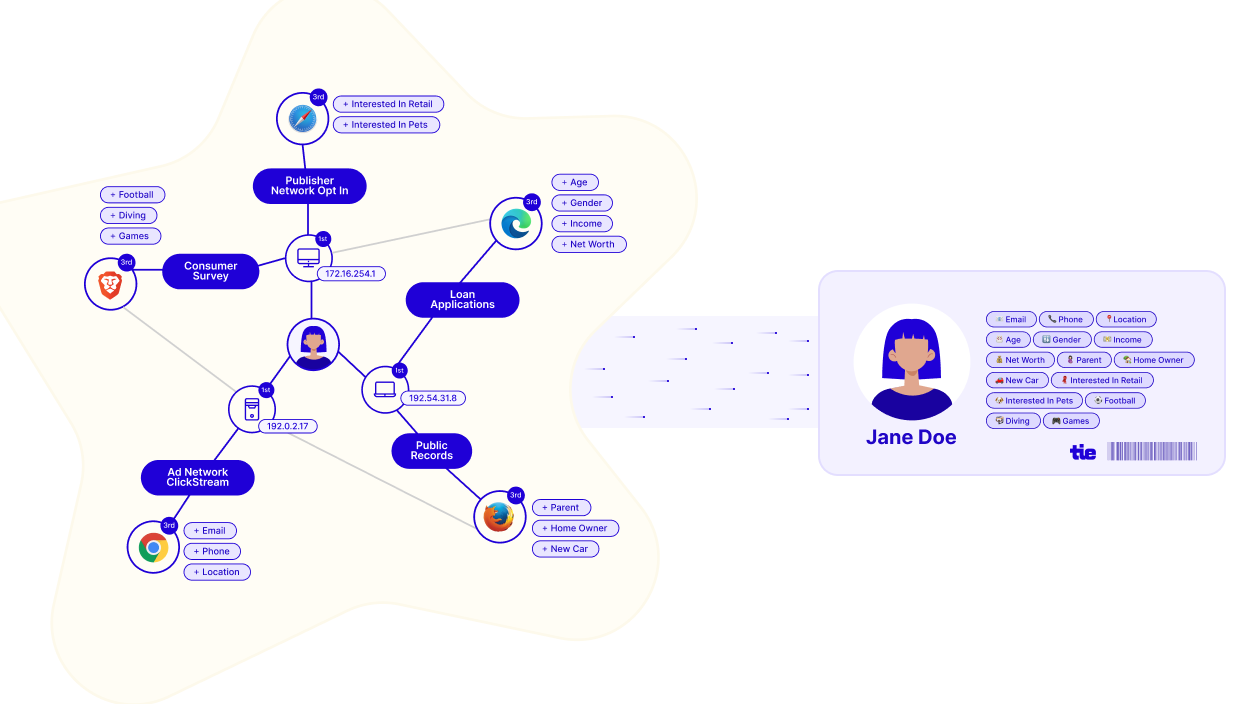
- Stitching guest checkouts and browsing sessions into unified profiles that fuel email, SMS, and ad retargeting.
What cart abandonment software usually does
Shopping cart abandonment software detects when a shopper adds items but leaves without checking out and automatically sends reminders to bring them back. Most ecommerce platforms like Shopify, WooCommerce, and BigCommerce integrate these tools to allow brands to re-engage visitors in real time.
Here’s what a typical setup includes:
- Event detection: Track when someone leaves the shopping cart without completing the checkout page.
- Automated reminders: Send abandoned cart emails or SMS within minutes of drop-off. These often include product images, price details, and a checkout link.
- Basic sequences: Multi-step recovery campaigns (first email after 1 hour, second email after 24 hours, sometimes including a discount follow-up).
- On-site triggers: Exit intent pop-ups or push notifications to stop abandonment before it happens.
- Audience segmentation: Set up recovery campaigns based on cart value, product categories, or previous purchase history.
Modern ecommerce brands go further by layering cart abandonment software with identity resolution, A/B testing, and retargeting campaigns (Facebook/Google) to recover lost sales more effectively.
ECommerce marketing automation platforms like Klaviyo, Omnisend, Cartstack, and ActiveCampaign now combine cart abandonment recovery with broader marketing automation, including browse abandonment, replenishment, and loyalty flows.
What’s the difference between cart abandonment and checkout abandonment?
It’s easy to confuse the two, but the conversion funnel makes the difference clear:
- Cart abandonment happens earlier, usually when an online shopper adds a product to the cart (from a product page or PDP) but exits before starting checkout. Causes often include unexpected shipping costs, distraction, or comparison shopping.
- Checkout abandonment happens later in the funnel, after the shopper has started the checkout process (filling in address or payment details) but drops off before completing payment.
Both mean lost revenue. While the average shopping cart abandonment rate averages 70%, checkout abandonment rates are usually much lower at 22% with a higher impact since those shoppers are seconds away from purchase.
By treating them differently, ecommerce brands can build precise recovery campaigns: cart recovery requires emails with product recommendations for casual browsers, and checkout recovery requires reassurance, payment flexibility, and urgency.
The hidden ceiling: reach, not creativity
Most ecommerce teams assume cart abandonment software underperforms because of weak creative or poor timing. In reality, limitations are often caused by reach:
- Identifiable vs. anonymous carts: Many abandoned carts never enter recovery campaigns simply because no email or phone number was captured. Without a verified identifier, abandoned cart emails, SMS, or cart recovery sequences can’t even start.
- Channel mismatch and cookie decay: Retargeting ads and on-site popups are fallback options for anonymous visitors, but both are limited. Cookies expire, shoppers switch devices, and retargeting audiences shrink over time.
- Deliverability constraints: Even when you do capture contacts, inbox placement isn’t guaranteed. Weak list hygiene, stale segments, or a declining sender reputation can keep recovery emails from ever reaching the inbox.
Identity-led recovery: expand reachable audiences
Cart abandonment software only works on shoppers you can identify. If you don’t capture usable contact details, most carts remain unreachable: no abandoned cart emails, SMS, or retargeting.
Identity-led recovery breaks this ceiling by expanding the pool of shoppers you can re-engage across your ecommerce platform.
Here are a few ways to do it:
Capture email before checkout
Don’t wait for the payment step. Use exit intent pop-ups, discount prompts, or save-cart modals to collect emails earlier in the journey. Even a simple back-in-stock form on a product page can turn an anonymous cart into a recoverable one.
These opt-ins flow straight from your ecommerce platform (Shopify or WooCommerce) into your marketing tool (like Klaviyo or Omnisend) for automated abandoned cart emails and SMS sequences.
Progressive profiling with micro-IDs
Layer low-friction capture points throughout the funnel. Quizzes, wishlists, or “notify me” buttons give you partial identifiers that you can link to a shopper’s behavior.
These micro-IDs feed into your ecommerce store’s CRM and let you send targeted follow-up emails or product recommendations even before full checkout details are shared.
Session-to-profile stitching
Online shoppers switch between devices, and cookies expire fast. Without stitching, a cart created on mobile won’t connect to a later desktop visit.
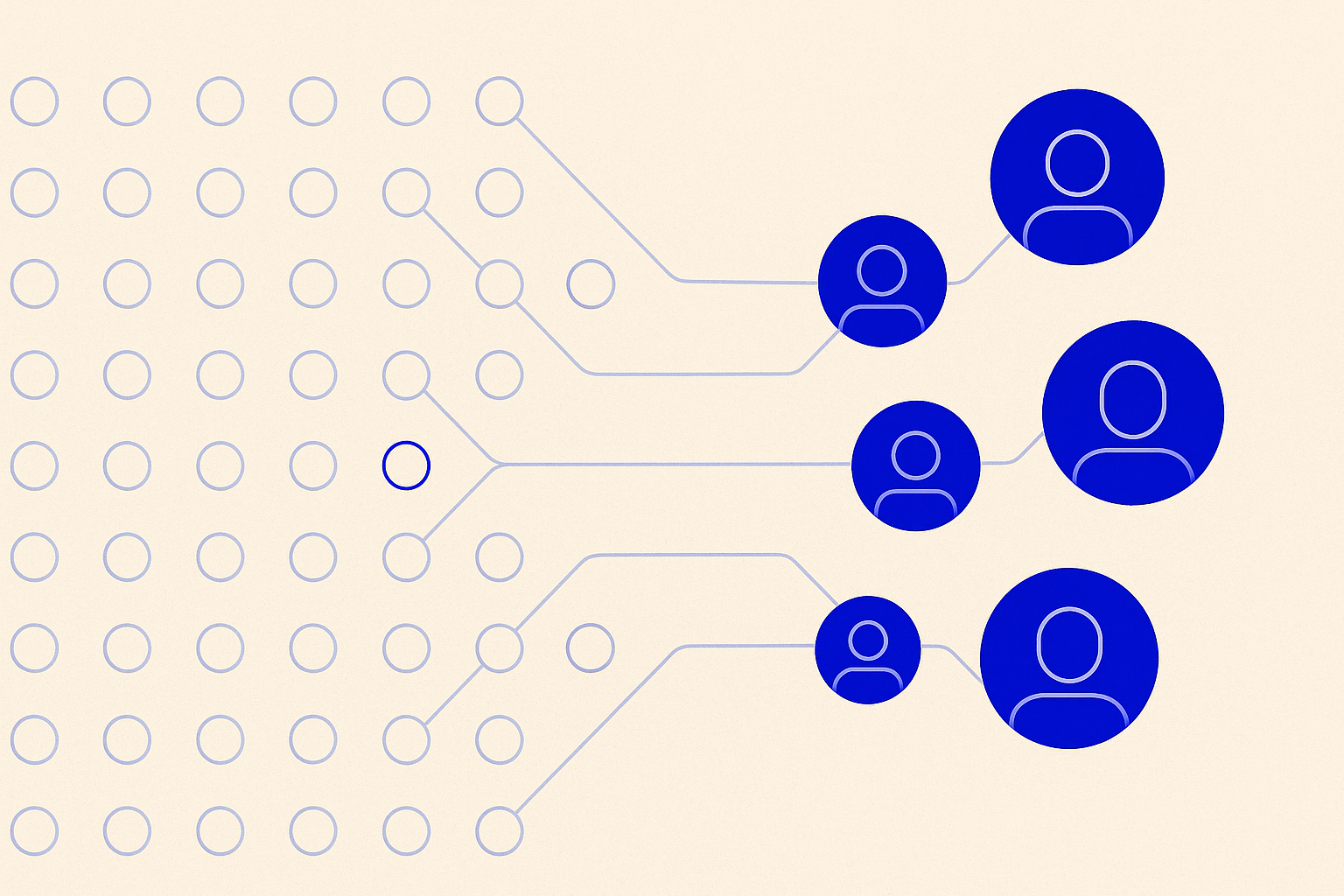
Identity resolution maps these sessions back to one profile, allowing your marketing automation to trigger the right cart recovery emails, push notifications, or retargeting ads in real time.
Third-party data matching
Shopping cart abandonment software usually stops at first-party data. By matching anonymous sessions against opted-in third-party identity graphs, you increase the share of recoverable carts.
This turns lost website visitors into reachable audiences you can re-engage through email marketing, SMS, or paid retargeting campaigns.
Cart enrichment from guest checkout
Guest checkout is a blind spot for many ecommerce businesses. Identity stitching links the email captured at checkout to earlier browsing and carting activity.
Instead of sending a generic order confirmation, you can trigger enriched follow-ups with upsells, recommendations, or win-backs tailored to the full journey.
Why this matters
Identity-led cart abandonment recovery improves more than just conversion rates. It expands your reachable audience. Layering early capture, progressive profiling, session stitching, and enrichment lets you:
- Recover carts from shoppers who never filled out a checkout form.
- Improve ROI by sending cart recovery emails to verified, high-quality contacts.
- Reduce your cart abandonment rate by connecting anonymous sessions to active segments.
- Protect deliverability. Email list growth and quality improve since every contact has already been verified.
- Feed richer customer data into Klaviyo, ActiveCampaign, and other marketing tools for personalized email campaigns and follow-up flows.
This approach doesn’t just automate abandoned cart emails. It recaptures lost revenue that traditional cart abandonment software can’t touch.
Acquisition that includes cart continuity
Acquisition isn’t only about driving new traffic. For ecommerce brands, it’s about keeping a shopper’s journey intact, whether or not they log in.
Cart continuity solves one of the biggest gaps in shopping cart abandonment software, connecting browsing, carting, and checkout activity to the same identity across sessions.
Here’s how you put it into practice:
- Recognize returning shoppers without login: Most online shoppers never create an account. With cart continuity, you still recognize them when they come back, linking their current session to previous cart abandonment or browse abandonment behavior in real time.
- Connect browse history to the cart, then to a contactable ID: Once you resolve an identifier (email, phone, or third-party match), you can enrich that profile with their full shopping cart and product page history. This means your cart recovery emails and SMS flows don’t just say “you left something behind” but highlight specific products the shopper viewed, price drops, or personalized product recommendations.
- Suppress duplicates and respect consent: Identity stitching must be clean. If the same visitor is matched twice (once by cookie and once by email), you suppress duplicates to avoid spamming. Every recovery campaign must respect consent preferences, keeping your sender reputation and conversion rates healthy.
When you combine acquisition with cart continuity, you recover more lost revenue while protecting list quality. Tie’s identity resolution makes this possible by stitching guest checkout details, anonymous browse sessions, and cart data into one contactable profile inside marketing platforms like Klaviyo.
Orchestration: right channel, right time
Once you’ve expanded your recoverable audience, the next challenge is how to reach them. The most effective ecommerce recovery systems don’t treat email, SMS, push notifications, and ads as separate channels. They orchestrate all channels from a single stitched profile, so each reminder complements the last instead of spamming shoppers.
Traditional shopping cart abandonment software focuses on automated emails. Identity-led orchestration goes further:
- Re-engage shoppers across every channel they’ve opted into, from email flows to push notifications.
- Adjust content dynamically based on real-time customer behavior, not static templates.
- Balance recovery campaigns with margin protection, lifting revenue without eroding profitability.
Which channel works best for abandoned carts?
No single channel wins every time. Cart abandonment emails remain the highest-ROI lever, but only works if the shopper provided a verified email. SMS delivers stronger immediacy for time-sensitive offers, but you need explicit consent and discipline to avoid fatigue.
On-site tactics like exit intent pop-ups capture micro-IDs before abandonment, while retargeting ads reach back to anonymous carts but come with rising costs.
The best approach is a sequenced mix where the channel depends on which identifiers you have.
Ideal timing and cadence for reminders
Recovery success depends on timing as much as channel:
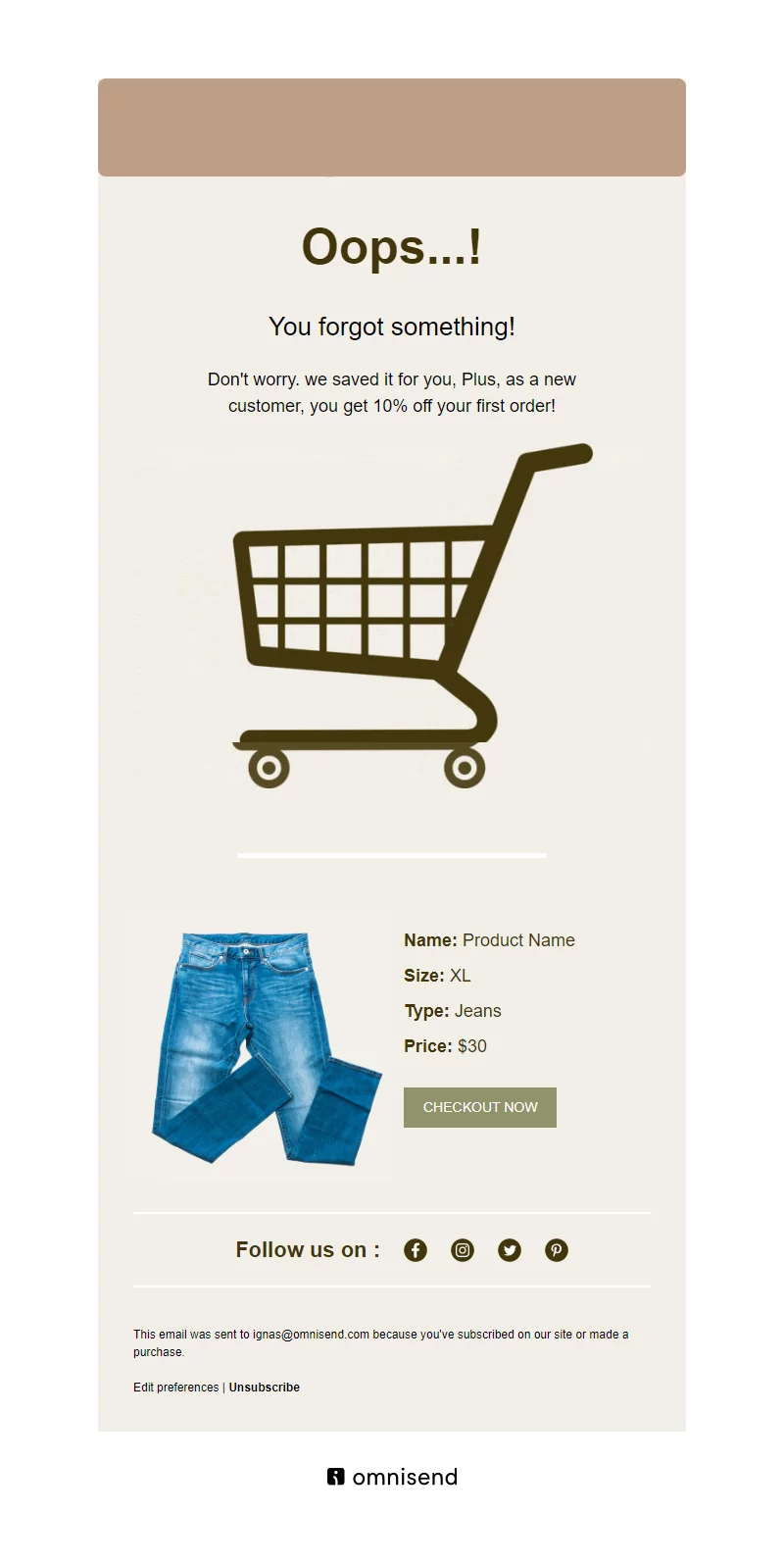
- First 10–30 minutes: Send an automated cart abandonment email with product images and a direct checkout link.
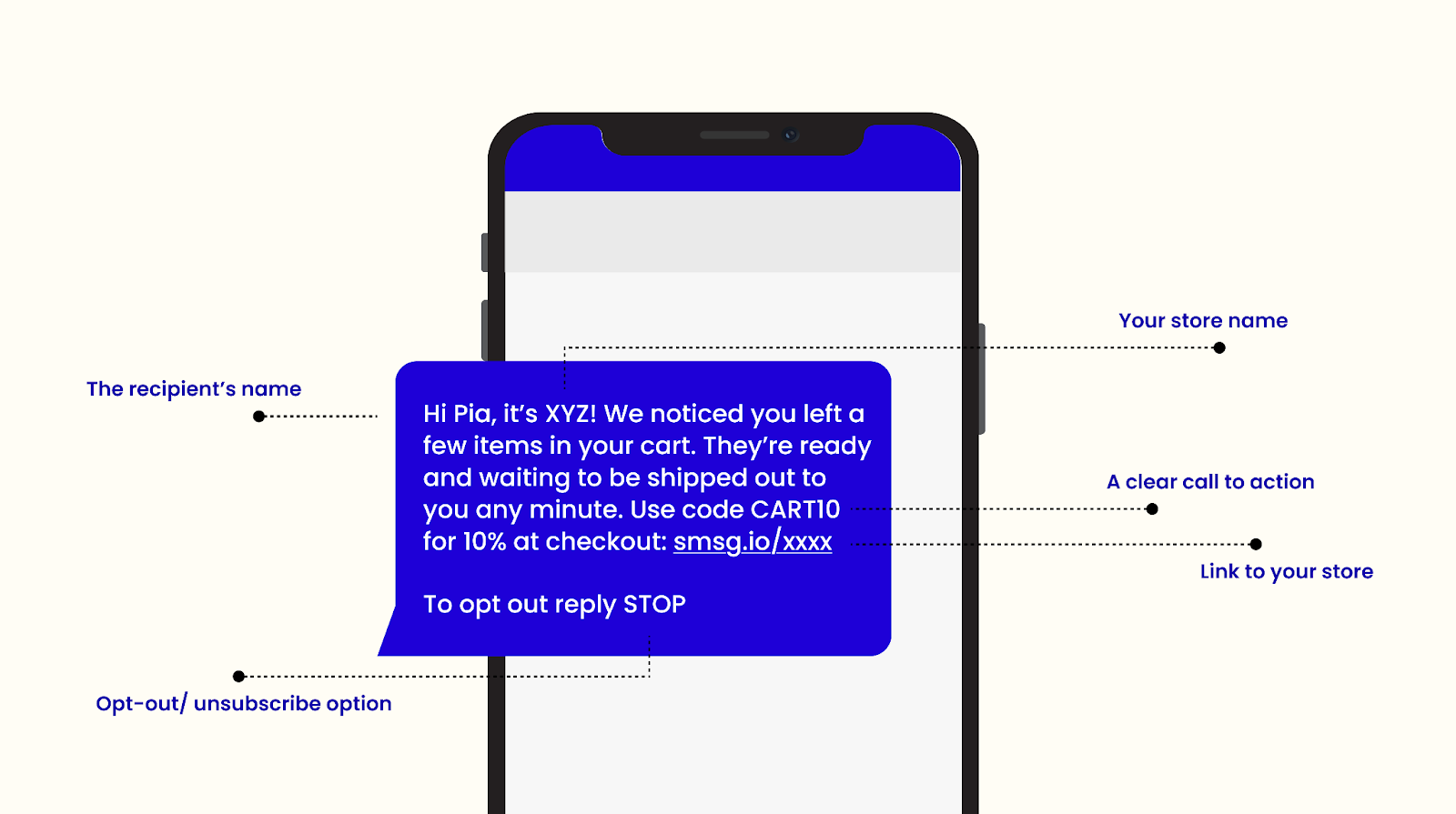
- 2–4 hours later: If unopened, trigger an SMS reminder for opted-in shoppers (short, personalized, and urgent).
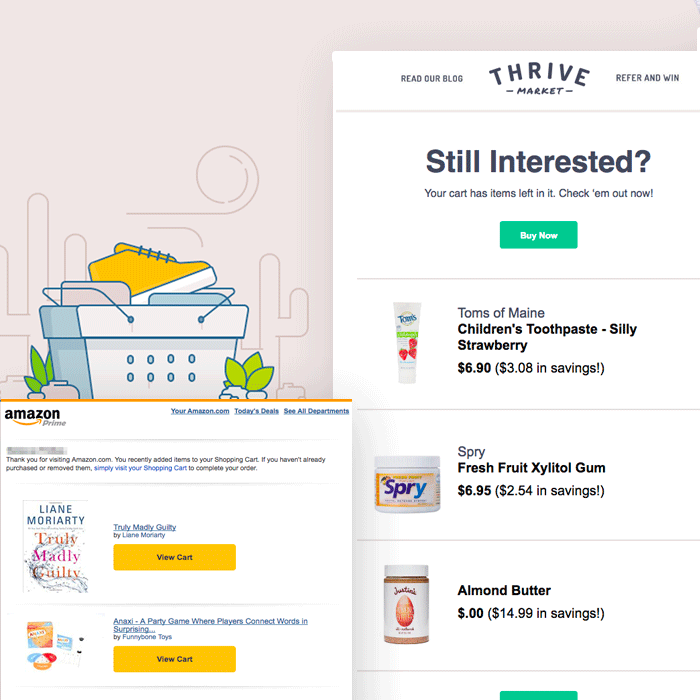
- Next day: Send a second abandoned cart email with context (e.g., shipping info, FAQs, or product recommendations).
- 48 hours later: Retarget the segment with ads on Meta or Google, excluding recovered carts to keep CAC predictable.
Content and incentives that protect margin
Generic “10% off” abandoned cart recovery campaigns kill margin. Instead, context matters:
- Highlight SKU-specific benefits (free returns for apparel, warranty for electronics).
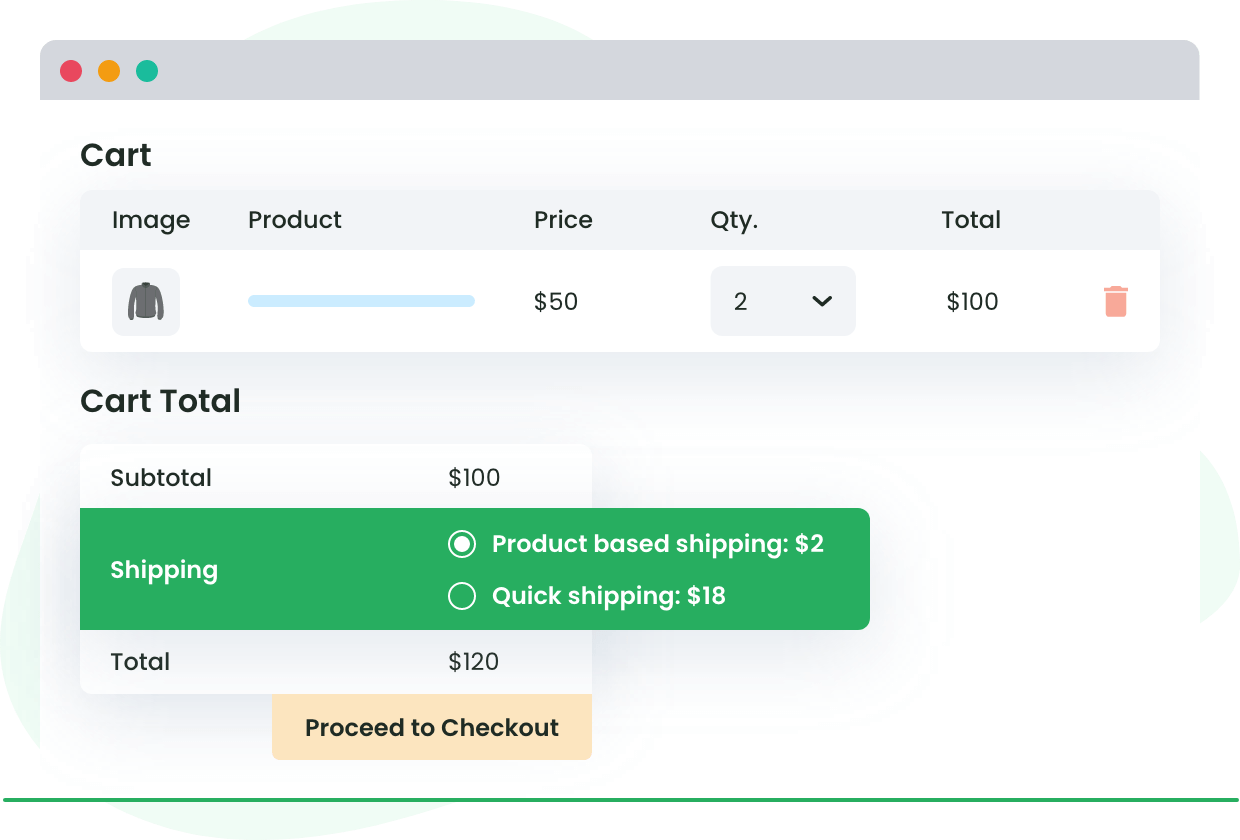
- Use shipping transparency to counter common abandonment reasons like unexpected costs.
- Reserve discounts for high-order value carts or at-risk segments, not as the default.
Measurement that helps prove success
You can’t improve cart abandonment recovery without measuring the right outcomes. Ecommerce brands often track open rates or clicks, but the metrics that actually prove value are reach and revenue. Some common metrics that you should track are:
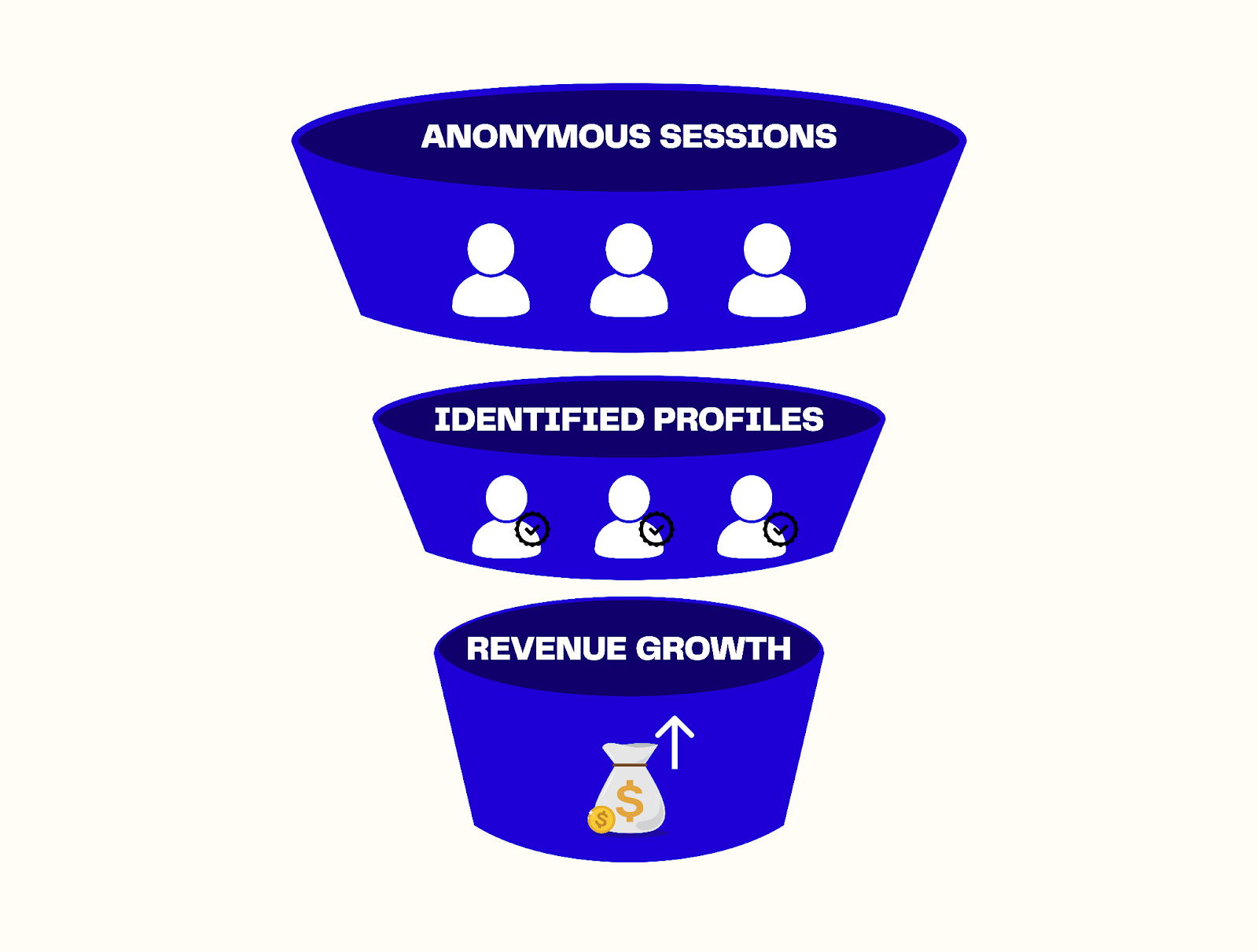
- Reachable abandoners: Instead of only counting abandoned carts, measure how many carts you can remarket to. Identity-led cart abandonment software increases the percentage of abandoners you can reach with abandoned cart emails, SMS, or push notifications. Identity resolution expands this denominator.
- Recovered revenue: Don’t just track conversion rates from cart recovery emails. Instead, connect recovered orders back to specific flows. This shows exactly how much lost revenue was won back through abandoned cart recovery campaigns.
- Deliverability rates: Your recovery rate is only as strong as your inbox placement. Poor list hygiene drags down sender reputation, which means fewer abandoned cart emails land in primary inboxes. Track inboxing rates alongside recovery conversions to keep your ecommerce marketing strategy honest.
- A/B test with-ID vs. without-ID cohorts: Compare cohorts where identity resolution is active (identity stitched and profile enriched) against flows that run without it. You’ll see higher conversion rates and more recovered revenue from the identified segment.
- Checkout abandonment rate vs. cart abandonment rate: Compare both side by side. Cart abandonment rate measures how many visitors drop after adding to the cart. Checkout abandonment rate tracks how many drop off after they start payment. When you expand identification, you increase the share of carts that move from anonymous to reachable, which reduces both rates.
Tie gives you visibility that traditional shopping cart abandonment software doesn’t. You see recovered orders as well as incremental lift from resolving anonymous sessions.
Implementation checklist
Cart abandonment recovery works best when your foundation is clean. Before you launch advanced recovery campaigns, make sure these are in place:
- Event schema and server-side capture:
- Define events: product view, add-to-cart, checkout start, purchase.
- Standardize naming and payloads across your ecommerce platform.
- Use server-side capture so events fire consistently, even when client-side scripts fail.
- ESP/CDP integrations and profile enrichment:
- Connect your ecommerce store (Shopify, WooCommerce, BigCommerce) with your ESP/CDP.
- Sync enriched profiles into your marketing tool (Klaviyo, Omnisend, or ActiveCampaign) for cart abandonment workflows.
- Map browse abandonment, cart events, and checkout data to a single profile.
- Compliance and consent management:
- Add clear opt-in language to all capture points (pop-ups, save-cart prompts, checkout forms).
- Build a preference center so shoppers can choose channels (email, SMS, push notifications).
- Respect unsubscribes globally to protect deliverability and sender reputation.
Buyer’s guide: what to look for when choosing cart abandonment software
Not all shopping cart abandonment software works the same way. Many tools promise higher conversion rates but still leave you capped by reach, deliverability, or cookie-based retargeting.
When you’re evaluating solutions for your ecommerce store, look for features that go beyond basic abandoned cart emails:
Real-time ID stitching and match coverage
Cart abandonment recovery only works if you can identify the shopper. The best cart abandonment software connects sessions, guest checkouts, and browse abandonment into a single profile.
Real-time ID stitching makes sure you capture more usable contacts and connect them back to abandoned carts. The wider the match coverage, the more lost sales you can recover.
For example, brands like G.O.A.T. Foods used Tie to identify 50%+ of previously anonymous visitors, feeding more abandoners into Klaviyo flows and recovering revenue that their previous tool had missed.
Activation endpoints that fit your stack
Recovery campaigns need to run across email marketing, SMS, push notifications, and paid ads. Choose shopping cart abandonment software that integrates directly with your ecommerce platform and your ESP/CDP.
This lets you push enriched profiles into automated abandoned cart workflows, cart recovery emails, and retargeting audiences without manual work.
With Tie’s enrichment solution, email flows directly into segments so that ecommerce brands can trigger abandoned cart recovery emails, push notifications, and SMS campaigns in real time without manual uploads or sync delays.
Built-in deliverability protections
Recoverable contacts are useless if your abandoned cart emails land in spam. Look for tools with deliverability safeguards like real-time email validation, inbox monitoring, and suppression of duplicates.
Twillory, for example, lifted open rates by 39% after using Tie’s deliverability suite, which filtered low-quality prospects and protected inbox placement. Without this layer, abandoned cart workflows risk high spam rates and wasted sends.
For more details on how to make your emails land in the inbox, read our blog on email deliverability best practices.
Avoid cookie-only retargeting
Relying only on cookies limits your recovery potential. Cookies expire, break across devices, and vanish under privacy settings.
Choose software that uses identity resolution to re-engage shoppers through verified email, SMS, or push notifications, not just display ads that follow shoppers around the web.
Recover more carts with the right cart recovery software
Most cart abandonment tools stop at reminders. If you only reach shoppers who left their email, you’re leaving a majority of carts untouched. The brands that get past this limitation look at who they can reach, not just how they follow up.
With Tie, you go beyond abandoned cart emails:
- Capture identifiers earlier via save-cart prompts, exit intent pop-ups, or progressive checkout.
- Stitch sessions and guest checkouts into one profile, so you don’t lose carts across devices.
- Activate across every channel by syncing enriched profiles directly into marketing, CRM, and ad platforms for cart recovery emails, SMS, push, and retargeting.
- Protect deliverability so that recovery flows land in inboxes, not the spam folder.
Want a quick audit? Start by mapping your current ID capture points and measuring what share of abandoned carts you can actually reach. Most ecommerce brands discover the gap is larger than expected.
Want to know more?
- See how G.O.A.T. Foods turned anonymous carts into revenue with Tie
- Learn how identity resolution powers abandoned cart recovery
If you’re ready to build identity into your own cart recovery flows, book a demo with Tie.
Cart abandonment FAQs
Why do most programs fail to reach anonymous carts?
Traditional shopping cart abandonment software relies on identifiers like email or phone numbers captured at checkout.
If the shopper never opts in, the program has no way to send abandoned cart emails or SMS follow-ups. That’s why anonymous carts often go unrecovered unless you add identity resolution or on-site capture strategies.
How does identity capture increase recovered revenue?
When you collect identifiers earlier (through save-cart prompts, exit intent pop-ups, or progressive profiling), you expand the denominator of reachable abandoners. More reach means more opportunities to send cart recovery emails, retargeting ads, or SMS flows.
The lift doesn’t come from sending more reminders. It comes from sending reminders to more verified profiles.
How do deliverability and list hygiene impact recovery rates?
If your abandoned cart emails land in spam, recovery stops there. List hygiene, suppressing inactive users, validating emails in real time, and protecting sender reputation, directly impacts inbox placement.
Strong deliverability ensures that recovery flows reach online shoppers instead of being filtered out, which drives higher conversion rates and prevents wasted sends.
How do I measure incremental revenue from identity-led recovery?
You can measure incremental revenue from identity-led recovery by running an A/B test: one cohort with standard abandoned cart workflows, and another with ID resolution enabled.
By comparing recovered revenue between the two, you see the incremental lift directly tied to identity capture and stitching. This is more accurate than tracking open rates or clicks, which don’t prove actual revenue recovery.




Identity, intent and inbox placement for ecommerce brands, inside the tools you already run.
Klaviyo Preferred Tech Partner