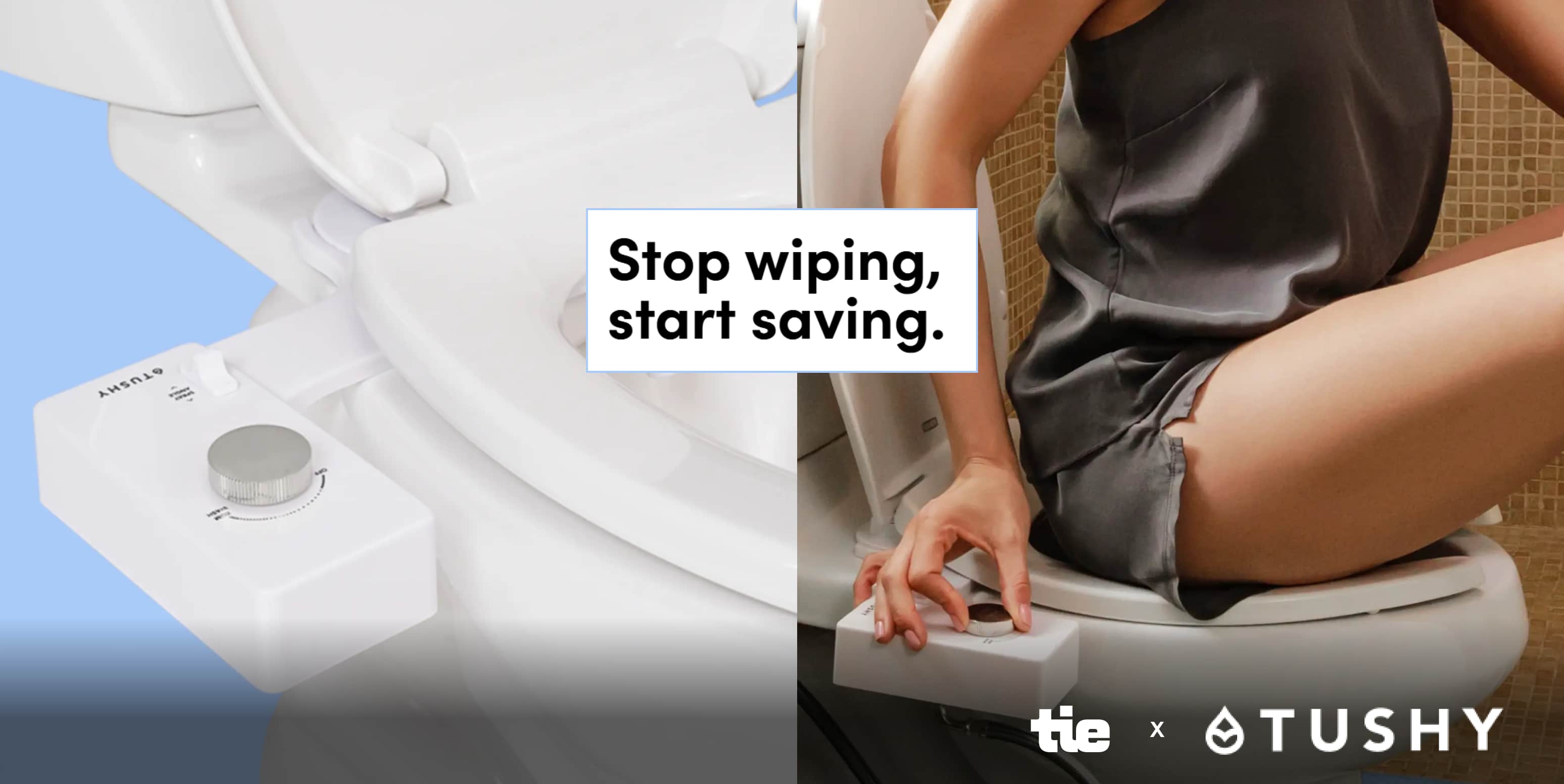
Scaling retention revenue sounds simple, grow your list, send more campaigns, and retarget harder. However, executing this isn't all that simple.
As your list grows, manual work increases. Attribution becomes harder to trust. You send more emails, but you won’t always see proportional returns. What’s more, if your identity resolution tool needs constant oversight, it quietly drains time from your team.
TUSHY was feeling that pressure.
Email and SMS were already meaningful revenue channels. But the team needed to grow owned audiences, make remarketing more efficient, and trust their attribution, without adding operational drag.
After switching to Tie, TUSHY was able to:
- Generate $110K+ in incremental revenue
- Achieve 6x ROI on identity-based remarketing spend
- Grow their email list by 20%+ without increasing send volume
- Improve remarketing ROAS from 2x to 4x
Instead of sending more, they sent smarter. Instead of inflating metrics, they focused on real incrementality.
“Tie runs quietly in the background and delivers clear ROI. That’s what we needed, something scalable, trustworthy, and easy to manage.”
Jake Martin, Director of Retention & CRM, TUSHY
About the brand
TUSHY is a modern bathroom brand best known for bringing bidets into the mainstream North American market. What started as a bidet attachment has grown into a broader product line that includes bidet seats, smart toilets, bathroom essentials, and wellness-focused products.

Challenge: Scaling identity-based remarketing without losing control
TUSHY wasn’t trying to fix email or SMS. Those channels were already driving revenue.
The real issue was how to scale identity-based remarketing without increasing manual work, bloating the list, or relying on numbers the team didn’t fully trust. Two problems stood out:
1. Scaling list growth without adding operational drag
Before switching, TUSHY was using another identity resolution provider to capture anonymous visitors and grow owned audiences. It worked, but it required constant oversight. As volume increased, so did the hands-on management.
“I didn’t want another tool that required constant hands-on work. I wanted something that scaled without adding operational drag.”
For a retention team already managing flows, campaigns, segmentation, and performance tracking, adding more manual work wasn’t sustainable.
At the same time, the team didn’t want to increase send volume just to grow revenue. More emails don’t automatically mean more efficiency. If anything, it can hurt deliverability and inflate costs.
They needed audience growth without constant management, stronger segmentation logic, and higher efficiency per send
2. Attribution that felt inflated
The second issue was trust. Their previous identity resolution solution showed strong performance within its dashboard, but the attribution window felt inflated, making it hard to trust.
“I wanted attribution that felt reasonable and transparent, not numbers I had to second-guess.”
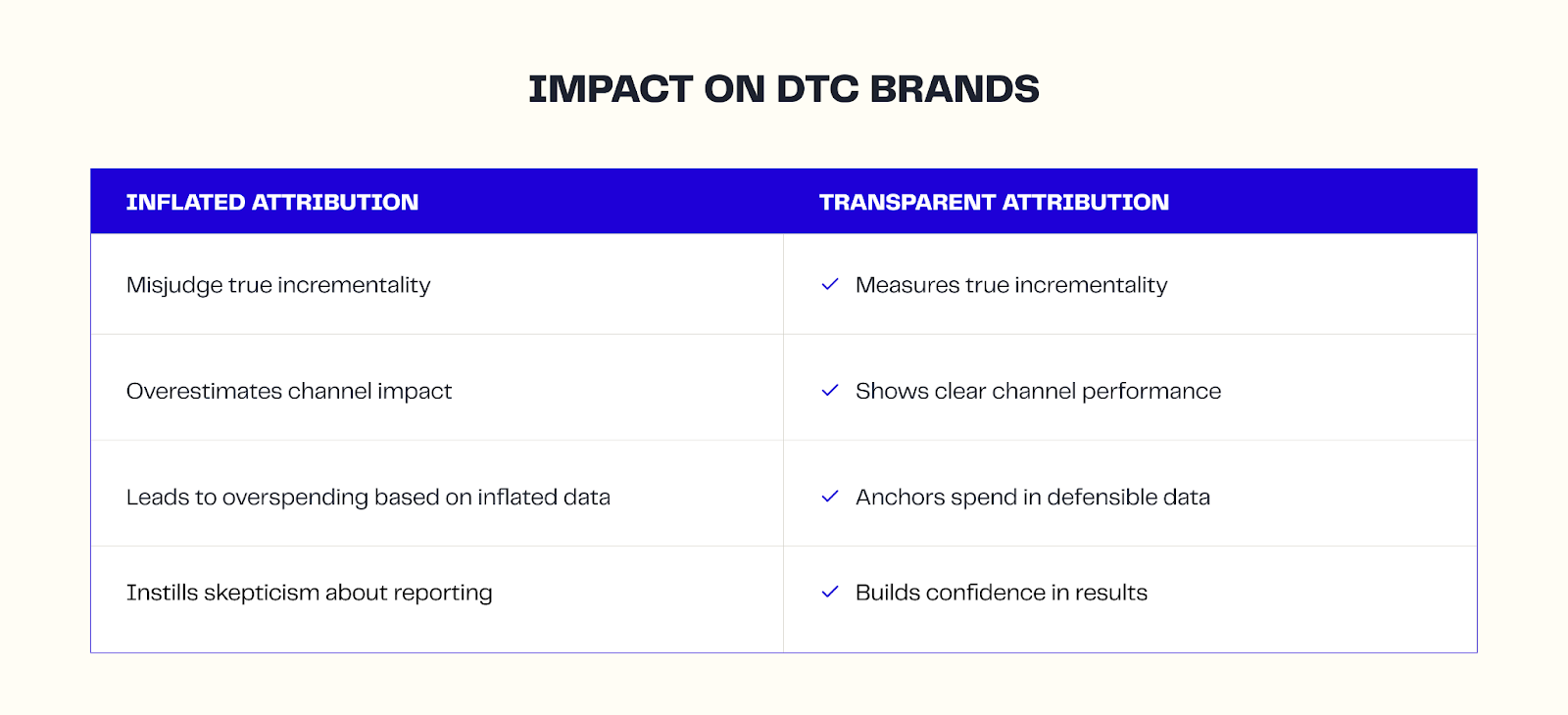
For a performance-focused DTC brand, inflated attribution creates real problems:
- You misjudge true incrementality.
- You overestimate channel impact.
- You scale spend on assumptions, not clean data.
TUSHY needed clearer reporting. If identity-based remarketing was driving revenue, the lift had to be defensible.
They weren’t looking for more complexity. They were looking for a system that ran quietly in the background, improved audience quality, and delivered measurable, incremental revenue without constant tuning.
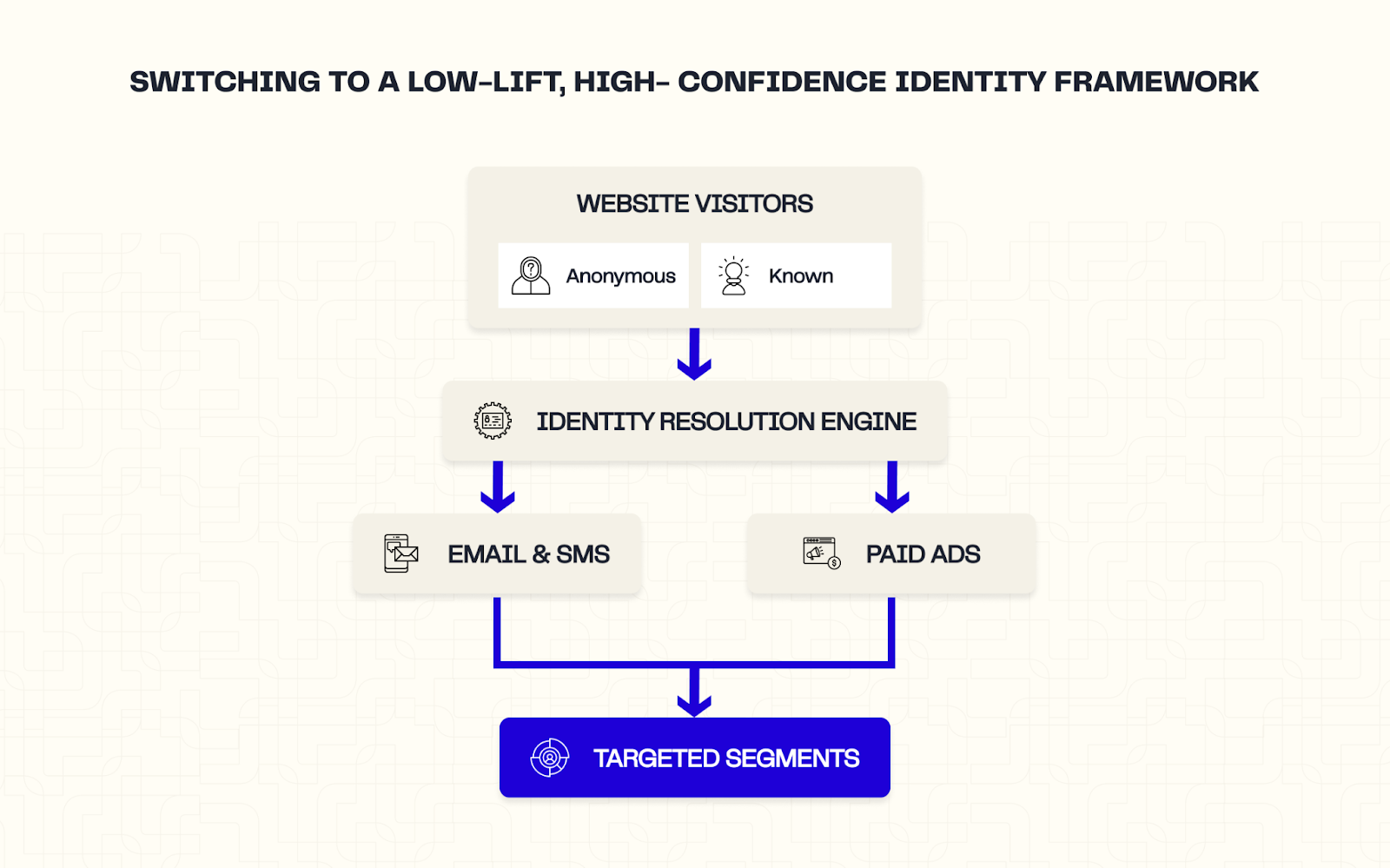
Solution: Switching to a low-lift, high-confidence identity framework
TUSHY didn’t redesign its retention strategy. It replaced the infrastructure underneath it. After evaluating performance and attribution concerns, the team migrated to Tie in spring 2025, with a clear goal, improve efficiency without increasing operational load.
Here’s how they did it.
1. Migrate without disrupting revenue
Switching identity providers can create risk. If flows break or audiences reset, revenue dips. TUSHY avoided that.
Tie replicated existing configurations and handled setup quickly. The system went live in days, and revenue stayed stable during the transition.
“The setup was basically hands-off. There was no dip in revenue. We started seeing results right away.”
Instead of rebuilding flows, the team kept their existing lifecycle engine and simply improved the identity layer feeding into it.
2. Refine segmentation inside Klaviyo
Once live, Tie began identifying high-intent visitors and pushing enriched audiences into TUSHY’s existing email and SMS workflows.
The biggest operational shift wasn’t sending more. It was sending smarter.
TUSHY started using engaged vs unengaged audience logic directly within Klaviyo:
- Prioritize shoppers with recent behavioral signals
- Reduce sends to low-engagement contacts
- Focus remarketing efforts on users most likely to convert
“We’re sending to fewer people now, but they’re more engaged, and that’s exactly what we wanted.”
This helped the team increase revenue efficiency while keeping deliverability strong and list costs under control. Instead of growing volume, they improved quality.
3. Sync identity-based audiences to paid media
Tie didn’t just feed owned channels. It also synced identified audiences to Meta and Google. That allowed TUSHY to:
- Exclude known customers from prospecting
- Tighten remarketing pools
- Improve return on ad spend without increasing budget
Even though paid reporting was handled by a separate team, identity-based audiences became part of the broader performance strategy. The result was better alignment between owned and paid.
4. Operate with transparent attribution
With their previous provider, the numbers always felt slightly inflated. The attribution window was wide, and the impact appeared larger than it was. That makes planning harder. You hesitate before scaling because you’re not sure what’s truly incremental.
Tie changed that. The attribution model felt grounded. The team aligned early on what “reasonable” should look like, and reporting reflected that.
“I trust the attribution because it’s transparent, and because we aligned on what ‘reasonable’ actually looks like.”
That clarity allowed TUSHY to scale identity-based remarketing with confidence, knowing the lift was measurable and defensible.
Results: $110K+ in incremental revenue and 6x ROI
Once Tie was fully live, the impact showed up quickly in revenue efficiency.
Over the evaluation period, TUSHY generated nearly $110K in incremental revenue on just over $17K in spend, resulting in 6x ROI.
That lift didn’t come from sending more emails or increasing SMS volume. It came from improving who they were targeting and how cleanly audiences were structured.
Here’s what changed:
- 20%+ growth in email list size without increasing send volume.
- ROAS improved from 2x to 4x after switching identity providers.
- Higher engagement across owned channels by focusing on intent-based segments.
“Tie runs quietly in the background and delivers clear ROI. That’s what we needed, something scalable, trustworthy, and easy to manage.”
TUSHY grew owned audiences, improved remarketing efficiency, and strengthened attribution confidence, all without adding operational complexity.

Ready to scale retention revenue without adding operational drag?
Most ecommerce brands are investing heavily in traffic and lifecycle marketing, but still struggle to scale email and SMS efficiently. Lists grow. Segments expand. Spend increases. But, it’s difficult to separate true incremental lift from inflated reporting.
Without a reliable identity layer, you can’t confidently distinguish high-intent visitors from passive traffic, tighten remarketing audiences across email, SMS, and paid, or attribute revenue in a way that’s defensible
Leading brands like TUSHY solve this by strengthening the identity infrastructure behind their retention engine. If you want to scale email and SMS with cleaner segmentation, stronger remarketing efficiency, and attribution you can stand behind, Tie helps you:
- Identify high-intent visitors already on your site
- Sync enriched audiences directly into your lifecycle and paid workflows
- Measure incremental revenue with transparency
Book a demo to see how Tie helps you turn retention traffic into measurable revenue.