
Identity Match Rate: Definition, Benchmarks, and How to Improve It


Most of your website traffic leaves without a trace. Visitors browse products, compare options, and show clear intent, but you never capture who they are. They don’t fill out a form, they don’t log in, and they don’t come back in a way you can track. That means a large share of your highest-intent traffic never enters your CRM, email flows, or retargeting audiences.
Identity match rate tells you how much of that traffic you can actually recognize and use. The higher your match rate, the more of your traffic you can convert into campaigns, flows, and revenue.
In this guide, you’ll learn what identity match rate means, what strong benchmarks look like, and how to improve it so more of your traffic becomes usable.
What is the identity match rate?
Identity verification match rate is the percentage of your website sessions or records that can be linked to a known person. It tells you how much of your traffic you can actually recognize and use within your marketing systems.
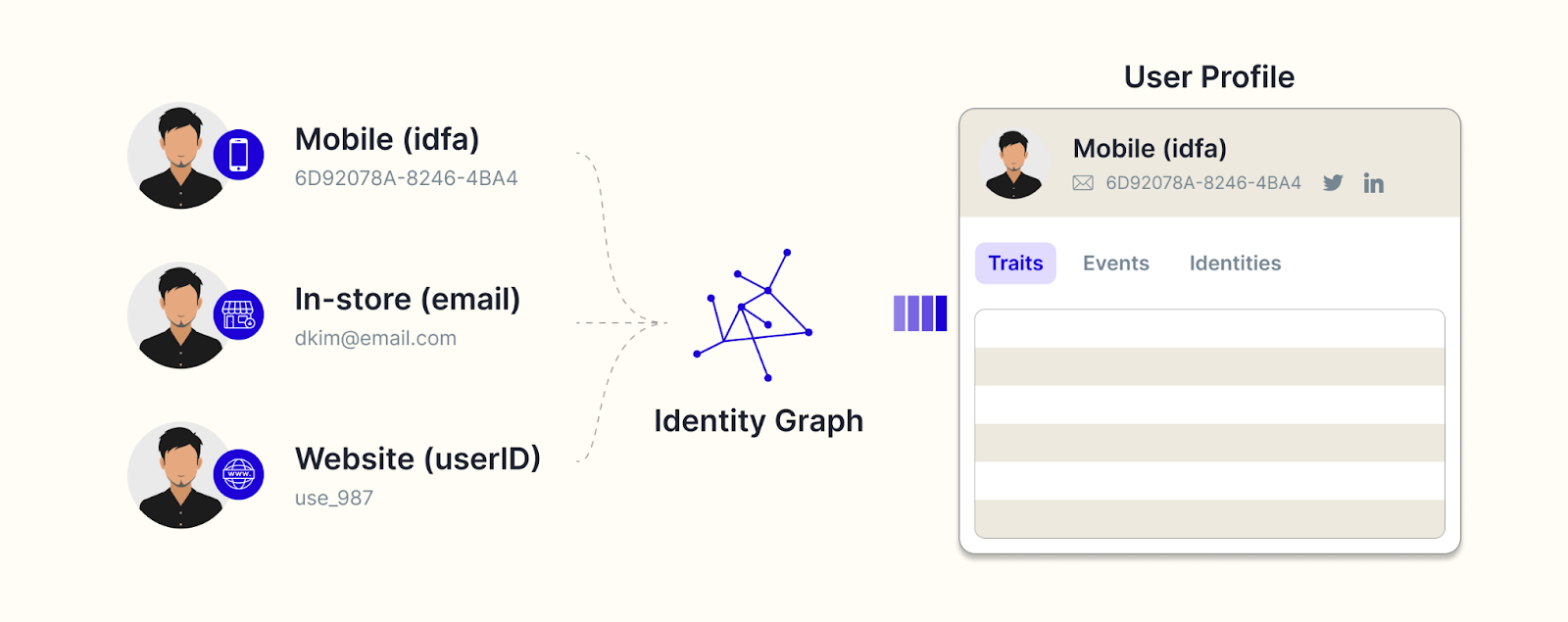
A “match” happens when your system connects one or more identifiers to a single user profile. These identifiers can include email, phone number, device ID, IP, or behavioral signals.
A match qualifies when your system confirms that these signals belong to the same person with enough confidence to act on it, such as sending an email, adding them to an audience, or triggering a flow.
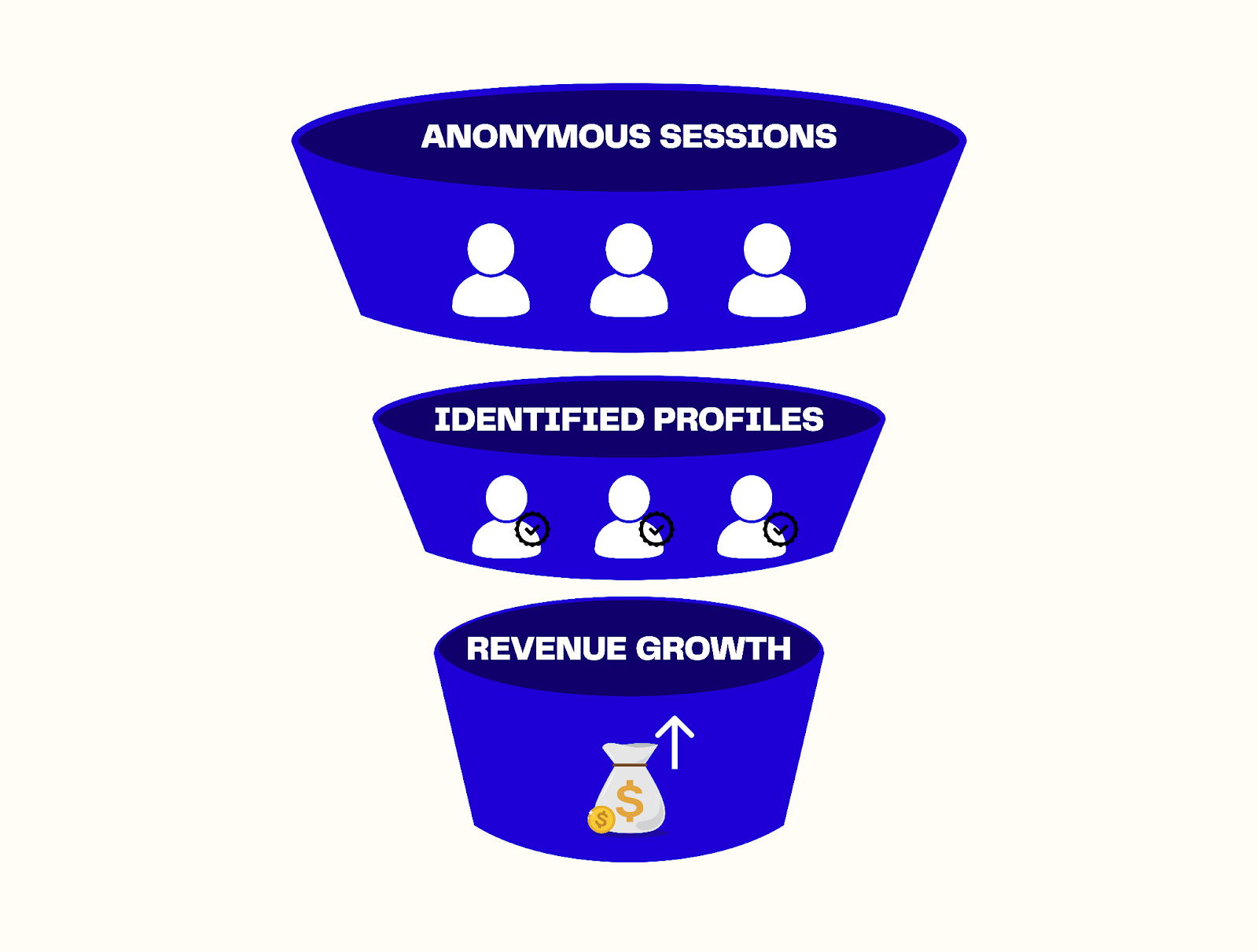
How the identity match rate is calculated
You can calculate the identity verification match rates by dividing the number of identified users by the total number of unique users or sessions processed within a given period.
Identity match rate = Number of identified users ÷ Total users or sessions
Here’s a simple example:
- You process 10,000 website sessions
- You identify 6,000 of those visitors
Identity match rate = 6.000 ÷ 10,000 = 60%
This means you can recognize and act on 60% of your traffic, while the remaining 40% stays anonymous.
Different platforms define a “match” in different ways. Some count only exact matches using deterministic identifiers like email. Others include probabilistic matches based on behavior, device, and network signals.
This directly impacts reported match rates, which is why you should always evaluate how a platform defines and verifies a match before comparing numbers.
What is a good identity verification match rate?
A good identity match rate depends on where your traffic comes from and how your shoppers behave. For most ecommerce brands, a strong person-level identity match rate typically falls between 5–20% for identifiable users with usable contact information, while anything significantly below that usually points to weak data coverage or limited identity resolution capabilities.
Identity resolution solutions usually identify only a portion of ecommerce traffic, leaving a meaningful share of visitors unidentified and unavailable for targeting, personalization, or lifecycle marketing.
Tie pushes beyond this by combining cross-device identity graphs, real-time resolution, and enriched data sources. In practice, this lets you identify 90%+ of existing shoppers, plus a significant portion of traffic new to your business.
This directly changes how much of your traffic you can act on. A higher identification rate expands your cookieless retargeting pool, improves segmentation, and increases the number of shoppers who can enter email, SMS, and paid campaigns without relying solely on form fills or logged-in sessions.
What impacts identity match rate (and why most tools fall short)
Your identity match rate depends on how effectively your system turns scattered customer signals into usable profiles.
Three factors control this outcome: data quality, the strength of the identity graph, and how matching logic is applied across sessions and devices. When any one of these breaks, your match rate drops and a larger share of your traffic stays anonymous.
Most tools struggle because they operate with limited data, shallow graphs, or rigid matching logic. That combination reduces how many shoppers they can confidently identify, especially across devices and sessions.
The core drivers of match rate
Several factors determine how many shoppers your system can actually identify. When these inputs are strong, more sessions connect into usable customer profiles.
- Data quality and completeness: Clean, consistent identifiers improve match rates. Accurate emails, verified phone numbers, and stable session data make it easier to connect multiple visits to the same user.
- Identity graph depth and coverage: The more signals your system can connect across channels, the more shoppers you can recognize. A deeper graph lets you link a shopper’s activity across devices instead of treating each session as a new visitor.
- Matching methodology: Strong systems combine deterministic matching (exact identifiers like email or phone number) with probabilistic and model-based approaches that use behavioral and device signals. This helps identify more shoppers, even when they have not submitted a form or logged in.
Where most tools break down
Many identity resolution systems struggle for predictable reasons:
- Limited data sources: Many systems only use on-site or first-party data, which restricts how many shoppers they can identify, especially if visitors don’t log in or submit a form.
- Weak cross-device visibility: When the graph lacks cross-device and cross-channel signals, the same shopper appears as multiple profiles, lowering your match rate.
- Overly rigid matching logic: Static rules fail to connect shoppers when identifiers vary slightly across sessions, leaving a large portion of traffic unresolved.
- Overly conservative thresholds: Some vendors intentionally limit matching to avoid false positives. While this reduces incorrect matches, it also narrows how many shoppers can actually be identified and activated.
When these inputs improve, match rates tend to improve alongside them. More shoppers are recognized, more sessions connect into a single profile, and more of your traffic becomes usable across email, SMS, retargeting, and lifecycle marketing.
How to improve your identity match rate
If your match rate feels stuck, the issue usually comes down to how your data is collected and connected. You don’t need a complete overhaul. A few focused changes in how you handle identifiers and identity resolution can quickly increase how many visitors you can recognize and activate.
Here’s where to focus:
Enhance data quality
Start with the basics: clean and reliable customer data. Audit your systems and fix duplicate profiles, inconsistent formatting, and missing fields. Validate emails and phone numbers at the point of capture so bad data doesn’t enter your system in the first place.
When your data is clean, your identity matches become more reliable. Your system can connect records across datasets without confusion, which increases your match rate and keeps your profiles usable across customer onboarding, segmentation, and campaigns.
Use multiple identifiers
Don’t rely on a single identifier like email. Capture multiple signals such as phone number, device data, and behavioral activity across sessions. You can collect these through signups, checkout flows, and on-site interactions.
When one identifier drops off, another can still connect the shopper. This improves your ability to recognize visitors across devices and return visits, which increases your match rate and gives you a larger audience to retarget and engage.
Use deterministic and probabilistic methods
Rely on a combination of deterministic and probabilistic matching. Deterministic methods connect users through exact identifiers like email or login data. Probabilistic methods use patterns like device, location, and behavior to identify users when exact matches aren’t available.
Using both expands your coverage. Deterministic matching keeps your data accurate, while probabilistic and machine learning models help you identify users who would otherwise remain a “no match.” This balance increases your match rate while keeping your identity data reliable for real-world use cases.
How Tie maximizes identity match rate
Tie focuses on turning more of your anonymous traffic into usable customer profiles and pushing them into your marketing workflows while intent is still high.
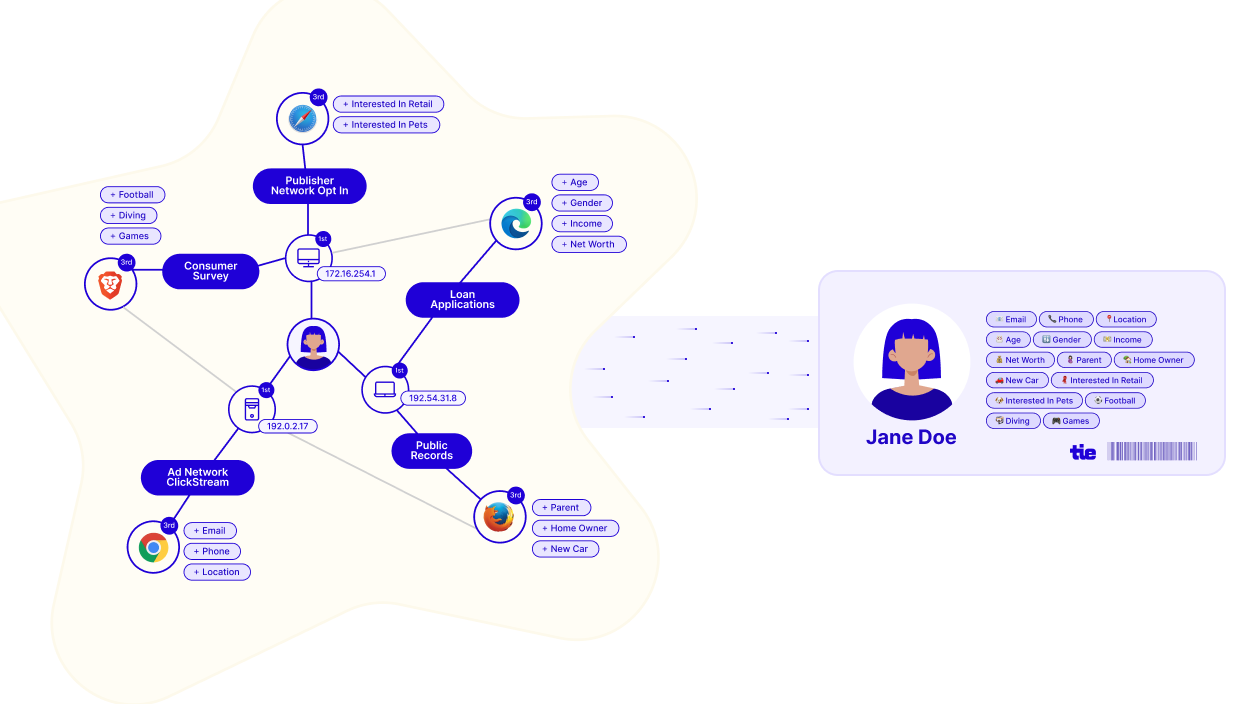
It connects identifiers across sessions and devices using a large, consented identity graph. Once a visitor is resolved, their profile updates in real time and flows directly into your CRM, email platform, and ad channels. This keeps your customer targeting, segmentation, and attribution aligned with real user behavior.
What Tie does differently
Here are the key ways Tie improves match rate and makes it usable:
- Identifies visitors in real time, during the session: When a visitor shows intent, Tie resolves their identity immediately so you can trigger flows and cookieless retargeting strategies without delay.
- Connects activity across devices into a single profile: A shopper moving from mobile to desktop stays one user in your system, which increases match coverage and keeps journeys consistent.
- Expands coverage using a deep, consented identity graph: Tie connects multiple signals like email, phone, device, and behavior to identify more users with confidence.
- Enriches profiles with usable data: Get verified attributes like contact details and intent signals, so you can segment and act without extra steps.
- Pushes identities straight into your marketing tools: Profiles sync into platforms like Klaviyo, Meta, and Google Ads in real time, so data turns into action instantly.
- Gives you control over activation: Decide which identities enter flows based on quality and intent, keeping your campaigns clean and effective.
For example, Fair Harbor used Tie to identify 60%+ of devices and generate $38K+ in incremental revenue from visitors their existing stack couldn’t capture. Tie filled the identity gaps left by the previous CRM, allowing the brand to trigger additional browse and cart abandonment flows for users who previously disappeared after a session.
This also improved paid performance. Once Fair Harbor started using Tie-built audiences for Meta retargeting, their agency saw lower cost per acquisition (CPA) alongside stronger audience coverage.
Turning anonymous traffic into identifiable revenue
Your match rate shows how much of your traffic you can actually use. When it goes up, more visitors move from anonymous sessions into identifiable profiles you can target, retarget, and convert.
That change shows up quickly. More shoppers enter your email and SMS workflows, your retargeting audiences get larger, and your attribution starts reflecting real people instead of disconnected sessions. You don’t need more traffic to grow. You just need to recognize more of the traffic you already have.
Start by checking your current match rate and where shoppers drop into a “no match.” Look at how your identifiers are captured, how your data sources connect, and how quickly identities move into your campaigns.
If you want to see what this looks like with your own data, book a demo with Tie. You’ll see how many visitors you can identify, where you’re losing them today, and how that gap translates into revenue.
Identity match rate FAQs
Is a higher identity match rate always better?
A high match rate increases how much of your traffic you can act on, but it needs to come with reliable data. If your system starts forcing matches without enough confidence, you end up attaching the wrong identity to shoppers. That leads to poor targeting, wrong attribution, and wasted spend.
Aim for a match rate that grows alongside data quality. The goal is to identify more shoppers and keep those identities accurate enough to use in campaigns.
How does identity match rate impact revenue?
Your match rate directly controls how much of your traffic you can convert. When more visitors are identified,
- You can retarget them through ads instead of losing them after one session
- You can trigger email and SMS flows without waiting for form fills
- You can personalize messaging based on behavior instead of guessing.
For example, if your match rate increases from 50% to 75%, you now have 25% more visitors entering your marketing system. That creates more opportunities to recover carts, re-engage users, and drive repeat purchases.
Which identity matching solution has the best accuracy rates?
Accuracy depends on how a platform handles data, identity graphs, and matching logic. You should look at how the system:
- Combines deterministic and probabilistic matching
- Verifies and filters data before resolving identities
- Maintains consistency across devices and sessions
Platforms like Tie combine real-time identity resolution with a deep identity graph and enriched data sources. This lets you identify a larger share of your traffic while keeping profiles usable for targeting and attribution.
How can you improve your identity match rate?
You can improve your match rate by increasing the number of usable signals your system can connect. This includes:
- Capturing identifiers earlier in the session
- Connecting data across devices and channels
- Cleaning and standardizing your existing customer data
- Using a system that resolves identities in real time
When these pieces come together, more of your traffic becomes identifiable, and more users can move into your marketing flows without friction.
What’s the difference between identity match rate and data enrichment?
Identity match rate measures how many shoppers you can recognize. Data enrichment focuses on what you know about those shoppers after you identify them.
For example, if 1,000 visitors land on your site and you identify 600 of them, your match rate is 60%. If you add attributes like location, interests, or purchase intent to those 600 users, that’s enrichment.
Match rate expands your reachable audience. Enrichment improves how precisely you can target that audience.


