Key takeaways
- Post-BFCM customer segmentation works best when you combine loyalty data like points balance and VIP tier with shopper recognition and intent data in Klaviyo.
- Smile syncs points balance, VIP tier, member status and referral URL to Klaviyo profiles, plus loyalty events like Points Expiring and VIP Tier Achieved.
- Klaviyo natively recognizes ~9% of all site traffic, or roughly 22% to 36% of returning shoppers. Tie recognizes up to 90%, so more loyalty members can trigger flows when they come back.
- Five segments to build now: unredeemed points, close to a first reward, new BFCM VIPs, buyers who haven't joined, and expiring points with low engagement.
- Members with points to spend and high purchase intent often don't need a discount. Test every new segment against a Klaviyo holdout group.
BFCM just added thousands of first-time buyers to your list. Many joined your loyalty program with points on their first order, and some are already a few hundred points from a reward.
Your loyalty program knows how many points each of these customers has and how close they are to a reward. Klaviyo can use that, but its behavior-triggered flows only fire for shoppers it recognizes when they return..
Klaviyo natively recognizes 22% to 36% of returning shoppers. Tie recognizes 90% to 100%. Without that recognition, a loyalty member can come back to check their points and leave without triggering a single flow.
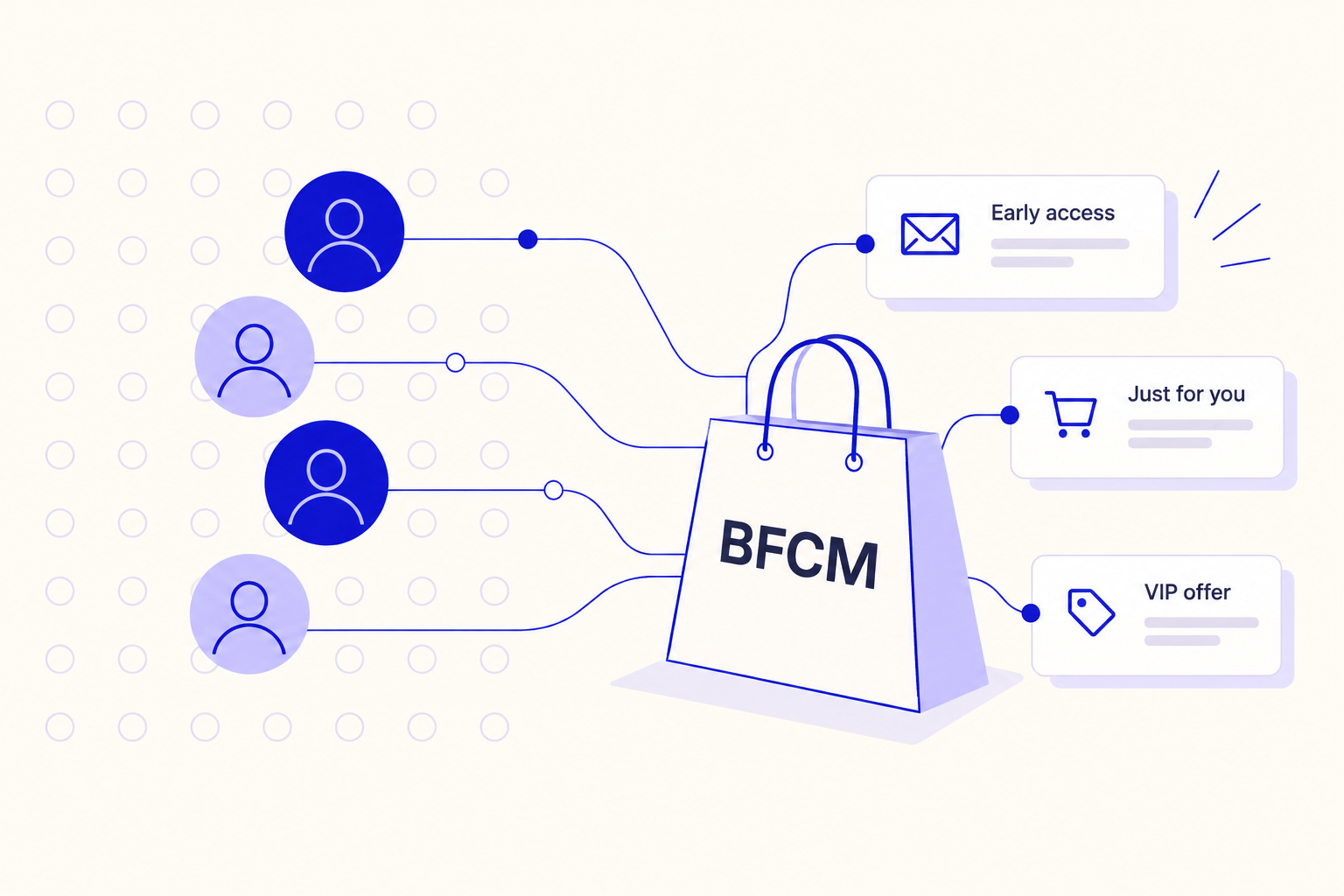
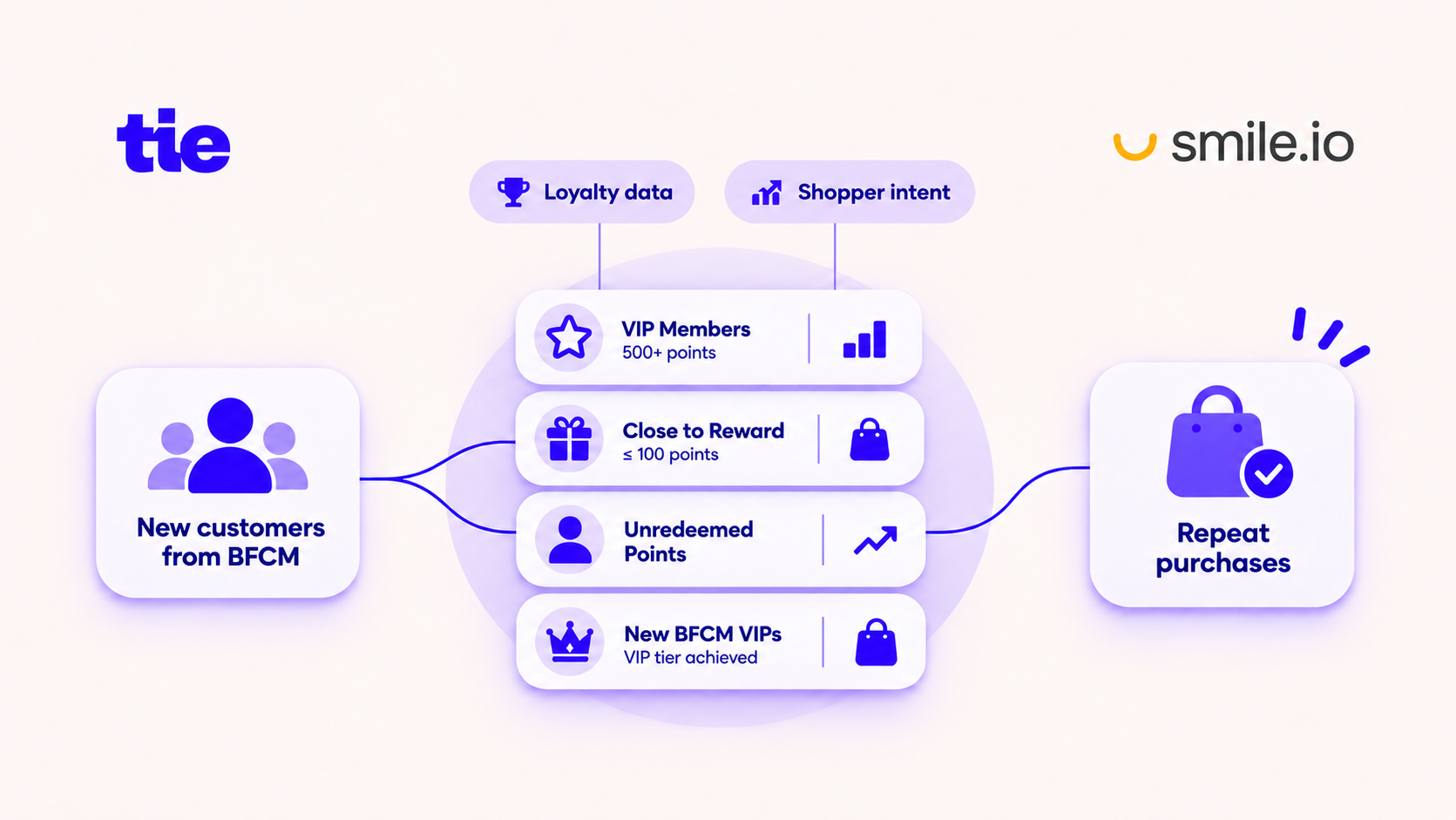
Combine Smile's loyalty data with Tie's shopper recognition and intent data in Klaviyo, and you know both what each new customer has to come back for and when they're back.
What loyalty data can you use for post-BFCM customer segmentation?
When Smile is connected to Klaviyo, five loyalty properties sync to every customer profile:
- Smile Points Balance: how many points the customer has available
- Smile VIP Tier Name and Smile VIP Tier ID: the tier they're currently in
- Smile State: whether they're a program member or a candidate who hasn't joined
- Smile Referral URL: their personal referral link
Smile also sends loyalty events Klaviyo can use as flow triggers or segment conditions, including Points Earned on Order, Points Redeemed, Points Expiring, Reward Expiring, VIP Tier Achieved, Birthday Reward Issued, Referral Started and Referral Completed. The full list is in the Smile and Klaviyo data syncing guide.
This is first-party data your customers created by shopping with you. A customer sitting on 400 unspent points has a reason to come back that their order history doesn't show.
Why do loyalty segments need shopper intent?
A loyalty segment answers who. A customer who is 50 points away from a 500-point reward is a clear candidate for a reminder. What the segment can't tell you is when that customer is paying attention, or whether they're likely to buy this week.
Tie fills that gap with two products that sync into Klaviyo::
- Tie ID recognizes returning shoppers and creates or enriches their Klaviyo profile. A member who comes back on their phone after buying on a laptop can still recognized, so their visit can trigger a flow.
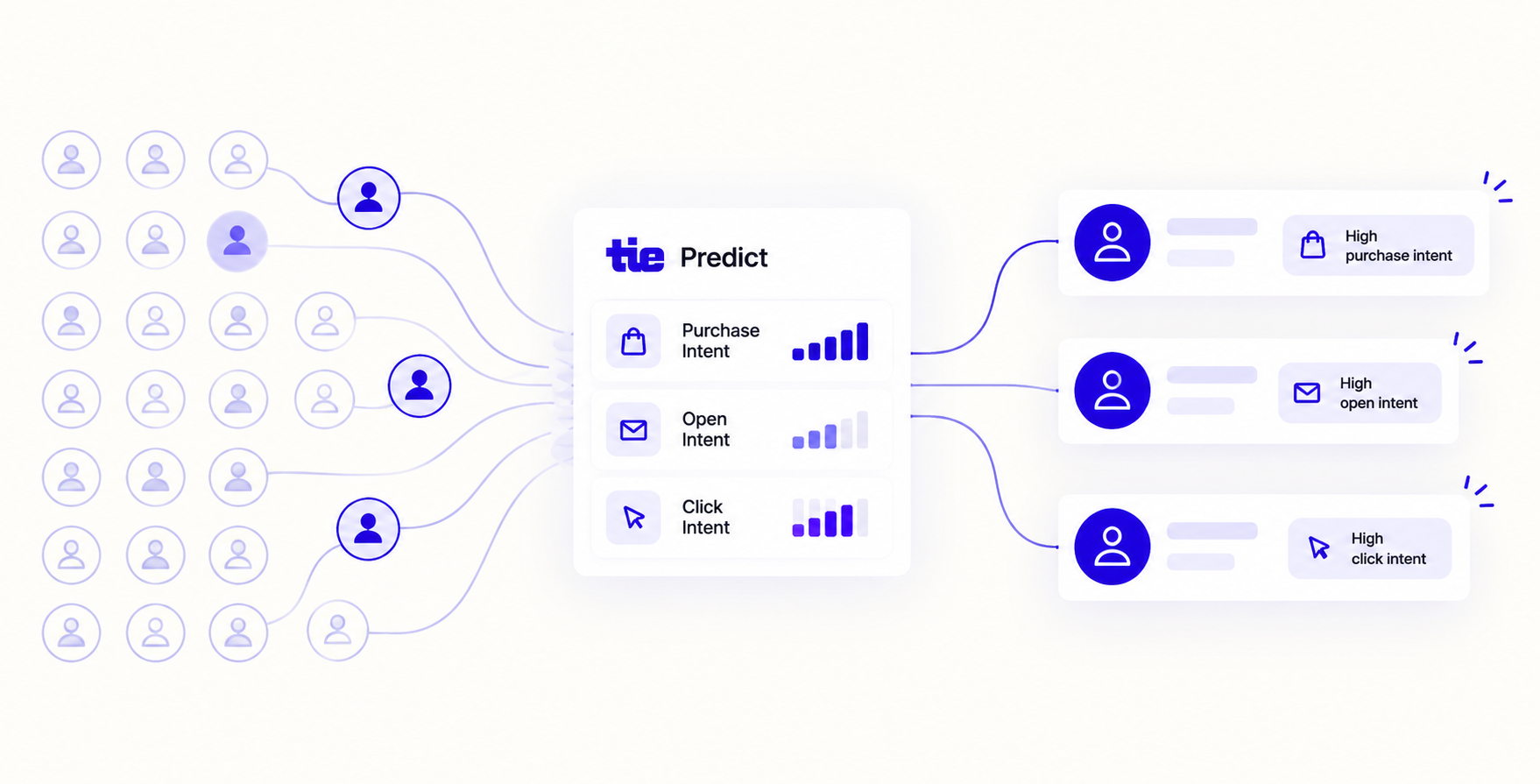
- Tie Predict scores each shopper's Purchase Intent, Open Intent and Click Intent, refreshed daily, and syncs those scores to Klaviyo as profile properties.
Recognition matters most right after BFCM, when your list is full of shoppers Klaviyo has only seen once. Beekman 1802 generated $520,947 in revenue over three months by reactivating more than 80,000 returning shoppers Klaviyo wasn't recognizing.
With both connected to Klaviyo, a loyalty message can go out when a member is actually back on your site, not on a fixed schedule.
Five post-BFCM segments to build with Smile and Tie
Each segment below pairs a Smile loyalty property or event with a Tie signal. Build them in Klaviyo using the synced properties and events from both platforms.
1. BFCM buyers with unredeemed points who come back to your site
Smile data: Smile Points Balance above your lowest reward threshold
Tie signal: A return visit recognized by Tie ID
These customers earned points on their BFCM order and haven't used them. When Tie ID recognizes their return visit, trigger a "your points are waiting" email that shows their balance and the rewards they can claim. The points are already earned, so the incentive costs nothing extra.
2. Members close to their first reward with high purchase intent
Smile data: Smile Points Balance within range of your first reward (for example, 400 to 499 points if your first reward is 500)
Tie signal: High Purchase Intent score from Tie Predict
A first redemption is a strong sign a new customer is building a habit. Prioritize members who are close to a reward and likely to buy, and show them exactly how far they are from it, alongside products they've browsed.
3. Customers who reached a VIP tier during BFCM
Smile data: The VIP Tier Achieved event during the BFCM window, plus Smile VIP Tier Name
Tie signal: Recognized browsing sessions since their order
Some BFCM buyers spent enough to reach a tier on their first order. Many won't know it. When they're back on your site, send a welcome to their tier that explains the perks they now have. Status they've already earned is a stronger reason to return than another discount.
4. BFCM buyers who haven't joined your program
Smile data: Smile State is "candidate"
Tie signal: A return visit recognized by Tie ID
Not every BFCM buyer creates an account. These shoppers bought from you but aren't earning points yet. When they return, invite them to join and show the points they would have earned on their first order.
5. Members with expiring points and low engagement
Smile data: The Points Expiring event
Tie signal: Low Open Intent and Click Intent scores from Tie Predict
Not every segment needs more email. For members with expiring points and low intent scores, send the points-expiring reminder and hold back broader promotions. Sending less to unengaged shoppers protects deliverability after the heaviest sending weeks of the year. Sharper Image increased revenue per recipient by 41% while sending 22% fewer emails with Tie Predict.
Which post-BFCM customers don't need a discount?
The default post-BFCM move is a second discount around day 30. For many customers, it isn't necessary.
A member with a high purchase intent score and points to spend already has a reason to buy. Showing them how many points they have gives them an incentive they've earned, without lowering your margin or teaching them to wait for the next sale. Save percentage-off offers for shoppers who have no loyalty balance and no recent intent signal.
Bonus points campaigns are another option for high-intent members. Double points for a limited time rewards the purchase without discounting the product.
How do you know your segments are working?
Test before you scale. Run each new segment with a Klaviyo holdout group, and compare revenue per recipient between the two groups. Tie Predict's results at Sharper Image were holdout-tested on the brand's own data, and the same approach works for loyalty-based segments.
Questions for retention and CRM leaders to bring to their team
- What share of our BFCM buyers are loyalty members, and how many have unredeemed points right now?
- How many of our returning shoppers can Klaviyo actually recognize?
- Which of our post-purchase flows trigger on behavior, and which run on a fixed schedule?
- Where are we sending a discount to customers who already have points to spend?
- Are we testing loyalty campaigns against a holdout group?
Start with the customers you just acquired
Your BFCM cohort is the largest group of new customer relationships you'll start all year. With Smile and Tie both connected to Klaviyo, you can segment them by what they've earned and reach them when they come back.
For more on the shopper intent side, read Tie's guide on the Smile blog: Turning BFCM Shoppers Into Loyal Customers.
If you lead loyalty, retention or CRM at a brand on Klaviyo, talk to our team at Smile about building loyalty segments into your post-BFCM plan. We'll look at your program and Klaviyo setup and show you where your next repeat orders are likely to come from.