.jpeg)
SMS performance has become core to retention marketers' strategy, with abandonment flows driving consistent revenue and with high ROI for the messages sent. This makes the channel incredibly dependable.
However, many ecommerce marketers don’t realize there is another important growth lever they can pull.
Many returning subscribers show purchase intent, but don’t successfully enter those abandonment flows due to anonymous identity.
A subscriber can return to the site, browse products, and add items to the cart, but if that session isn’t matched back to their SMS profile, they won’t enter your retargeting flows.
When behavior does not connect to a phone number in real time, browse and cart abandonment messages can’t be triggered. Abandonment recovery reflects only the subscribers recognized during active sessions, while a portion of opted-in contacts remain outside the automation entirely.
Revenue from SMS abandonment automations depends on two variables:
- Number of eligible subscribers entering the flow
- Conversion rate of the message
In this blog, we’ll examine how subscriber recognition shapes SMS retargeting performance, how to evaluate coverage within your own program, and what structural shifts occur when more opted-in subscribers enter browse and cart automations.
When your SMS program is ready for its next growth lever
Browse and cart abandonment flows are one of the most efficient revenue engines of an SMS program. They recover high-intent sessions, bring shoppers back to complete purchases, and drive a consistent share of monthly orders.
Over time, they settle into a stable pattern within the lifecycle strategy:
- Phone numbers enter through pop-ups and checkout opt-ins.
- Browse abandonment occurs when a product page is viewed without purchase.
- Cart abandonment triggers after an item is added but left behind.
- Subscribers are segmented based on purchase history, engagement patterns, or lifecycle stage.
- Attribution reports clearly show which flow influenced each order.
From an operational standpoint, the automation runs exactly as designed.
Why conversion optimization alone isn’t enough
Once core flows are live, performance often stabilizes. Deliverability remains high, click-through rates stay within historical ranges, and abandonment revenue appears stable from month to month.
At this stage, teams focus on improving conversion within the flow. They test new offers, adjust timing, and refine messaging to lift response rates. These optimizations work and can meaningfully improve performance.
However, conversion optimization has a natural ceiling. If only a portion of eligible subscribers ever enter the flow, improvements apply only to that limited audience.
Expanding subscriber recognition changes the scale of the opportunity. When more opted-in subscribers are recognized during live browsing sessions, more eligible shoppers qualify to enter browse and cart automations. The same flows trigger more often, which increases the number of purchase opportunities those optimizations can influence.
Messaging improvements increase efficiency while recognition improvements expand reach. When both improve together, abandonment revenue grows faster because more real shopper intent enters the system.
The hidden growth lever: Subscriber recognition
Abandonment revenue reflects more than message quality. It reflects whether subscriber behavior is recognized during live sessions. An opted-in contact can be included in the SMS list and still move through the site without triggering automation.
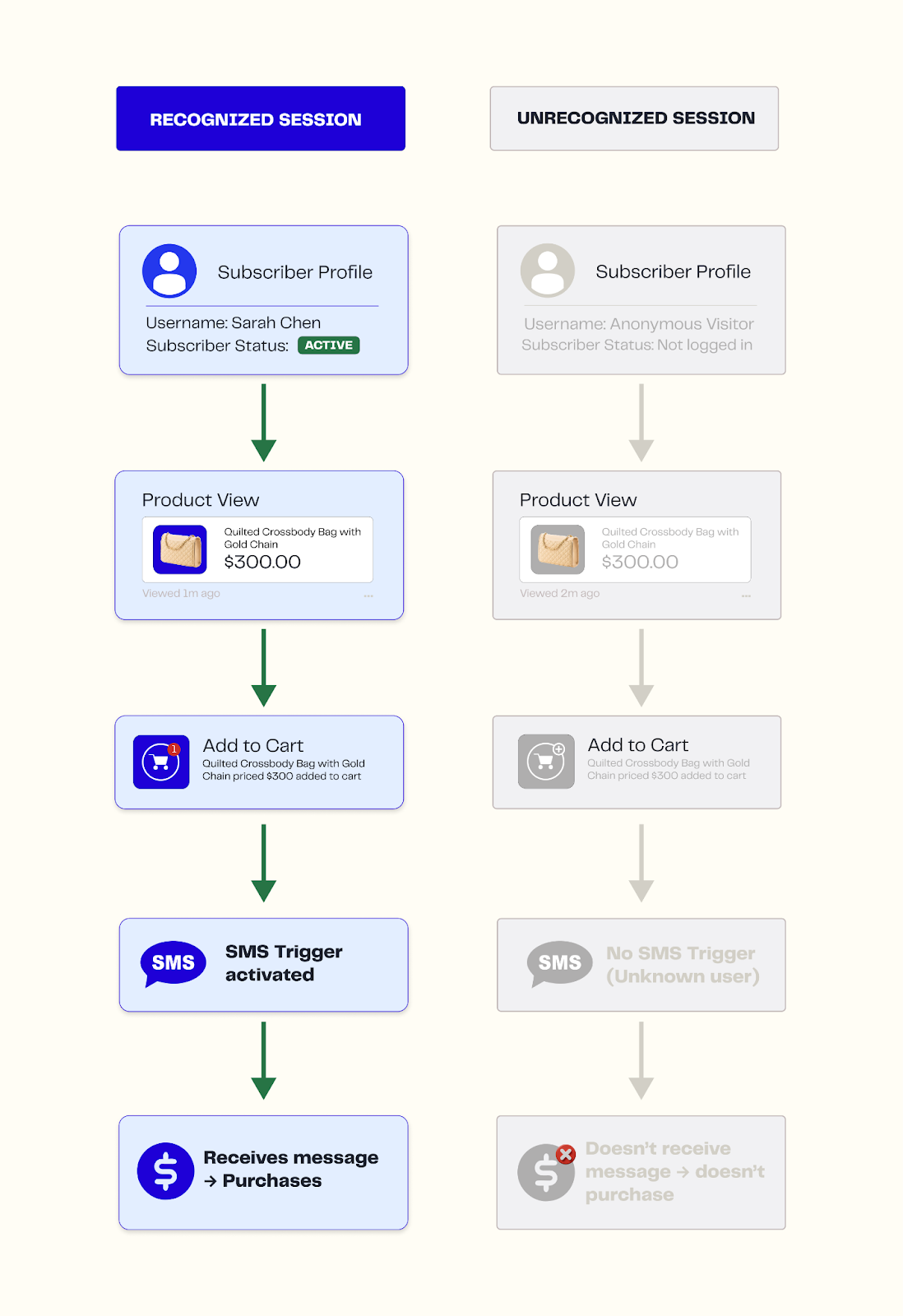
When behavior doesn’t attach to a subscriber profile, the system records activity but can’t act on it.
How recognition gaps actually happen
Recognition gaps are often caused by normal customer behavior.
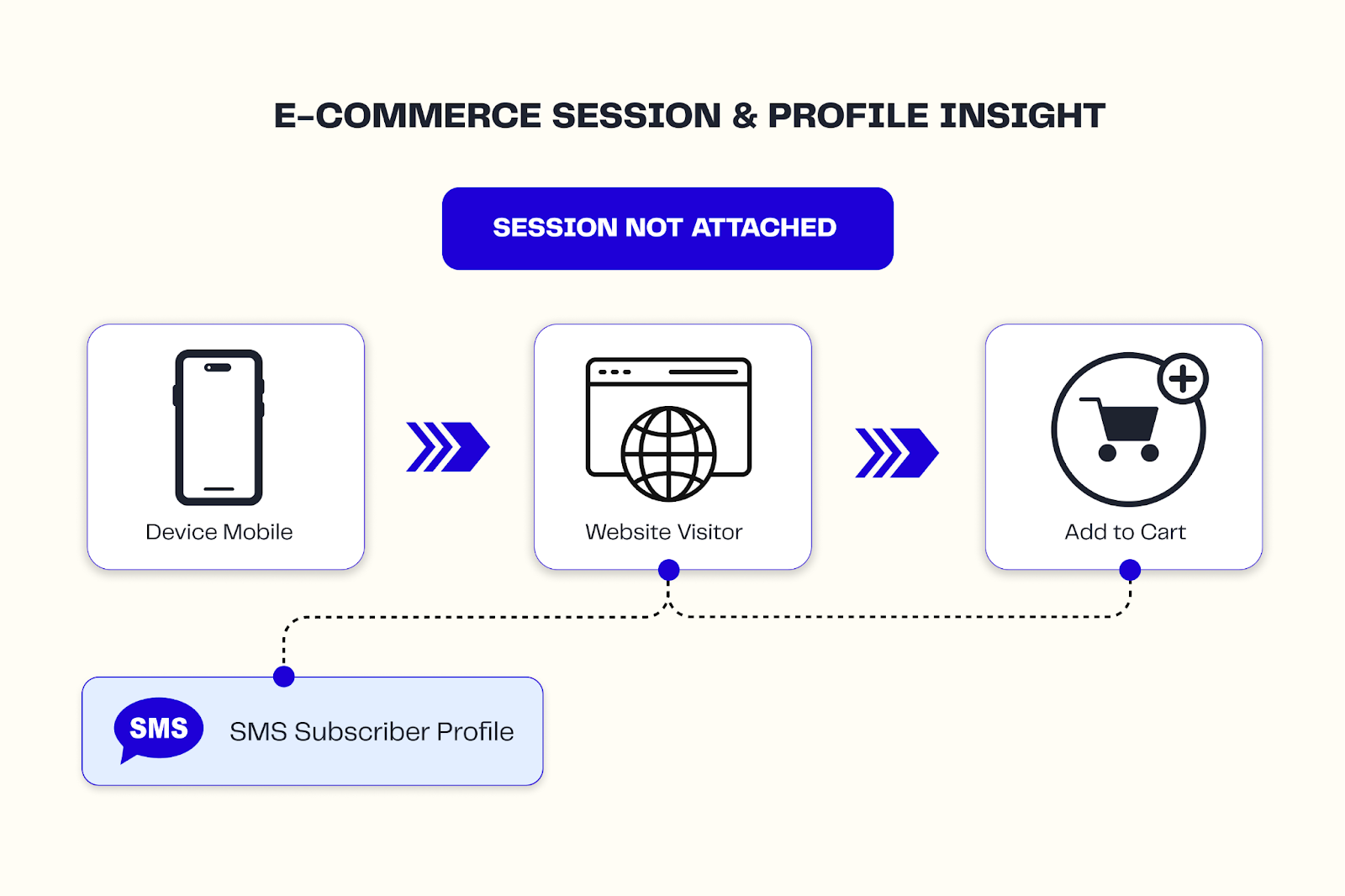
A subscriber opts in on mobile during checkout. A few days later, they return from a laptop to continue browsing, and view multiple product pages, compare options, and add an item to the cart. The session carries no persistent identifier that links back to their original opt-in. The platform records product views and cart activity, but it can’t confidently connect that behavior to a phone number.
The same pattern is seen when cookies expire between sessions, shoppers switch devices, or privacy browsers restrict tracking signals. In all these scenarios, shoppers may show clear intent and engagement, but the system can’t attach that activity to a known subscriber.
What breaks within the automation
When sessions remain anonymous, browse events stay detached from subscriber records. Cart additions appear in analytics but do not trigger abandonment flows. The automation functions exactly as configured, yet it activates only for the subset of subscribers recognized during the visit.
Flow performance then reflects the visible audience. Conversion rates look strong because identified subscribers tend to convert well. But total reach stays constrained, since a share of opted-in subscribers never qualify to enter the automation despite clear purchase intent.
How Tie and Postscript expand subscriber coverage
The integration between Tie and Postscript increases the percentage of opted-in subscribers recognized across sessions and devices, allowing more high-intent shoppers to enter abandonment flows and generate additional revenue.
When a known SMS subscriber returns to the site, identity resolution connects that session to their existing profile. Product views, page visits, and cart additions attach to that record and sync into Postscript in real time.
Browse and cart automations then trigger for a broader pool of qualified subscribers. Creative and timing remain unchanged. The difference shows up in flow volume, as more eligible subscribers now qualify to receive the message and contribute to abandonment revenue.
Why flow coverage unlocks more value from copy optimization
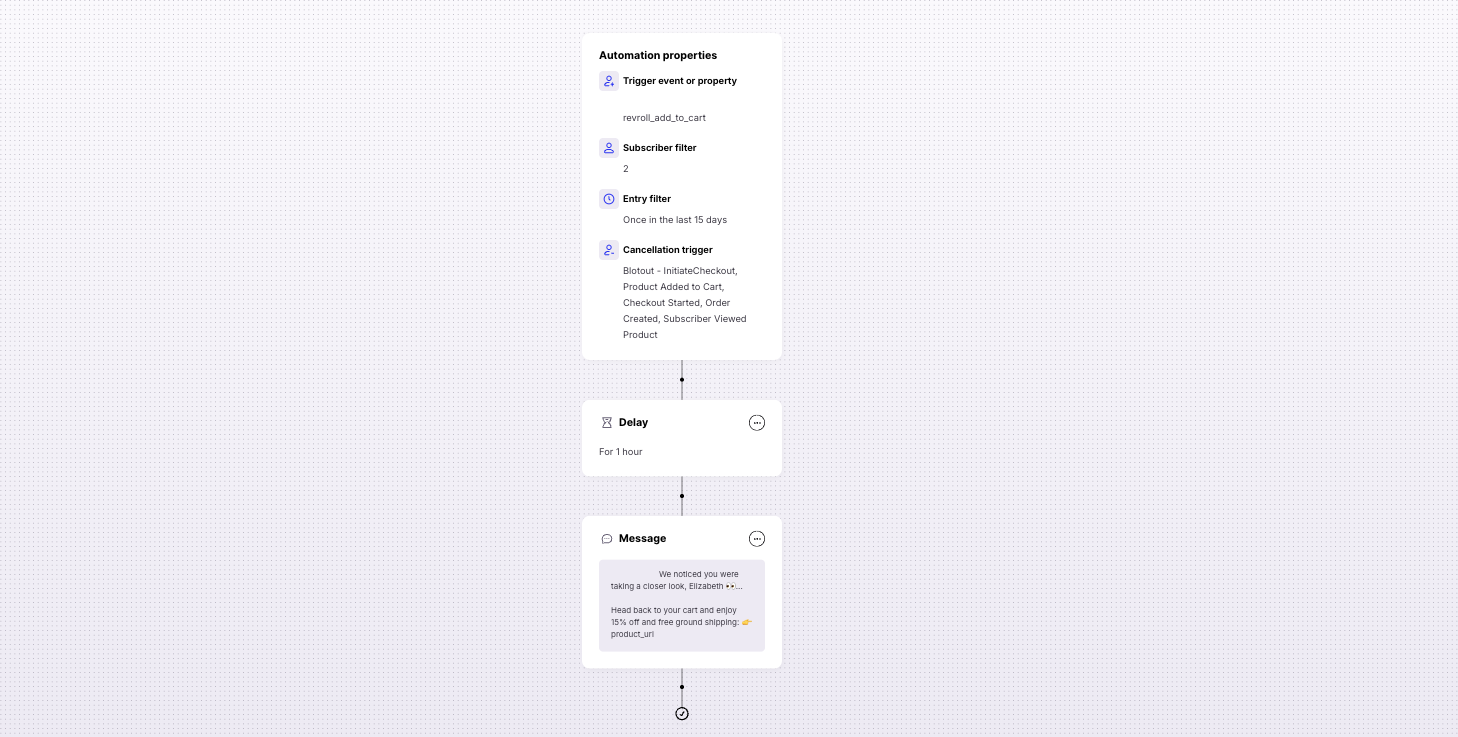
Once browse and cart automations are live, most optimization efforts focus on improving how subscribers respond within the flow. The structure remains the same, so teams focus on increasing conversion among subscribers who already entered.
While this improves efficiency, the larger opportunity lies in increasing the number of eligible subscribers who enter the automation in the first place.
Where teams typically focus
Teams usually focus on optimizing the message and timing:
- A/B testing different angles in the copy.
- Adding urgency indicators, such as low-stock reminders or countdown messaging.
- Adjusting discount thresholds to protect margin.
- Testing send timing to capture peak engagement windows.
- Revising frequency caps to balance revenue and fatigue.
Each of these changes can improve conversion rates.
The real lever behind SMS Abandon Flow’s revenue growth
Abandonment revenue reflects both how many subscribers enter the flow and how many of them convert. When teams focus only on improving conversion, they can only increase efficiency within the same triggered subscribers.
Let’s assume 8,000 subscribers enter a cart flow each month. A lift in conversion improves revenue generated from those 8,000. The total number of triggered subscribers, however, stays the same. Flow volume sets the upper limit of how much revenue the automation can produce.
Brands using the Tie & Postscript integration typically see abandonment send volume increase by 40%+.
When more eligible subscribers enter the flow, conversion gains compound on a larger base, and that's where sustainable revenue growth comes from.
How to audit your SMS retargeting coverage
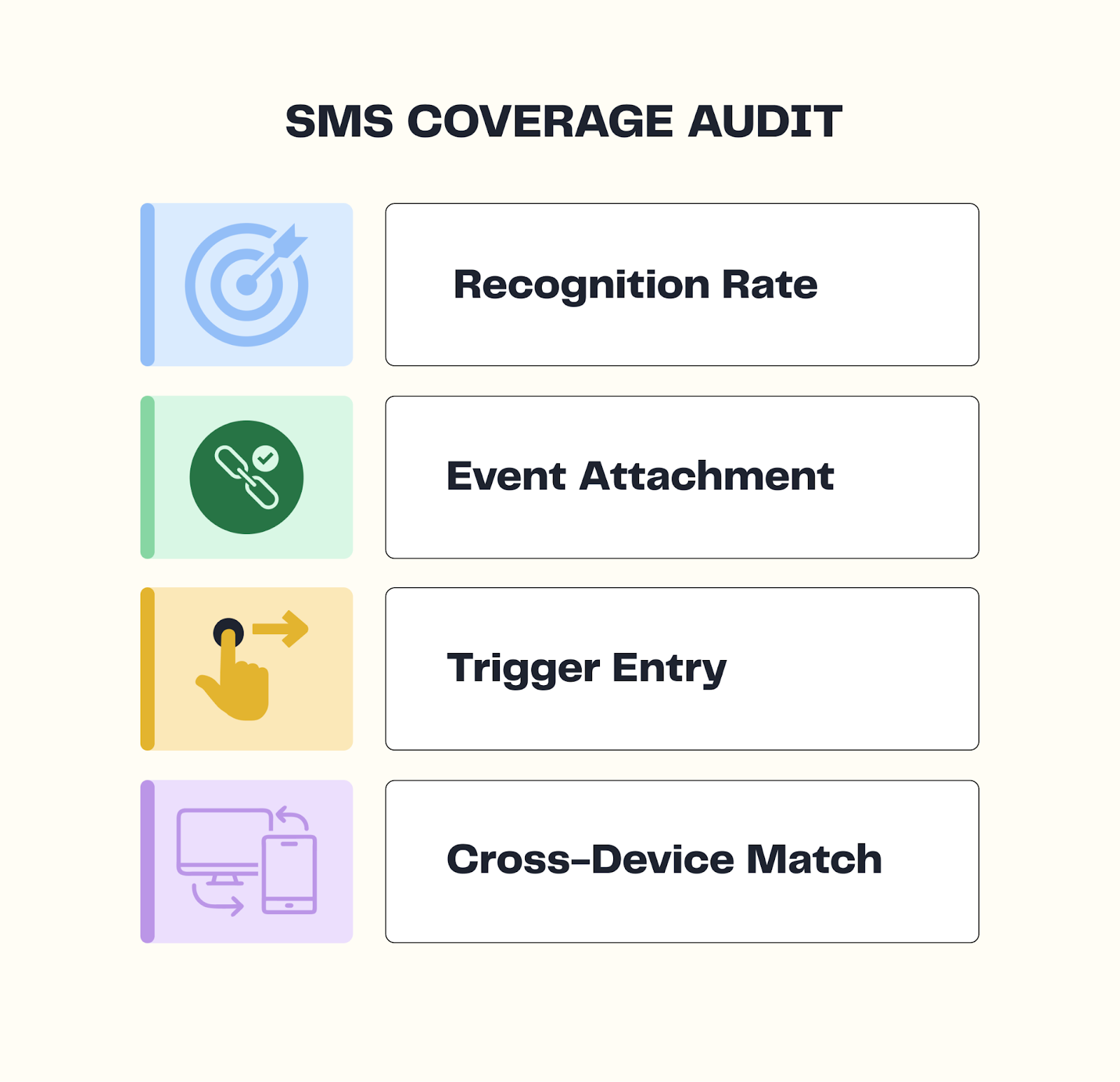
Abandonment revenue depends on how many eligible subscribers actually qualify to enter the flow. Auditing coverage means measuring recognition at three specific points: subscriber identification, event attachment, and trigger activation.
- Measure subscriber recognition rate: If you have 20,000 subscribers but only 8,000 attach to live browsing activity each month, your automation is operating on 40% of your addressable audience. That percentage sets the practical ceiling for browse and cart flow reach.
- Compare total events to attached events: Look at total product views and add-to-cart events. Then measure how many of those events are tied to known SMS contacts. The gap between total activity and attached activity represents sessions that never qualify for automation.
- Review trigger entry volume: Track how many cart abandoners enter your cart flow each month. If total cart sessions increase but triggered flow volume stays flat, subscriber recognition is limiting reach.
- Check cross-device recognition: Measure how often subscribers are recognized when switching from mobile to desktop or across browsers. A drop in attachment rates across devices signals identity gaps that directly shrink the audience your abandonment flows can target.
Signals that your SMS program has more revenue potential
Certain trends can indicate recognition limits within the program:
- Click-through rates remain strong while abandonment revenue plateaus.
- Site traffic grows, but browse and cart flow volume stay stable.
- SMS revenue increases only when acquisition volume increases.
When abandonment revenue only grows with traffic, subscriber coverage is usually a main constraint. Expanding recognition increases the number of eligible sessions that enter the automation, unlocking more revenue from your existing subscriber list.
The new benchmark for SMS performance
SMS performance is often evaluated through message efficiency. Conversion rate and revenue per send show how well a triggered message performs once it reaches a subscriber. These metrics remain essential because they reflect how effectively your messaging converts intent into revenue.
However, they measure only what happens after a subscriber enters the flow.
Sustained growth also requires understanding how many subscribers actually qualify to enter that flow. Adding coverage metrics alongside traditional performance metrics helps teams see the full picture.
Key indicators include:
- Subscriber recognition rate: Percentage of opted-in SMS subscribers identified during active site sessions.
- Eligible coverage percentage: Share of browse and cart activity attached to known subscriber profiles.
- Incremental flow volume growth: Month-over-month increase in subscribers entering browse and cart automations.
High-performing SMS programs track both efficiency and coverage. When more eligible subscribers enter abandonment flows, conversion improvements apply to a larger base, allowing revenue to scale alongside performance gains rather than plateau.
Want to expand your SMS flow coverage without increasing acquisition costs?
Abandonment revenue grows fastest when more eligible subscribers enter the flow. Recognizing more abandoners in real time activates a larger share of the subscribers already in your SMS program.
When you can recognize more shoppers, live sessions attach to real subscriber profiles. Product views and cart additions connect to the right phone number. Browse and cart automations trigger for subscribers who previously moved through the site anonymously.
Your flows don’t need to change. As more qualified sessions enter them, you re-engage high-intent buyers at the right moment and recover more revenue from the same automation.
We partnered with Postscript and Domaine to go deeper into the systems behind high-performing SMS abandonment programs in How Leading Brands Unlock More SMS Abandonment Revenue, a practical playbook on subscriber recognition, flow coverage, trigger optimization, and SMS infrastructure.
If SMS is already driving results for your brand, this is how you scale it further. Download the playbook.