The Best Email Deliverability Tools of 2026


Email deliverability determines whether your emails actually reach your customers’ inboxes. You can send thousands of campaigns every month, but if Gmail, Outlook, or Yahoo routes them to the spam folder or Promotions tab, your email marketing performance drops fast.
Moreover, deliverability is getting harder to maintain. ISPs now evaluate sender reputation, engagement signals, DNS authentication, email content, and sending behavior much more aggressively.
Privacy changes inside Apple Mail and Google Workspace have also made traditional metrics less reliable, pushing brands to rely more on real engagement and inbox placement testing. That is why ecommerce teams now use a stack of email deliverability tools instead of relying on a single platform.
In this guide, you’ll learn how email deliverability tools work, which platforms are worth considering in 2026, and how to build a stronger deliverability stack for long-term email performance.
What email deliverability tools are and why they matter
Email deliverability tools help you improve where your emails land after they get sent. They monitor sender reputation, authenticate domains, clean email lists, track inbox placement, and identify potential issues that affect engagement.
Ecommerce brands use these tools to maintain a healthy sending infrastructure as subscriber lists and campaign volume grow.
It is also important to separate delivery from deliverability.
- Delivery measures whether your email reached the recipient’s server.
- Deliverability measures whether your email reached the recipient’s inbox and actually got seen.
You can maintain a 99% delivery rate while still losing revenue if Gmail or Yahoo stops surfacing your campaigns to subscribers.
Why email deliverability is important
Email deliverability directly affects how much revenue you generate from your email program.
When mailbox providers place your campaigns in spam or promotions folders, fewer subscribers engage with your emails. That weakens open rates, lowers clicks, reduces conversions, and gradually damages sender reputation even further.
For ecommerce brands, poor deliverability impacts:
- Abandoned cart recovery flows
- Product launch campaigns
- Promotional sends
- Winback sequences
- Post-purchase retention
- Subscriber lifetime value
Strong deliverability keeps your campaigns visible to engaged customers at the moments when purchase intent is highest. That helps you drive more repeat purchases, improve retention performance, and maximize revenue from your existing audience without increasing ad spend.
Different types of email deliverability tools
Email deliverability relies on multiple systems working together. Some tools help you monitor inbox placement, while others improve ecommerce data capture, sending reputation, or subscriber engagement.
Here are the main categories of email deliverability tools that ecommerce brands use:
- Inbox placement and inbox optimization tools help brands improve email visibility across mailbox providers like Gmail and Yahoo. Some tools monitor where emails land, while others actively optimize inbox placement to increase visibility in high-engagement tabs like Gmail’s Primary inbox and reduce placement in Promotions. Platforms like Tie Priority focus on helping more emails reach Gmail's Primary tab, where brands typically see stronger engagement and revenue per send.
- Email verification and list cleaning tools remove invalid, fake, inactive, or risky email addresses from your database. Brands use them to reduce hard bounces, improve engagement quality, and maintain a healthier sender reputation over time.
- Email warm-up and sender reputation tools help brands build trust with mailbox providers as sending volume grows. They support domain warming, authentication, reputation management, and automated sending adjustments that protect deliverability as email programs scale. Solutions like Tie Protect continuously monitor sender reputation signals and dynamically adjust warm-up intensity and audience eligibility to maintain consistent deliverability and healthy sending performance.
- Data enrichment and identity tools improve audience quality by enriching customer profiles with behavioral and first-party identity data. Platforms like Tie ID help you identify anonymous visitors, improve segmentation accuracy, suppress low-intent audiences, and personalize campaigns using real engagement signals across channels.
The best email deliverability tools of 2026
The best email deliverability tools solve different parts of the problem. Some focus on inbox placement testing and spam filters, while others improve email authentication, sender reputation, list validation, or sending infrastructure.
In this section, we’ll take a look at 10 of the best email deliverability and testing tools of 2026 and why they would fit in your existing tech stack:
Tie
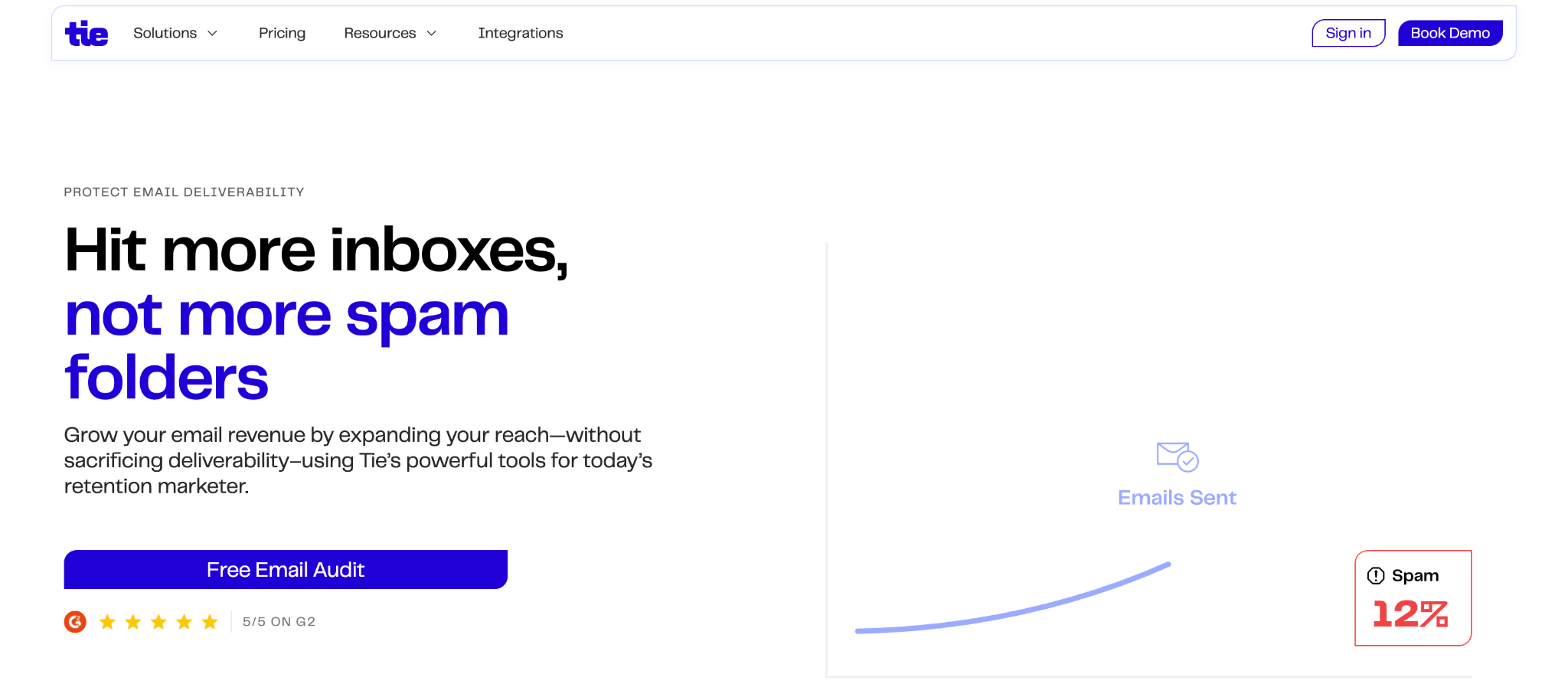
Tie helps ecommerce brands improve email deliverability by combining shopper intelligence with deliverability optimization. Tie Priority helps more campaigns reach Gmail's Primary Inbox, Tie Protect automatically protects domain reputation and manages warming, and Tie ID helps marketers target the shoppers most likely to engage. Together, these capabilities help brands improve inbox visibility, engagement, and lifecycle revenue.
Pricing overview: Custom pricing based on email volume, audience size, and platform requirements.
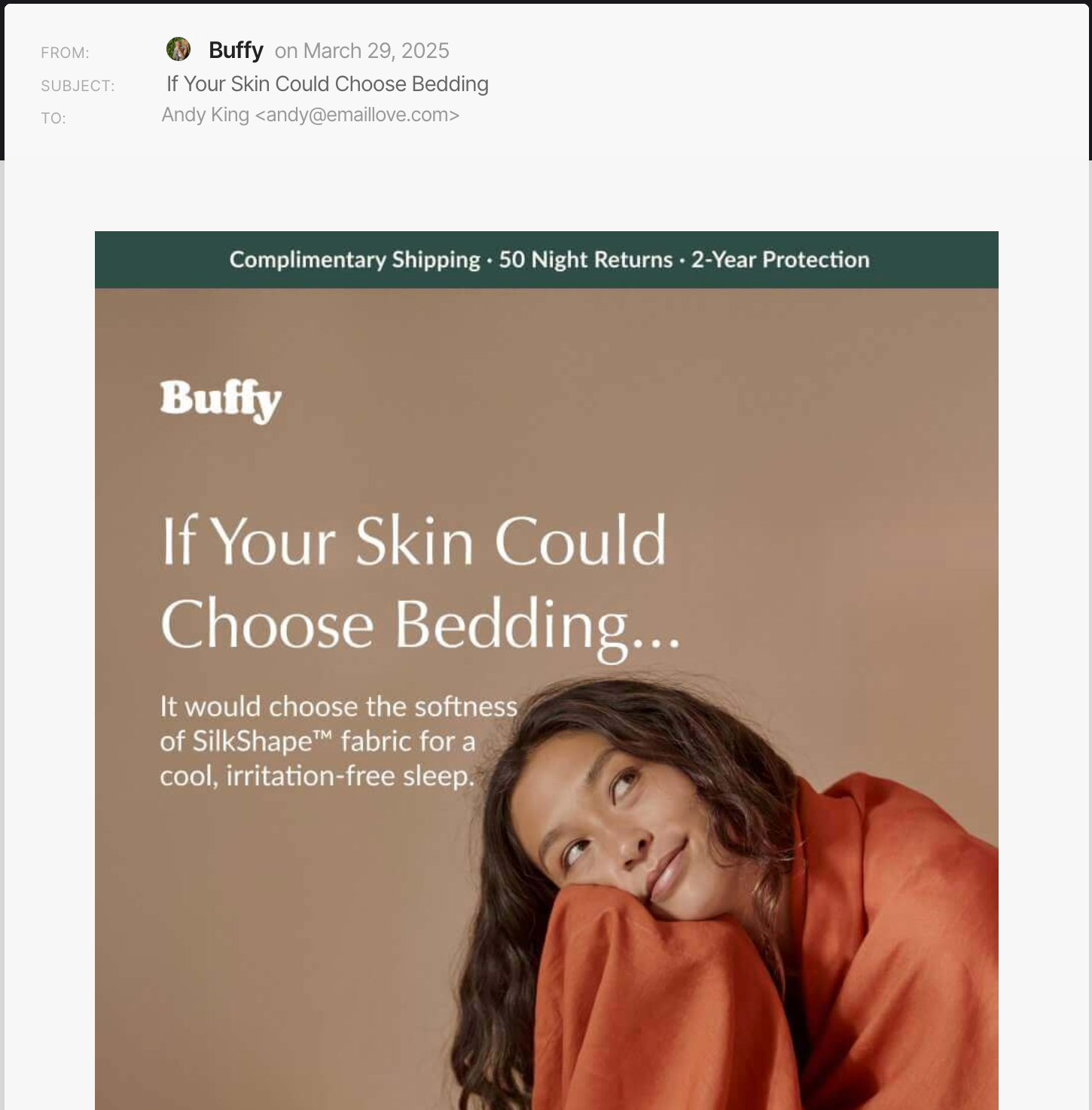
For example, Buffy, a bed linen brand, used Tie’s Promo Tab Protection and domain warming products to improve inbox visibility across lifecycle flows. Within the first month, the brand generated $60,000 in incremental revenue, increased flow revenue by 45%, and improved open and click rates after shifting more emails into Gmail’s primary inbox.
Key features:
- Improve visibility in inboxes with Tie Priority for Gmail
- Automated domain warming and reputation protection through Tie Protect
- Identity resolution and audience enrichment
- Behavioral segmentation
- Inbox placement monitoring
- Engagement-based suppression workflows
- Deliverability insights tied to customer behavior
Strengths: Tie connects deliverability performance directly to audience quality. You can identify anonymous visitors, enrich customer profiles with behavioral data, and improve targeting before campaigns go live. That helps you improve engagement signals that Gmail, Yahoo, and Outlook use to evaluate sender reputation.
Limitations: Enterprise teams with highly customized sending infrastructure may still use additional monitoring tools alongside Tie.
GlockApps
GlockApps helps you test where your emails land before you send them. It checks inbox placement across Gmail, Outlook, Yahoo, and other mailbox providers while identifying email spam filters and authentication issues affecting delivery.
Pricing overview: Tiered pricing based on testing volume and monitoring functionality.

Key features:
- Inbox placement testing
- Spam checker and spam score analysis
- Blacklist monitoring
- Sender Policy Framework (SPF), DomainKeys Identified Mail (DKIM), and Domain-based Message Authentication, Reporting, and Conformance (DMARC) validation
- Seed-list testing
- Real-time deliverability reports
Strengths: GlockApps gives clear visibility into how mailbox providers treat your email content before campaigns launch. It is especially useful for identifying spam folder risks, authentication gaps, and formatting problems.
Limitations: The platform focuses primarily on testing and monitoring. It doesn’t handle list cleaning, audience enrichment, or email warm-up workflows.
Everest
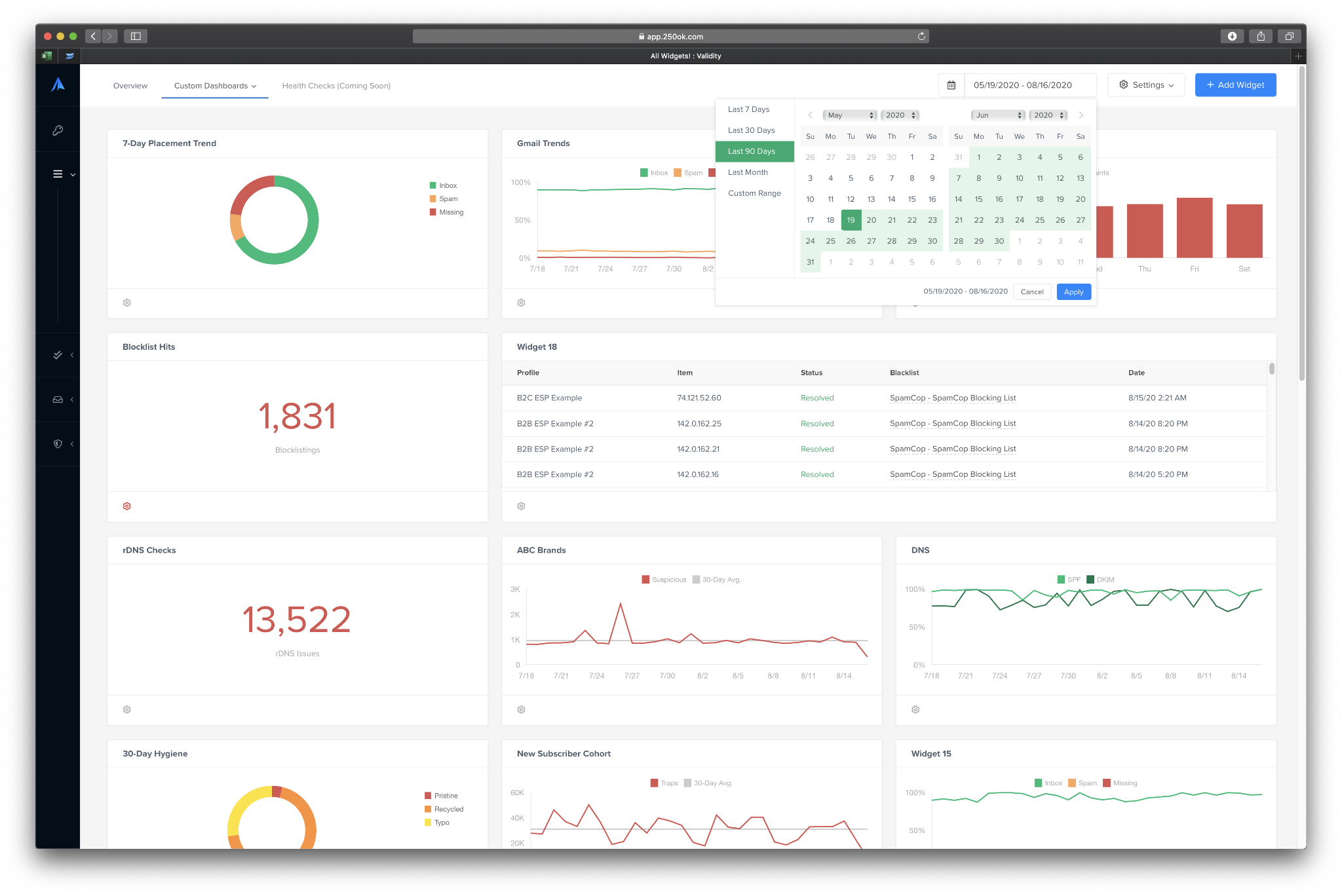
Everest by Validity is an enterprise email deliverability platform built for large senders managing complex sending environments and high email volume.
Pricing overview: Custom enterprise pricing based on sending volume and feature requirements.
Key features:
- Inbox placement testing
- Sender reputation monitoring
- Google Postmaster Tools integrations
- Blacklist and blocklist monitoring
- Deliverability analytics
- Certification and consulting services
Strengths: Everest provides detailed visibility into sender reputation, engagement metrics, and mailbox-provider performance across Gmail, Outlook, Yahoo, and Microsoft environments.
Limitations: The platform has a steeper learning curve and higher pricing than most mid-market deliverability tools.
ZeroBounce
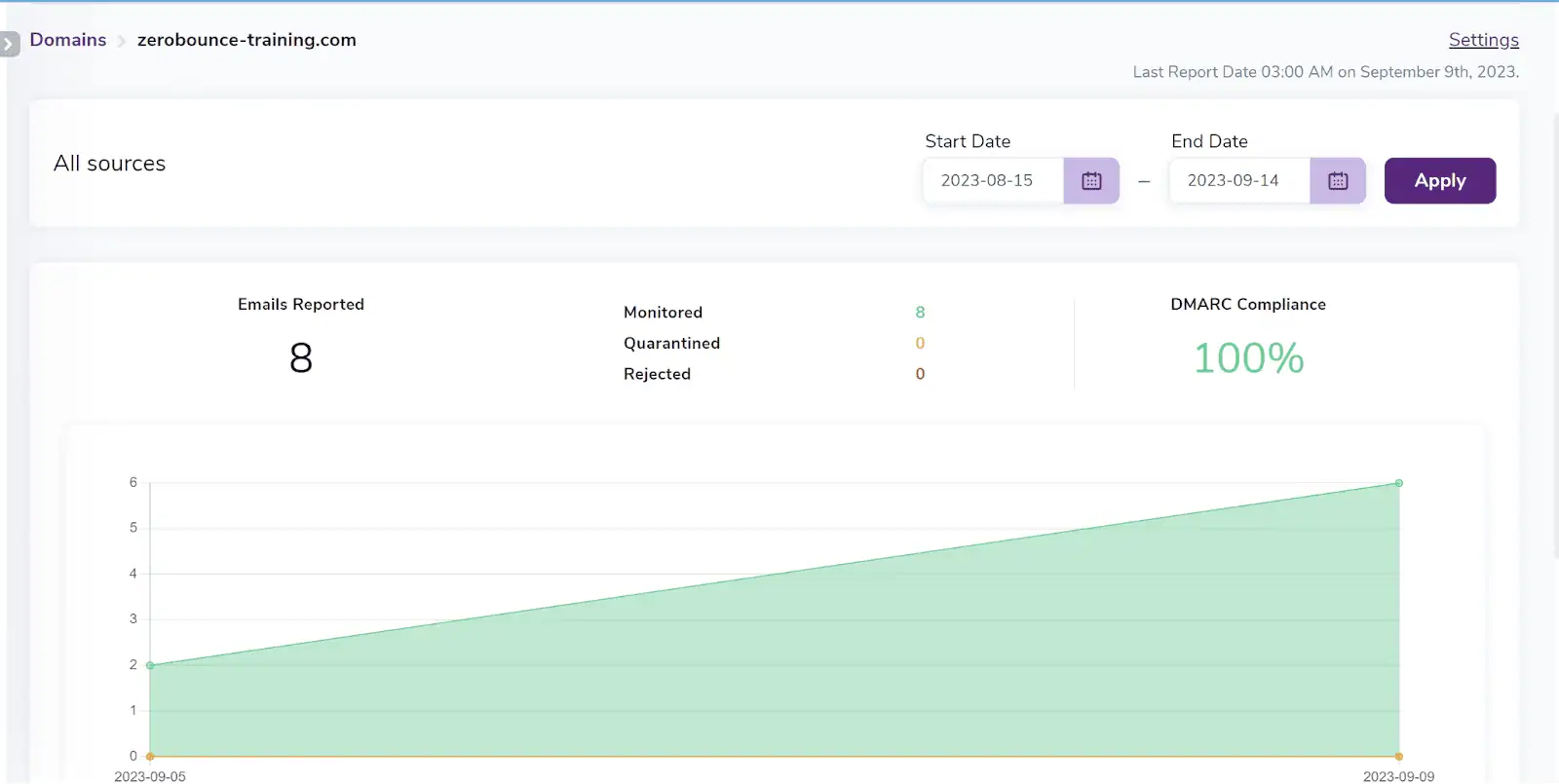
ZeroBounce improves email list quality through validation and hygiene workflows. It helps brands remove invalid, risky, and inactive email addresses before campaigns go out.
Pricing overview: Usage-based pricing with both pay-as-you-go and subscription options.
Key features:
- Email validation
- Spam trap detection
- Real-time API verification
- Abuse and blacklist checks
- Email scoring and validation reports
Strengths: ZeroBounce helps reduce bounce rates and protect sender reputation by improving list hygiene before you send emails. Its validation workflows work well for ecommerce brands collecting high volumes of leads through pop-ups, forms, and outreach campaigns.
Limitations: The platform focuses on validation and hygiene. You still need separate tools for inbox placement testing, sending infrastructure, and warm-up workflows.
NeverBounce
NeverBounce helps you maintain cleaner email lists through real-time validation and bulk verification workflows. It checks email addresses before they enter your CRM and removes invalid or risky contacts from existing databases.
Pricing overview: Volume-based pricing depending on validation usage and API requirements.

Key features:
- Real-time email validation API
- Bulk email list cleaning
- CRM and ESP integrations
- Automated verification workflows
- Bounce prevention checks
Strengths: NeverBounce works well for ecommerce brands collecting leads through pop-ups, checkout flows, and signup forms. Real-time validation helps reduce bounce rates before campaigns go out, which supports a healthier sender reputation and inbox placement over time.
Limitations: The platform focuses on email validation and list cleaning. You still need separate tools for inbox placement testing, spam checker workflows, and sending infrastructure monitoring.
Mailreach
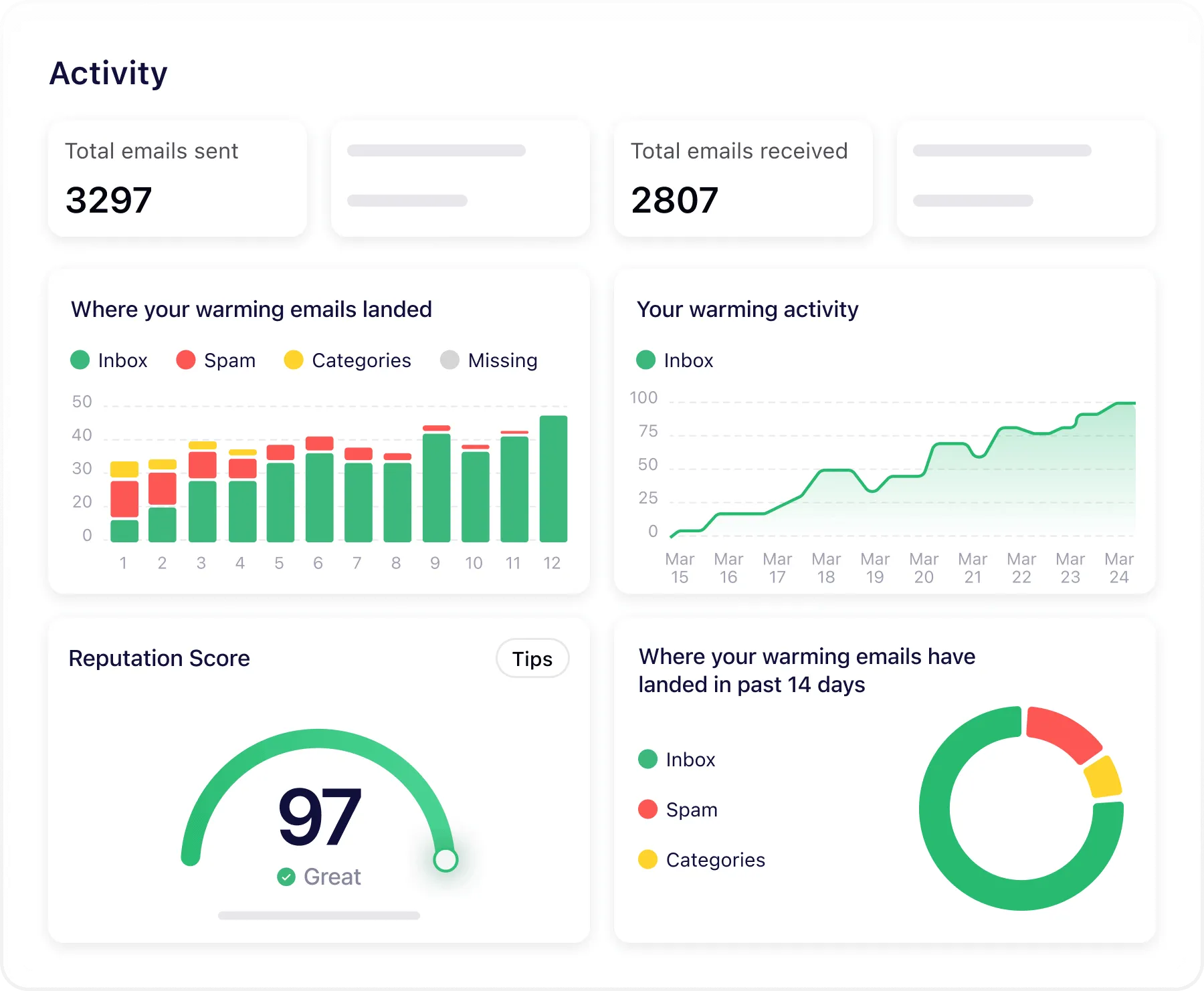
Mailreach helps improve inbox placement for cold email and outreach campaigns through email warm-up, sender reputation monitoring, and deliverability guidance.
Pricing overview: Subscription pricing based on inbox count and warm-up requirements.
Key features:
- Email warm-up automation
- Inbox placement monitoring
- Spam filter analysis
- Outreach optimization recommendations
- Sender reputation tracking
- Deliverability reports
Strengths: Mailreach focuses heavily on outreach-specific deliverability behavior. It helps teams stabilize sending volume, warm domains gradually, and improve primary inbox placement across Gmail and Outlook.
Limitations: The platform is built primarily for cold outreach rather than ecommerce lifecycle email campaigns or transactional workflows.
Warmup Inbox
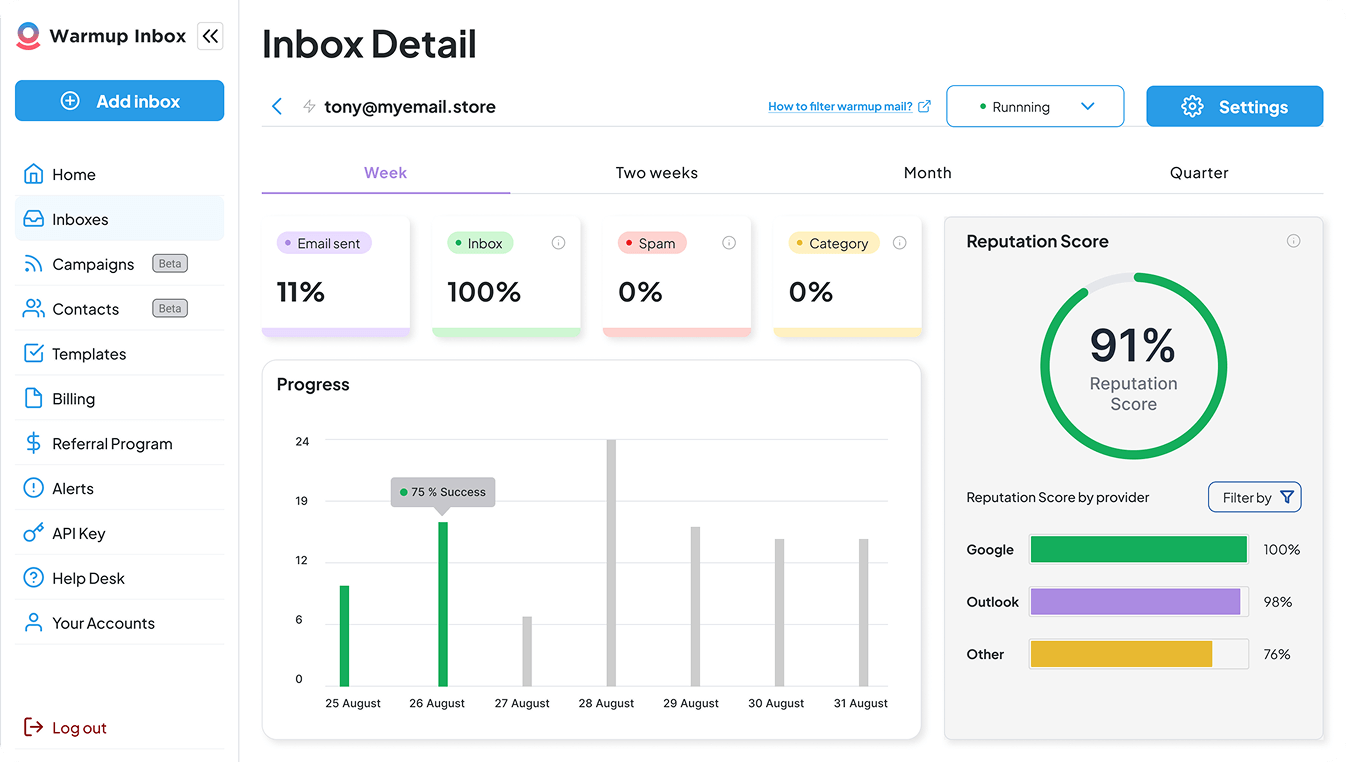
Warmup Inbox helps you build sender reputation by simulating real email interactions across a network of inboxes. The platform automates the email warm-up process for new domains and low-volume senders.
Pricing overview: Monthly subscription pricing based on inboxes and sending volume.
Key features:
- Automated email warm-up
- Inbox interaction simulation
- Sender reputation monitoring
- Warm-up automation workflows
- Deliverability metrics tracking
Strengths: Warmup Inbox helps improve trust signals with mailbox providers like Gmail, Yahoo, and Microsoft. It reduces the risk of emails landing in the spam folder during the early sending stages.
Limitations: Warm-up tools improve reputation gradually but do not solve list quality problems, email authentication gaps, or weak audience targeting.
Postmark
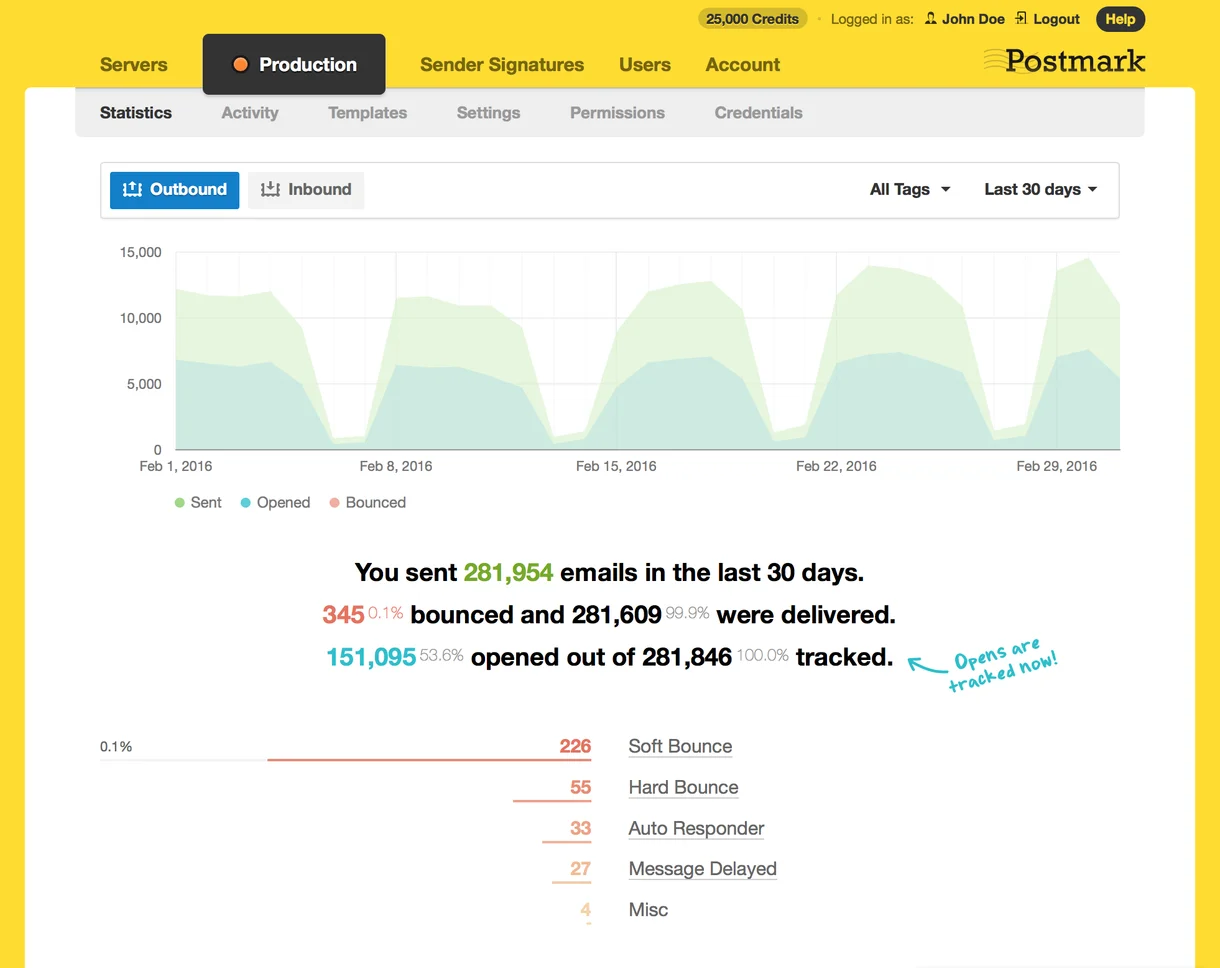
Postmark is a transactional email service built for fast and reliable email delivery. It helps businesses send critical emails like password resets, order confirmations, receipts, and email account notifications through stable SMTP and API infrastructure.
Pricing overview: Usage-based pricing with a free plan for lower sending volume.
Key features:
- Transactional email API
- SMTP relay infrastructure
- Real-time delivery metrics
- Message activity logs
- Email templates
- Delivery monitoring tools
Strengths: Postmark maintains strong transactional email performance by separating transactional and marketing streams. That helps protect sender reputation and improves inbox placement for high-priority emails.
Limitations: The platform is less suited for large-scale email marketing automation or advanced audience segmentation workflows.
SendGrid
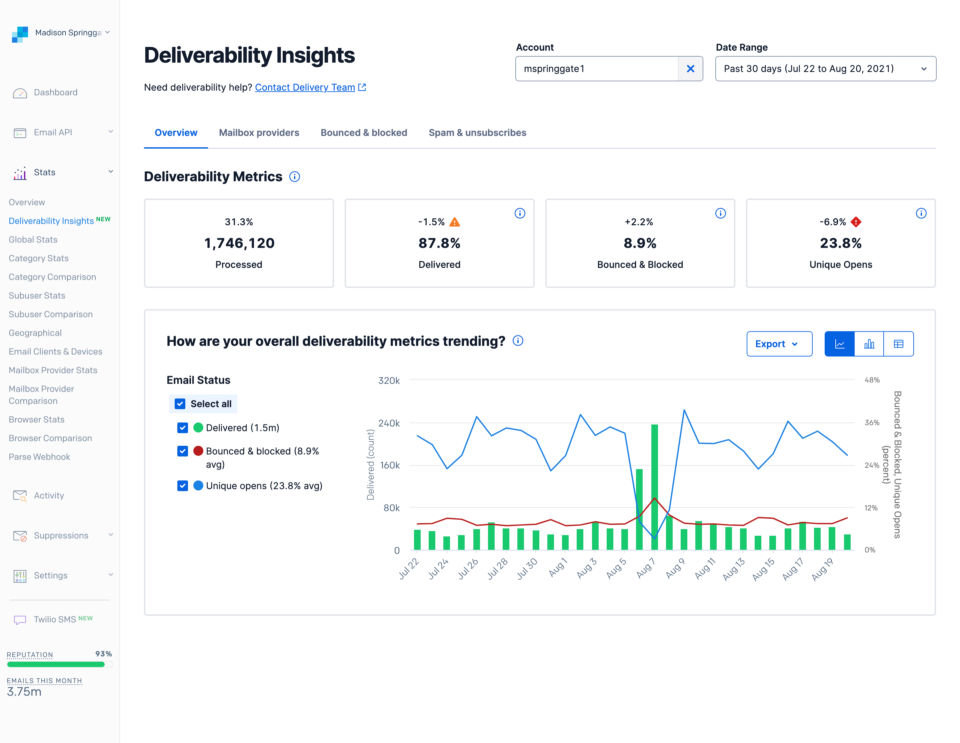
SendGrid is an all-in-one email delivery platform that supports transactional emails, marketing automation, and large-scale email campaigns through API and SMTP infrastructure.
Pricing overview: Tiered pricing based on sending volume, API usage, and advanced functionality.
Key features:
- Email API and SMTP services
- Marketing automation
- Deliverability analytics
- Dedicated IP address support
- Email authentication setup
- Real-time reporting and metrics
Strengths: SendGrid combines infrastructure, automation, analytics, and email marketing functionality inside one platform. It supports high sending volume and integrates with most modern ecommerce and CRM systems.
Limitations: Deliverability performance depends heavily on domain authentication, list quality, and ongoing sender reputation management. Teams usually need additional monitoring tools and validation workflows as volume grows.
Mailgun
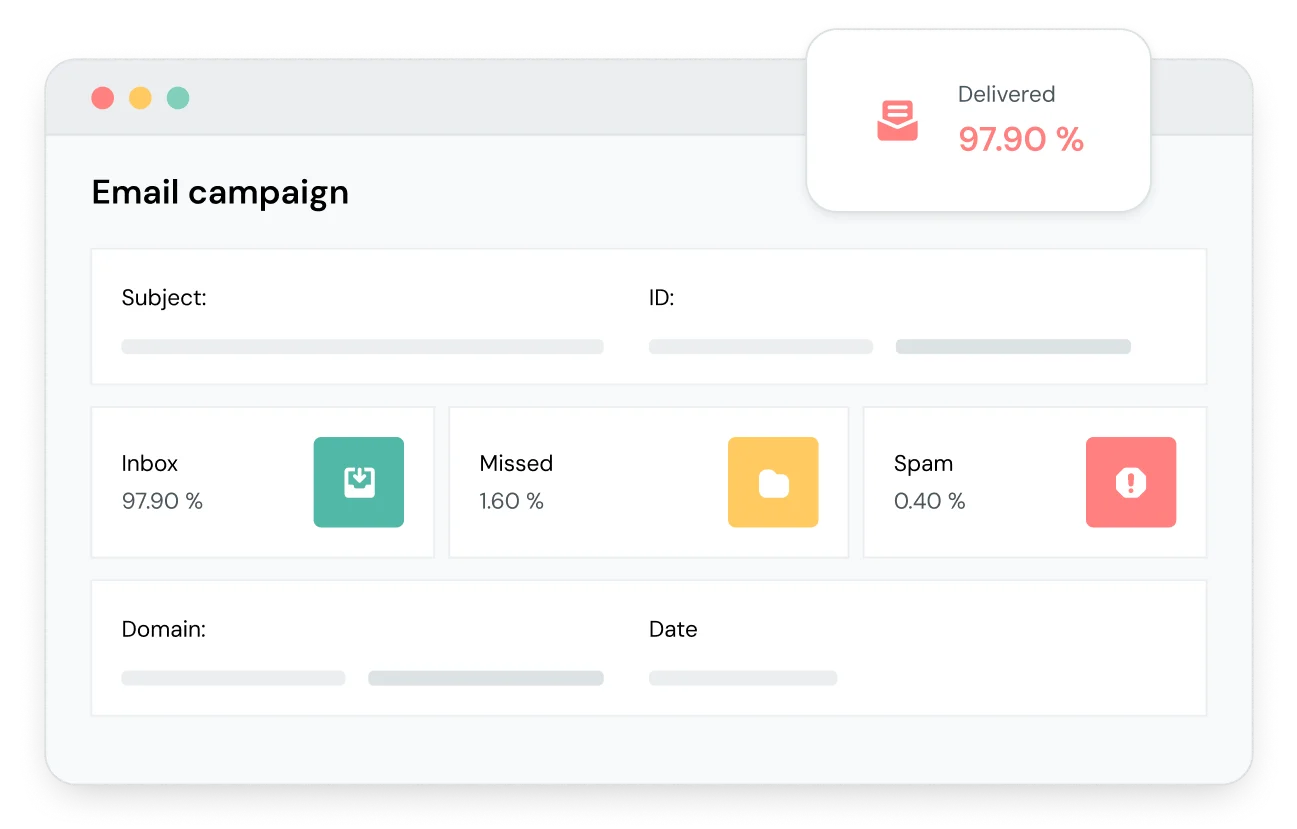
Mailgun provides developer-focused email infrastructure for transactional emails, notifications, and large-scale sending workflows. The platform includes APIs, SMTP services, and deliverability monitoring tools.
Pricing overview: Usage-based pricing with scalable plans for growing sending volume and infrastructure needs.
Best use case: Technical teams managing custom email workflows and high-volume transactional delivery.
Key features:
- Email API
- SMTP infrastructure
- Deliverability monitoring tools
- Real-time analytics
- Email validation API
- Reputation monitoring support
Strengths: Mailgun offers strong developer flexibility and reliable transactional email delivery across large sending environments. Its API and validation functionality work well for brands managing custom workflows and automation systems.
Limitations: The platform requires technical setup and active monitoring to maintain strong inbox placement and sender reputation over time.
Mailmend
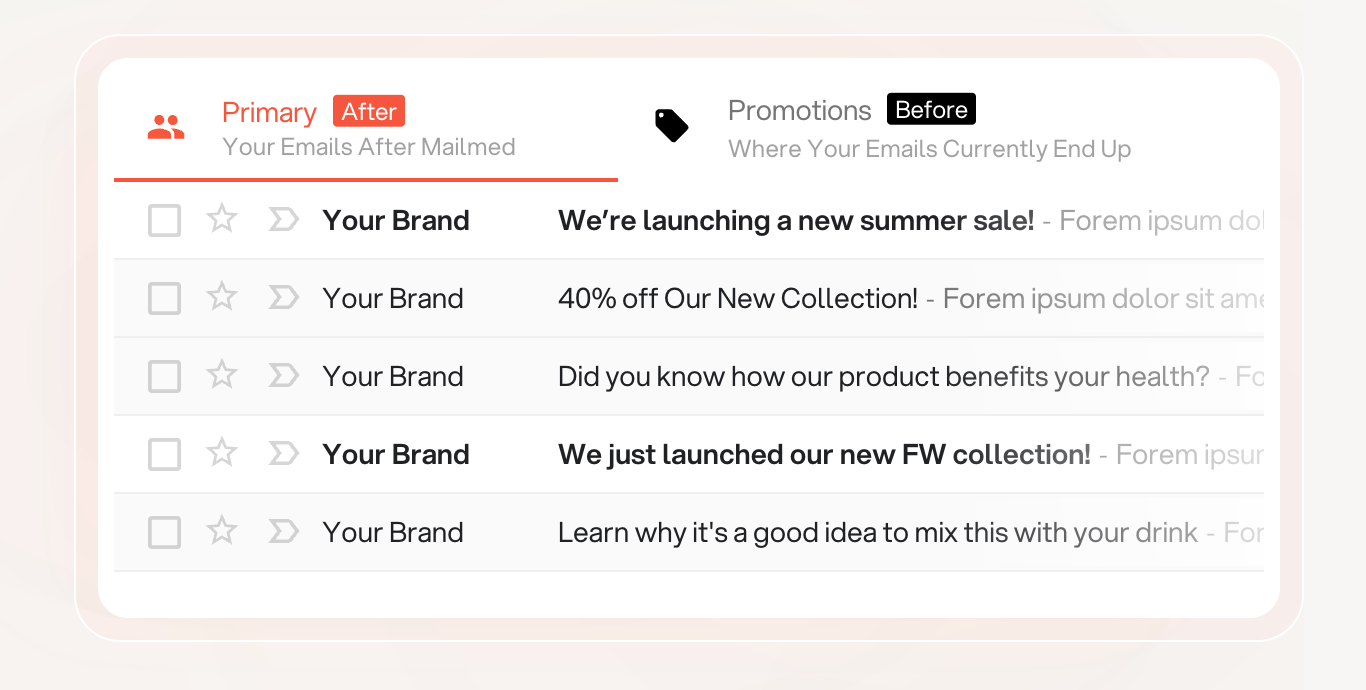
MailMend helps ecommerce brands improve Gmail inbox visibility by moving promotional emails from the Promotions tab into the Primary Inbox. The platform uses AI-powered code optimization to identify signals that trigger Promotions tab placement and applies custom modifications before emails are sent.
Pricing overview: MailMend uses a quote-based model and does not publicly disclose pricing.
Best use case: Ecommerce brands using Klaviyo that consistently land in Gmail's Promotions tab and want a fast way to improve Primary Inbox visibility without changing their email strategy, creative, or sending cadence.
Key features:
- Gmail Primary Inbox optimization
- AI-generated code modifications
- Native Klaviyo integration
- Built-in A/B testing
- Revenue attribution tracking
- White-glove implementation support
Strengths: MailMend focuses on a specific deliverability challenge that many ecommerce brands face: emails reaching Gmail but landing in Promotions instead of the Primary Inbox. The platform is relatively easy to implement and provides built-in testing that helps brands measure the revenue impact of improved inbox visibility. Several customer case studies report significant lifts in opens, clicks, and email revenue after implementation.
Limitations: MailMend works exclusively with Klaviyo and focuses on Promotions tab placement rather than broader deliverability concerns such as list quality, audience intelligence, sender reputation management, or domain warming. Brands with spam folder placement issues may need additional tools.
Maverick
Maverick helps ecommerce brands improve Gmail inbox visibility through automated deliverability optimization. The platform uses AI to continuously test and adjust email elements such as HTML, subject lines, preview text, and sender information before campaigns are sent. Rather than applying a single optimization, Maverick continuously experiments and reallocates traffic toward higher-performing variations over time.
Pricing overview: Custom pricing based on the number of campaigns and flows being optimized.

Best use case: High-volume ecommerce brands on Klaviyo that want an automated approach to inbox optimization, continuous testing, and ongoing improvements in Gmail Primary Inbox placement.
Key features:
- Automated inbox placement optimization
- AI-powered HTML and email content adjustments
- Subject line and preview text optimization
- Continuous A/B testing
- Campaign performance dashboard
- Direct Klaviyo integration
Strengths: Maverick provides a highly automated approach to inbox optimization. The platform continuously tests variations, adapts to changing deliverability conditions, and gives marketers visibility into the incremental impact of inbox placement improvements. Brands with large campaign volumes often benefit most because the system has more data to optimize against.
Limitations: Maverick focuses primarily on inbox placement optimization and does not address audience quality, shopper identification, or predictive targeting. The platform works best for established ecommerce brands already generating meaningful email volume and using Klaviyo as their primary ESP.
How to choose the right email deliverability tools
Most deliverability problems start with audience quality, sending behavior, and poor segmentation. Your tools should help you control those variables as your email program grows.
Instead of searching for one platform to solve everything, build a deliverability stack around your current growth stage.
Small brands: Focus on list hygiene and authentication
If you send under 100K emails per month, prioritize infrastructure and list quality first. At this stage, weak deliverability usually comes from invalid or inactive emails, improper SPF, DKIM, and DMARC setup, inconsistent sending patterns, or low engagement rates.
Your stack should help you:
- Verify emails before they enter your CRM
- Remove bounced and inactive contacts regularly
- Authenticate your domain correctly
- Segment recent clickers from inactive subscribers
These systems build sender reputation early and stabilize inbox placement as you scale.
Scaling brands: Add monitoring and reputation protection
As volume increases, reputation management becomes more important. More campaigns, larger lists, and higher send frequency create pressure on engagement rates and inbox placement.
Many scaling brands start seeing placement within Promotion tabs, higher complaint rates, declining click-through rates, and Gmail and Yahoo inconsistencies. At this stage, you need tools that help you:
- Monitor inbox placement by the provider
- Warm domains gradually
- Track reputation changes
- Suppress disengaged subscribers automatically
- Separate engaged and low-engagement audiences
The goal is to maintain engagement quality as volume grows.
Mature ecommerce teams: Improve targeting with identity and behavioral data
Once your infrastructure is stable, audience relevance becomes the biggest deliverability lever. Broad campaigns weaken engagement over time because subscribers stop interacting with irrelevant emails. Mailbox providers interpret that drop as a sender quality issue.
Advanced teams solve this by using:
- First-party behavioral data
- identity resolution platforms
- Cross-channel engagement signals
- Purchase intent data
- Lifecycle-based segmentation
This gives you cleaner audience segments and stronger personalization before campaigns go live. Platforms like Tie help you identify anonymous visitors, enrich customer profiles, and segment audiences based on real behavioral data.
That lets you prioritize high-intent subscribers, suppress low-quality audiences, trigger campaigns based on engagement signals, and improve clicks and reduce complaints.
Better data leads to stronger engagement, which, over time, improves sender reputation and inbox placement.
How to improve email deliverability beyond software
Email deliverability tools help monitor sender reputation, verify addresses, and track inbox placement. But software alone cannot fix poor engagement or low-quality audience data.
Mailbox providers like Gmail and Yahoo evaluate how subscribers interact with your emails over time. Good email open rates, clicks, replies, unsubscribes, spam complaints, and inactivity all shape whether future campaigns land in the inbox.
That means deliverability improves when your campaigns consistently reach the right people with relevant messaging.
Here are some email deliverability best practices that have the biggest impact on long-term inbox placement:
- Clean your lists regularly by removing invalid, bounced, and long-inactive contacts.
- Segment inactive users into separate re-engagement flows before suppressing them completely.
- Maintain a consistent send cadence so mailbox providers can recognize stable sending behavior.
- Authenticate domains properly with SPF, DKIM, and DMARC.
- Personalize campaigns using browsing behavior, purchase history, and engagement patterns.
- Improve audience targeting so subscribers receive campaigns aligned with their interests and lifecycle stage.
- Use first-party identity and behavioral data to build more accurate customer profiles and stronger segmentation.
These practices improve engagement quality across your email program. Higher engagement signals strengthen the sender's reputation, which directly impacts inbox placement over time.
If you’re looking for a more hands-on walkthrough, our email deliverability checklist is a good place to start.
Why list quality is the hidden driver of deliverability
Many deliverability issues start long before an email gets sent. Low engagement rates, spam complaints, and poor inbox placement often trace back to weak audience quality and incomplete customer data.
When marketers lack visibility into who their visitors are, campaigns become broader, less relevant, and harder to personalize. That lowers engagement signals that mailbox providers rely on to evaluate sender trust.
This is where identity resolution and audience enrichment become valuable. Platforms like Tie help brands recognize anonymous visitors earlier in the customer journey and connect behavioral signals across sessions, devices, and channels.
With stronger first-party identity data, you can build cleaner segments, suppress low-intent audiences, and prioritize subscribers who are more likely to engage. Over time, that leads to a healthier sender reputation, stronger inbox placement, and more efficient lifecycle marketing.
Conclusion
Modern email deliverability depends on far more than inbox monitoring.
Mailbox providers evaluate your sender reputation using engagement signals, audience quality, authentication setup, sending consistency, and subscriber behavior over time. Strong deliverability comes from building systems that improve each of those signals together.
The best-performing ecommerce brands combine:
- Proper domain infrastructure
- Inbox monitoring and reputation tracking
- Email verification and list hygiene
- Engagement-based segmentation
- First-party behavioral data
- Identity-driven audience enrichment
That combination helps you send more relevant campaigns to higher-intent audiences while protecting long-term sender reputation.
Platforms like Tie strengthen this process by helping you identify anonymous visitors, enrich customer profiles, and improve audience quality before campaigns go out. Your team gains better segmentation inputs, cleaner lifecycle targeting, and stronger engagement signals across email flows.
Over time, that translates into healthier inbox placement, lower complaint rates, and more revenue from your existing traffic and email program. If you want to improve deliverability beyond technical fixes alone, Tie can help you build a cleaner, more engaged audience foundation for long-term email performance.
Email deliverability tools FAQs
What is the best email deliverability tool?
The best email deliverability setup usually combines multiple tools working together. Most ecommerce brands use:
- An email service provider (ESP) for sending
- An email verification tool for list hygiene
- A deliverability monitoring platform for inbox placement and reputation tracking
This combination gives you visibility into sender reputation, bounce rates, spam placement, and engagement quality across your campaigns.
How can you improve email deliverability quickly?
The fastest improvements in email deliverability usually come from fixing list quality and sender reputation issues. Start by:
- Removing invalid and inactive contacts
- Setting up SPF, DKIM, and DMARC correctly
- Sending campaigns to recently engaged subscribers first
- Reducing sudden spikes in sending volume
- Monitoring complaint and bounce rates closely
These changes help mailbox providers recognize your domain as a trusted sender.
Do email verification tools improve deliverability?
Yes. Email verification tools help reduce hard bounces by removing invalid, fake, and malformed email addresses before campaigns go out. Most brands see stronger inbox placement when they verify emails during signup and run regular list-cleaning checks on older subscribers.
What impacts email deliverability the most?
Mailbox providers evaluate several signals before deciding where your emails land. The biggest factors include:
- Domain authentication setup
- Sender reputation
- List quality
- Subscriber engagement
- Sending consistency
- Spam complaints
- Email content quality
Strong engagement signals like clicks, replies, and saves also improve long-term inbox placement.
Can list quality affect inbox placement?
Yes, list quality directly affects sender reputation and inbox performance.
Large numbers of inactive subscribers, spam traps, bounced emails, or low-engagement contacts signal poor sending practices to mailbox providers. Most high-performing ecommerce brands maintain list hygiene through:
- Email verification
- Re-engagement campaigns
- Click-based suppression flows
- Regular inactive-user cleanup
How does Tie help with email deliverability?
Tie helps ecommerce brands build cleaner, more accurate audience segments using enriched customer identity and engagement data. This gives your team stronger visibility into who is actively engaging with your brand across channels.
With better segmentation and suppression logic, you can:
- Reduce risky sends
- Prioritize high-intent subscribers
- Lower bounce and complaint rates
- Improve engagement metrics tied to inbox placement
Tie also supports deliverability efforts through audience enrichment, engagement filtering, and cleaner CRM data flows.