

Whether a customer can be retained is shaped in their first interaction with your brand.
Customers form expectations the moment they land on your site. Those expectations carry into the purchase, shape the first experience with the product, and influence whether they continue using it.
Elliot Kovac, founder of Dispatch, has seen this consistently through lifecycle audits and experiments at LTV Lab. The same issues show up across brands. Customers drop off when they don’t fully understand what the product will do, how to use it, or how long it takes to see results.
Once that happens, follow-ups and campaigns have limited impact because the customer never built the right foundation.
In this piece, you’ll learn how early touchpoints shape retention, where journeys lose direction, and what to fix first to drive repeat purchases.
TL;DR
- Set expectations before purchase. Explain how the product works and how long results take.
- Align ads, site, and messaging so customers know exactly what to expect.
- Drive product usage immediately after purchase, it’s the strongest retention signal.
- Tell customers exactly what to do on day 1, day 3, and week 1.
- Educate before and after purchase. Don’t rely on flows to fix confusion later.
- Keep the welcome flow focused on conversion, not education.
- Use one clear, consistent offer across early touchpoints.
- Give each message a single goal to reduce friction and speed up decisions.
- Don’t try to predict retention, focus on guiding the next action.
- Reinforce usage early and often to build habit and drive repeat purchase.
Retention starts before the purchase
Retention is determined before the purchase decision is made.
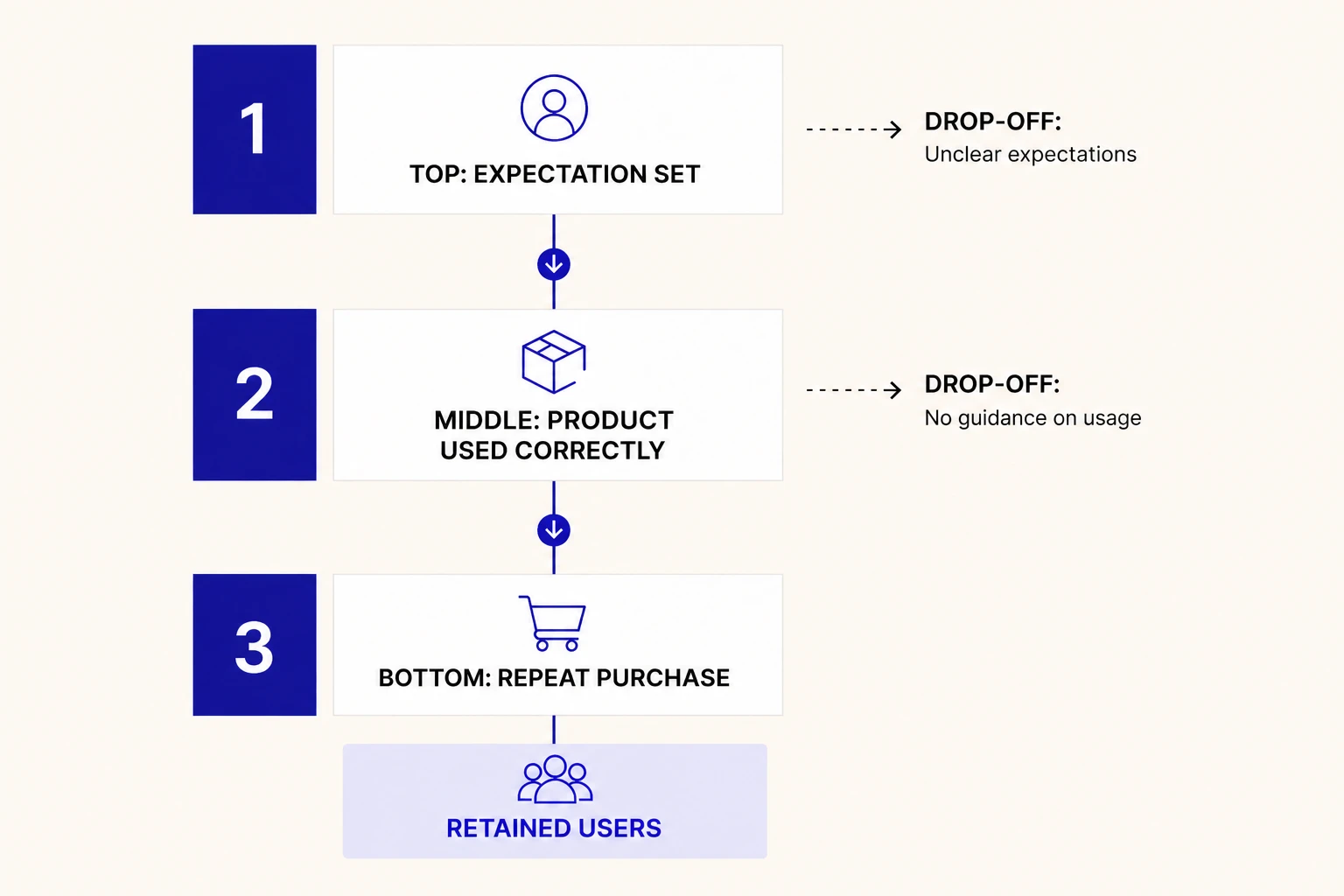
Every customer comes in with an expectation. That expectation is formed by your ads, your site, and the first few touchpoints they see. If that expectation is unclear or misaligned, it shows up as soon as they start using the product.
As Kovac puts it,
“It always boiled down to ‘what did we expect from the product, and did it meet those needs?’”
That gap between expectation and reality is where retention breaks.
This becomes obvious with products that need consistency, like supplements or skincare. If you don’t explain how the product works or how long it takes, the customer tries it once, sees no change, and stops.
At that point, no lifecycle marketing flow can fix it. The drop-off already happened.
So the goal early on is simple: make sure the customer understands what to expect and what it takes for the product to work.
Early touchpoints should drive product usage
Once a shopper has made a purchase, the focus shifts to usage.
Retention is defined by what the customer does in the first few days after buying and receiving the product. If they don’t start using the product, there is nothing to bring them back for.
Most marketing signals don’t capture this. Opens and clicks show that a message was seen, but not whether the product became part of the customer’s routine.
Kovac makes this clear,
“The actual answer is whether they’re using the product.”
This changes how you approach early touchpoints. You are guiding the first few interactions with the product, a critical window where the customer either starts using it properly or loses interest.
Be specific in what you communicate:
- What to do on day 1.
- What to expect in the first 3–5 days.
- What results look like over time.
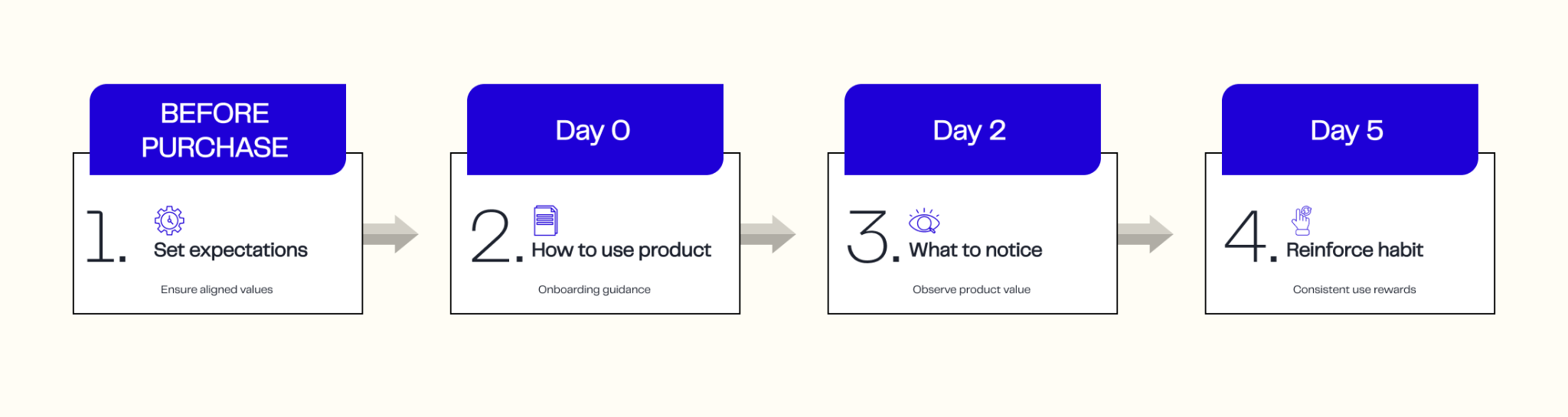
For example, if someone buys a supplement, tell them exactly when to take it, how often, and when they should expect to feel a difference. If someone buys skincare, guide them on frequency, order of use, and realistic timelines.
If you leave this unclear, customers will fill the gaps themselves, leading to inconsistent use. Once usage drops in the first few days, it rarely recovers.
Education is the highest-leverage early intervention
If you want customers to keep buying, you need them to understand why the product matters before they even start using it.
Ecommerce brands usually skip this step. They introduce the product, highlight benefits, and move straight to conversion. What’s missing is context.
Customers don’t build habits around products they don’t fully understand. Kovac puts it simply,
“You have to sell people on the problem they have before you sell them on your solution.”
This is where education fits in. Make three details clear early:
- What problem does this product solve in their daily life?
- Why does that problem need attention now?
- What changes when they use the product consistently?
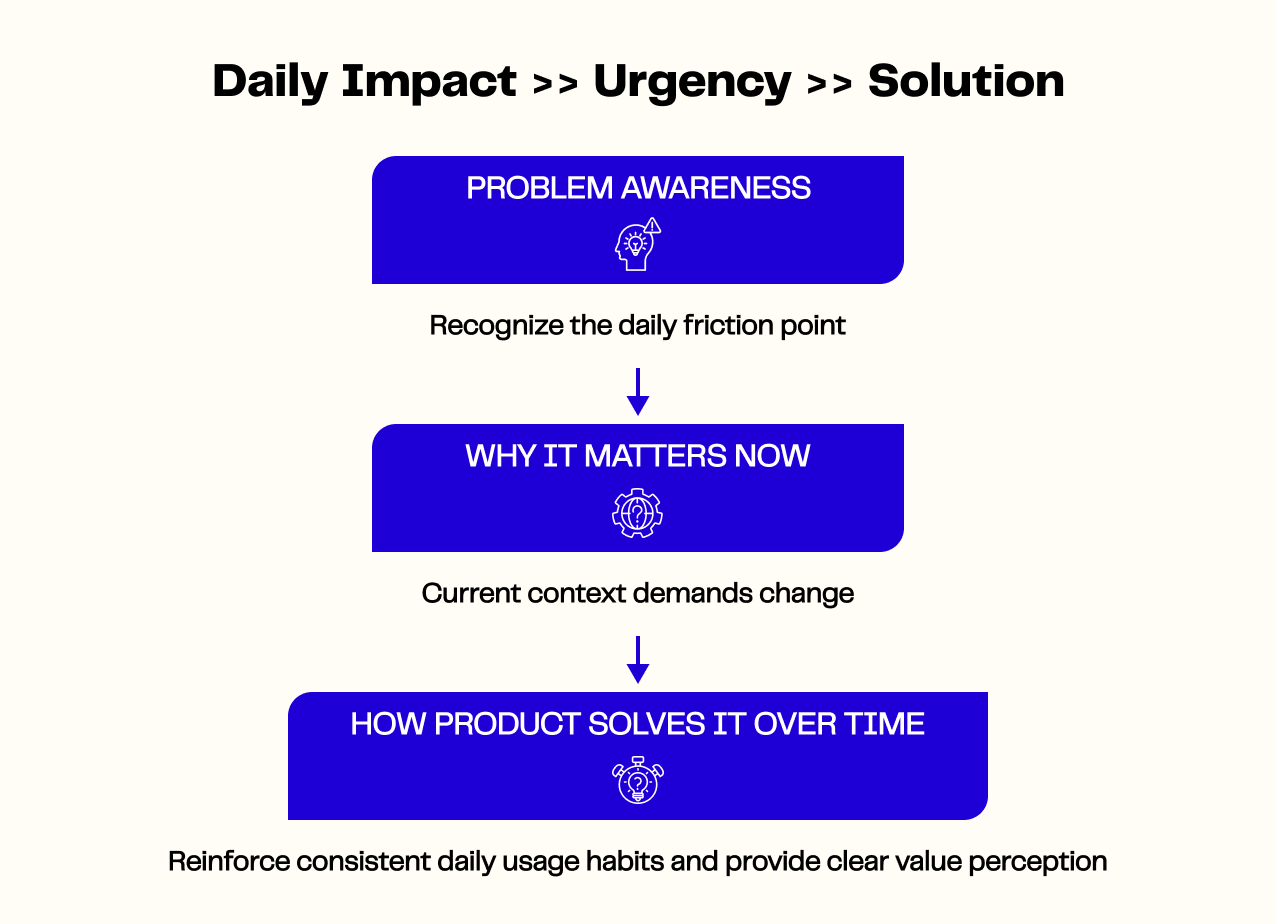
For example, if you sell a supplement for gut health, don’t just say it improves digestion. Explain what poor digestion looks like day-to-day, why it affects energy or focus, and how consistent use changes that over a few weeks. That clarity drives usage.
But remember that this needs to happen before the purchase and right after delivery. That window determines whether the customer starts using the product intentionally or treats it like another purchase they forget about.
The role of the welcome flow
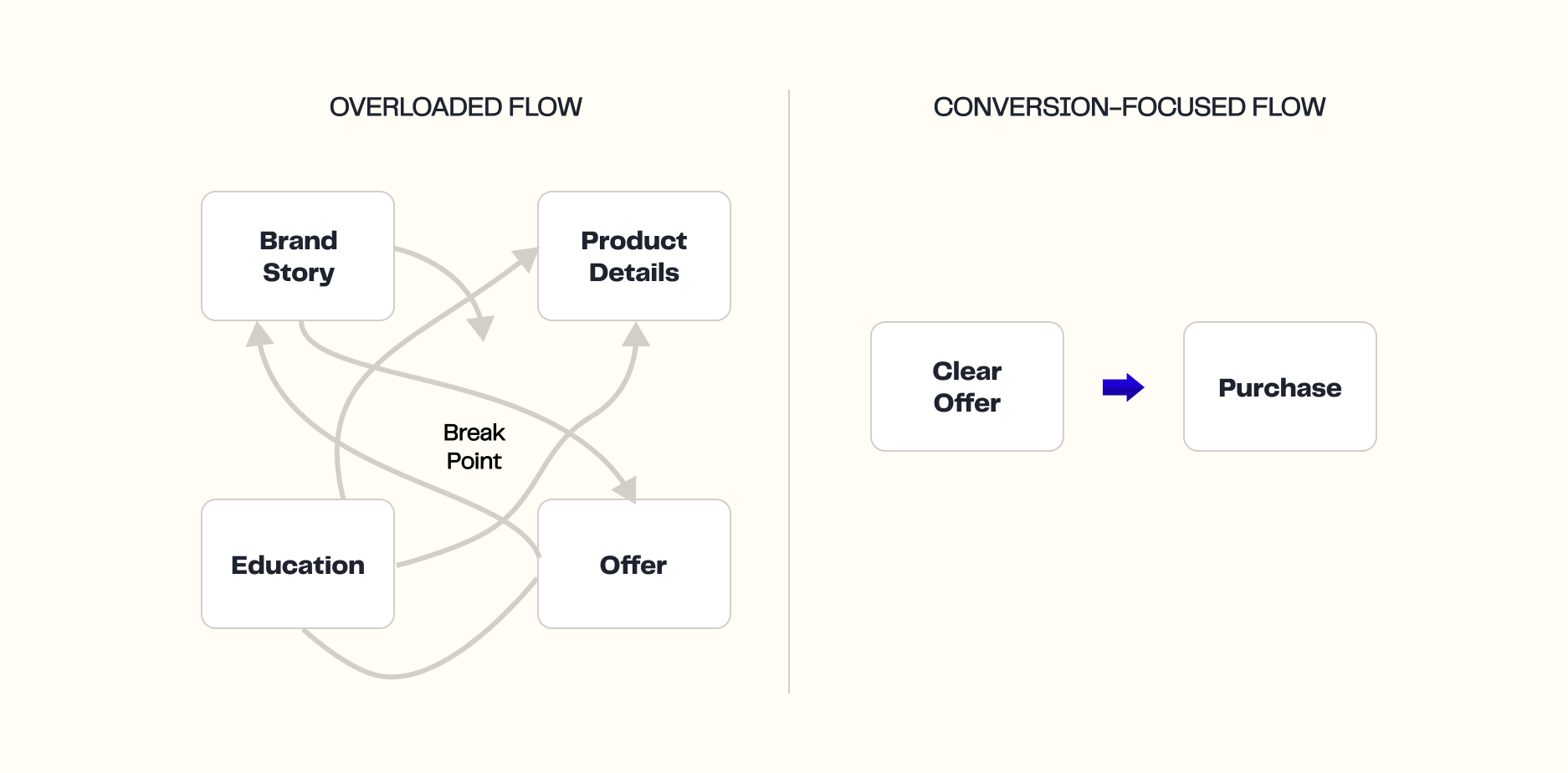
Welcome flows get complicated when teams try to do everything at once. They try to educate, introduce the brand, explain the product, and push the offer in the same email. That slows down the only thing this flow is responsible for, to get the first purchase. Kovac is clear on this,
“The point of a welcome series is to drive a first-time conversion… ideally as fast as possible.”
When you add too much, you create friction. The customer has to process more before taking action, and momentum drops.
Keep this flow tight:
- Show the offer clearly.
- Reinforce why they should act now.
- Remove anything that distracts from the purchase.
If you want to educate, do it before they enter the welcome flow or after they convert. Trying to combine everything into one sequence weakens both outcomes.
Offers shape early behavior
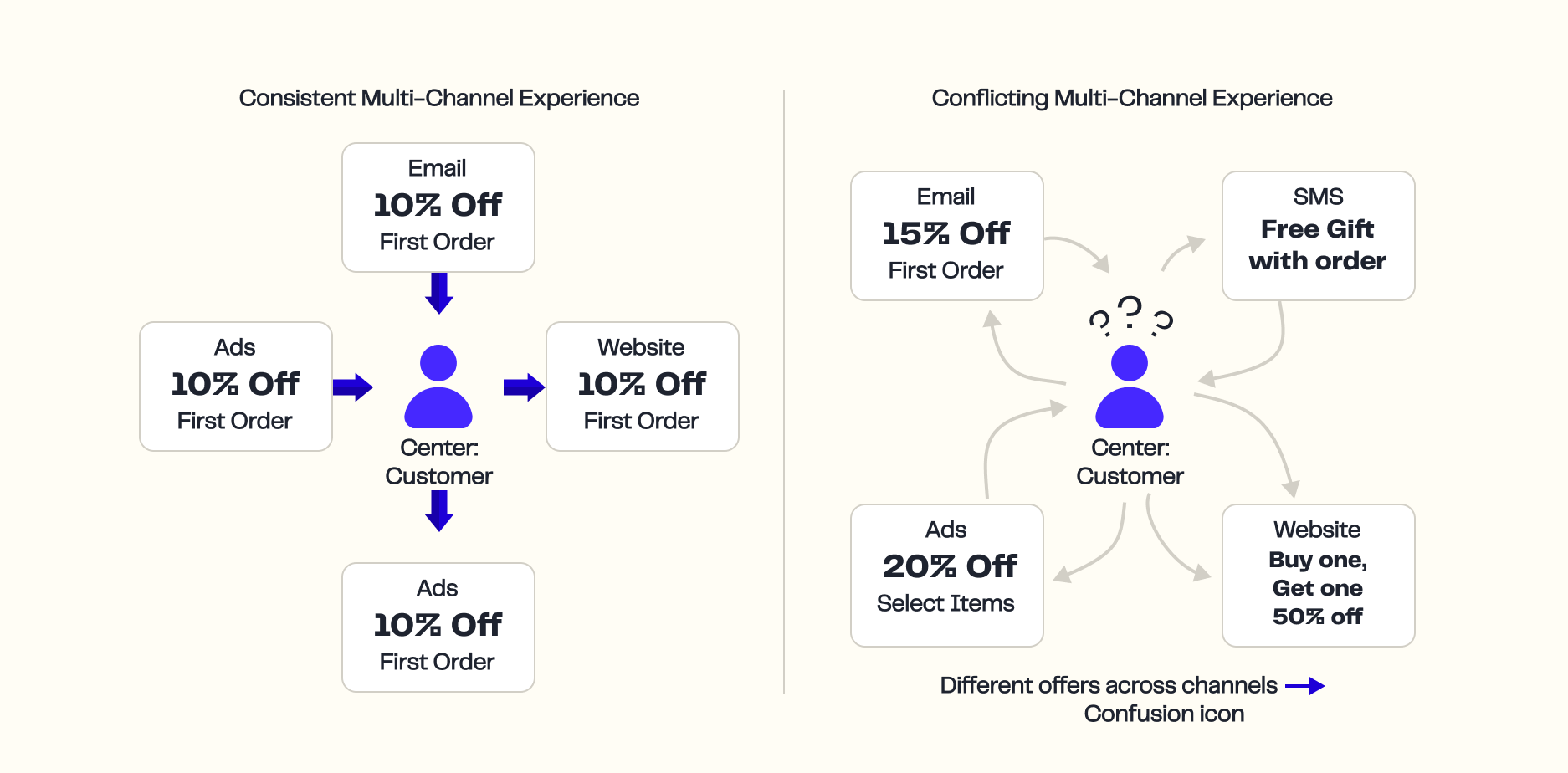
In the first few touchpoints, your offer determines whether the customer will take action.
Teams often spend time tweaking copy or adding personalization. That effort does not change the decision. What actually influences the customer is whether the offer is clear, visible, and worth acting on right now.
As Kovac puts it,
“Personalizing copy is a bit gimmicky… what matters is offers.”
The real problem is not the offer itself, but how you present it across touchpoints.
A customer might see one offer in the welcome flow, a different one in an abandoned cart email, and another in a campaign. This creates doubt. They wait, expecting a better deal, or question what the real value is.
You need to remove that uncertainty.
Keep your offer consistent across early touchoints. Repeat it until the customer takes action. Make sure it matches where they are in the journey.
For example, if your goal is the first purchase, every early message should reinforce the same incentive tied to that action. Clarity speeds up decisions and reduces drop-off.
Where early journeys lose clarity
Most early journeys break because the customer does not know what to do next. Two issues show up repeatedly.
- Conflicting incentives: When offers change within the same stage, customers hesitate. They delay action or lose trust in what they are seeing.
- Overloaded communication: Emails try to cover everything at once. Product details, brand story, loyalty programs, and new launches. The message loses direction.
Kovac points this out clearly,
“Brands try to stuff a ton of information into an email… there’s a lack of clarity to get them to the point.”
Timing also plays a role. If you ask for too much too early, the customer disengages. A new visitor doesn’t need to join a loyalty program or explore multiple categories. They need a clear next step.
You can fix this by simplifying how each touchpoint works:
- Give each message one clear goal.
- Introduce new information only when it becomes relevant.
- Match the ask to how familiar the customer is with your brand.
When the journey is clear, customers move forward without friction.
You cannot predict retention early, but you can influence it
Teams usually look for signals that predict repeat purchase, but these signals are limited. You don’t know if the customer liked the product, how often they used it, or whether it fit into their routine. Most of that happens outside your visibility.
Trying to predict repeat purchases at this stage leads to weak decisions. What you can control is what the customer does next.
That comes down to how clearly you guide them through the first few interactions with the product. Focus on three things:
- Set clear expectations before they buy so they know what they’re committing to.
- Tell them exactly how to use the product once it arrives.
- Keep your messaging consistent so they don’t second-guess their decision.
For example, if your product needs daily use for 2 weeks to see results, say that clearly before purchase and repeat it after delivery. If you leave that unclear, the customer sets their own expectations and stops using the product too soon.
Start here if you want to improve retention
If you want to fix retention quickly, start with education. Most teams treat education as a secondary layer. In practice, it drives whether the product gets used at all.
This is what that education looks like:
- Before purchase, explain the problem in a way the customer recognizes in their own routine.
- Right after purchase, guide them through the first few uses step by step.
- In the first few days after purchase, reinforce consistency so usage becomes a habit.
For example, here’s what the sequence could look like:
- Day 0: How to use the product for the first time.
- Day 2: What they should be noticing by now.
- Day 5: What consistent use looks like going forward.
When you do this well, the customer starts using the product with intent. That creates the conditions to drive repeat purchase without relying on heavy incentives later.
Ready to build retention that compounds from the first touchpoint?
Retention takes shape in the first few interactions a customer has with your brand.
If expectations are unclear, product usage is inconsistent, or early messaging lacks direction, customers drop off before your lifecycle system can do anything about it.
When those early touchpoints are clear and aligned, customers know what to expect, use the product correctly, and move through the journey with intent. That’s what allows retention to compound over time.
But this only works if you can actually see and act on those early interactions.
Most teams lose visibility before the first conversion. A large share of visitors remain anonymous, which means you can’t set expectations, guide behavior, or follow up in a meaningful way.
Tie helps you close that gap.
It identifies anonymous visitors early, connects their behavior across sessions, and syncs that data into your CRM so you can act on it. That means more shoppers enter your flows earlier, messaging reflects real behavior, and your retention system starts working from the first interaction, not just after purchase.
Book a demo to see how teams use Tie to identify more visitors, guide early touchpoints, and build retention systems that actually compound.