Retention vs. Lifecycle Marketing: What’s The Difference?


DTC brands know retention matters. But when they try to build it, they usually fall into two extremes.
They either treat it as a basic email channel, set up a few flows, send a campaign or two, and expect results. Or they overbuild, adding layers of segmentation, loyalty programs, and lifecycle strategies without a clear reason behind any of it.
Noah Haynes has seen this play out across dozens of brands.
As the founder of Duh Retention, he works with 8 and 9-figure ecommerce teams to run and scale their retention systems. His team has sent over 200 million emails, driven $73 million in email revenue, and added 750,000+ subscribers. But the focus is always the same: what actually drives revenue, and not what looks advanced.
In this breakdown, Noah draws a clear line most brands miss: retention marketing and lifecycle marketing are not the same thing. Until you understand that difference, it’s easy to stay busy without making real progress.
Retention marketing is where revenue is captured daily
Retention marketing should bring in revenue from people who already know your brand.
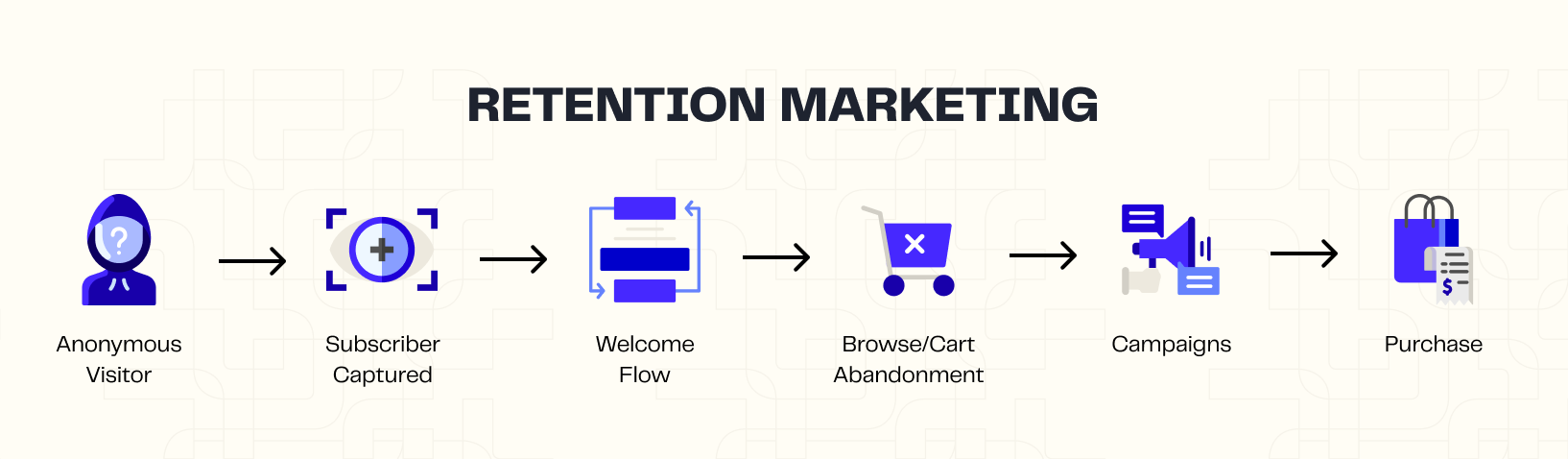
This is part of your email and SMS program, and includes flows, campaigns, list growth, and ongoing testing. The focus is on actions that directly influence purchases and repeat behavior.
As Noah puts it, retention is about the levers you can actively pull to re-engage customers and bring them back to buy again.
You need to prioritize a few core areas here:
- Your welcome flow should convert new subscribers quickly.
- Your browse, cart, and checkout flows should capture existing intent.
- Your campaigns should maintain consistent pressure on repeat purchases.
- At the same time, your list should keep growing through strong on-site capture and offers.
The goal is efficiency. Aim to generate more revenue from the audience you already have without relying on additional acquisition.
Teams often misplace effort in post-purchase messaging. Upsells, cross-sells, and win-backs receive a lot of attention, even though they are not the primary revenue drivers.
Noah sees this mistake often. Many brands treat retention as a post-purchase function when most of the opportunity sits earlier in the journey.
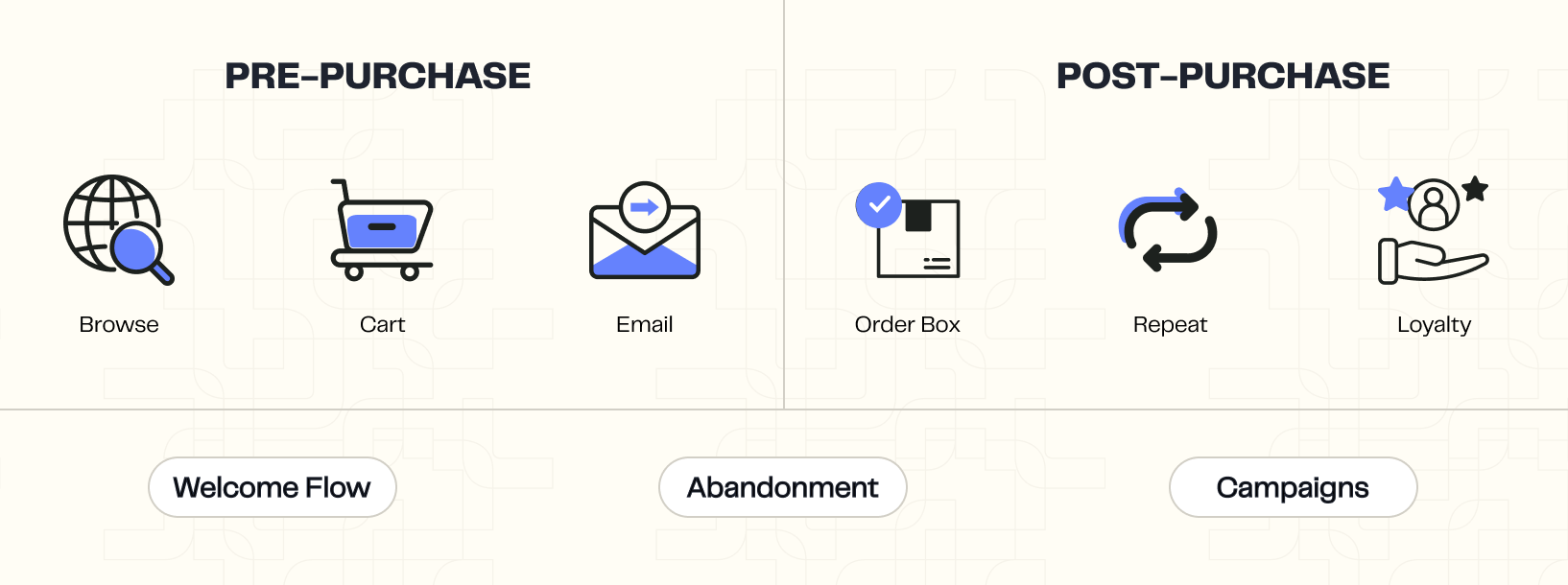
“For most brands, 30% of sales comes from post-purchase and 70% comes from pre-purchase. "Everything else comes from the welcome flow, the site abandonment, the cart checkout. Those are the flows that actually bring in the most.”
That means your welcome flow and abandonment flows should carry most of your attention. If these are underbuilt or under-tested, you are leaving a large share of revenue on the table.
You also need to avoid holding back on sending volume without accurate data. Many teams reduce frequency based on an assumption rather than performance.
“Most retention marketing fails simply due to the lack of volume. People are too afraid to send because they think they're going to annoy customers.”
You should track unsubscribes, spam complaints, and the behavior of your highest-value segments. If these stay within a healthy range, you can increase volume with confidence.
Customer retention increases when execution is consistent, measured, and tied directly to revenue outcomes.
Lifecycle marketing is how you increase customer value over time
Lifecycle marketing should guide how you increase the value of each customer over time. This focuses on understanding customer behavior across the entire journey. It includes when customers buy, what they buy, and where they tend to drop off.
“Retention is more about efficiency. Lifecycle is more about maximization. How do I get incremental value out of this customer over time?”
Look beyond individual campaigns and understand the patterns that drive long-term customer value. Focus on signals like:
- Time between purchases
- Drop-off points in the journey
- Product paths across categories
- Signals from support, reviews, and creative
One consistent pattern is that customers tend to buy within the same category again.
“Typically, 60% to 75% of people are more likely to buy more of the same category than something new.”
This should influence how you approach merchandising and cross-sell strategy. You should focus on increasing depth within a category before pushing customers into new ones.
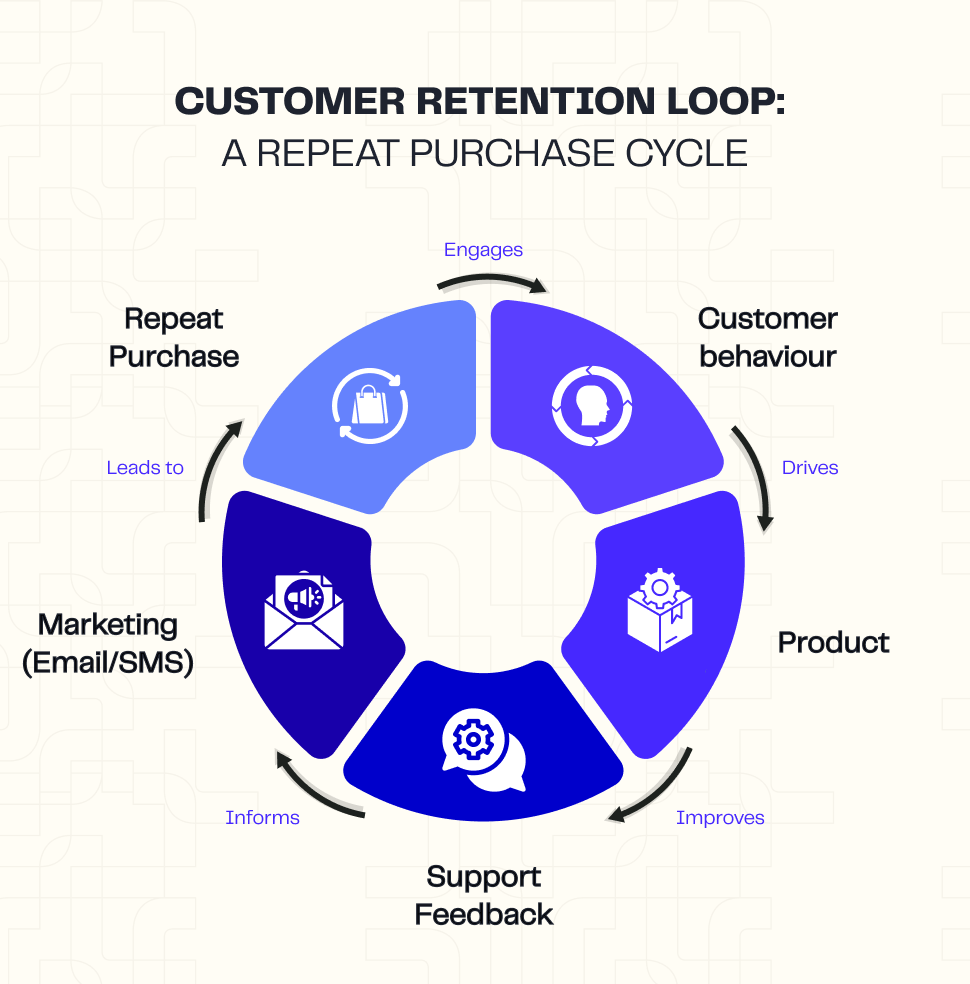
Lifecycle marketing also includes programs such as loyalty, subscription, and membership. These should be evaluated based on whether they change customer behavior in a measurable way.
Noah is careful about how he thinks about these programs.
“The question is: does this change customer behavior? Does it make them buy more often? Does it make them stick around longer?”
If a program does not increase purchase frequency, order value, or retention window, it is likely reducing margin without creating real value.
You should also bring in signals from outside your messaging channels. Customer support issues, product feedback, and creative performance all provide insight into what customers care about and what drives decisions.
These inputs should shape how you structure your retention program so that every message aligns with actual customer behavior.
Why most brands get this wrong (and where it shows)
Most teams don’t struggle because they lack tools. They struggle because they focus on the wrong levers. Issues show up in how they prioritize work, how they measure performance, and where they expect results to come from.
Below are the most common lifecycle mistakes that hold retention back:
Over-focusing on post-purchase
A lot of effort goes into upsells, cross-sells, and win-back flows early on. These feel like retention, so they become the focus. The distribution of revenue tells a different story.
That means your welcome flow and abandonment flows should carry the bulk of your attention. If those are underbuilt or not tested properly, adding more post-purchase logic will not move overall revenue.
Under-sending due to fear of spam
Send frequency often gets reduced based on an assumption. Teams worry about fatigue or churn without checking what the data actually shows.
Noah believes this is one of the most common reasons retention programs underperform.
“Most retention marketing fails simply due to the lack of volume. People are too afraid to send because they think they're going to annoy customers.”
Rely on clear signals. Unsubscribes, spam complaints, and engagement from your highest-value segments indicate whether your current volume is sustainable. Without those signals, lowering frequency usually limits revenue.
Overcomplicating segmentation
Segmentation tends to become overly detailed. Campaigns get built for narrow audiences with small variations in messaging. This approach reduces reach and limits impact.
Noah points out that when segments get too small, the incremental lift rarely justifies the effort. The goal is not to create more segments, but to identify the people most likely to engage and buy.
That's why many brands are moving beyond static 30, 60, or 90-day engagement rules. A shopper who opened an email last month may not be your highest-intent customer today.
Solutions like Tie Predict help solve this by scoring shoppers based on real-time buying intent. Instead of creating increasingly complex audience rules, you can prioritize customers who are most likely to open, click, or purchase.
This keeps the focus on what actually matters: reaching high-intent shoppers without adding unnecessary complexity to your retention program.
Optimizing for the wrong metrics
Many teams default to channel-level revenue when making decisions. But each platform reports its own numbers, and those numbers often conflict.
Noah cautions against treating attribution as a source of certainty.
"Attribution's wonky. You're not gonna know. Every platform is gonna say they're the one that attributed it."
Prioritize contribution margin and overall revenue impact. Channel metrics are useful directional signals, but they should support decisions, not define them.
Treating the lifecycle as a starting point
Some teams introduce loyalty programs, subscriptions, or complex lifecycle setups early. These require time, coordination, and budget.
Lifecycle only becomes useful when the core system is already working. That includes a strong product, a stable acquisition channel, and consistent retention execution.
If those pieces are not in place, lifecycle initiatives add complexity without improving results.
When retention is enough and when lifecycle starts to matter
The shift between retention and lifecycle is not about preference. It depends on how far along your business is. Your focus should be on what is already working in the business and what is still inconsistent.
Below is how that split typically shows up.
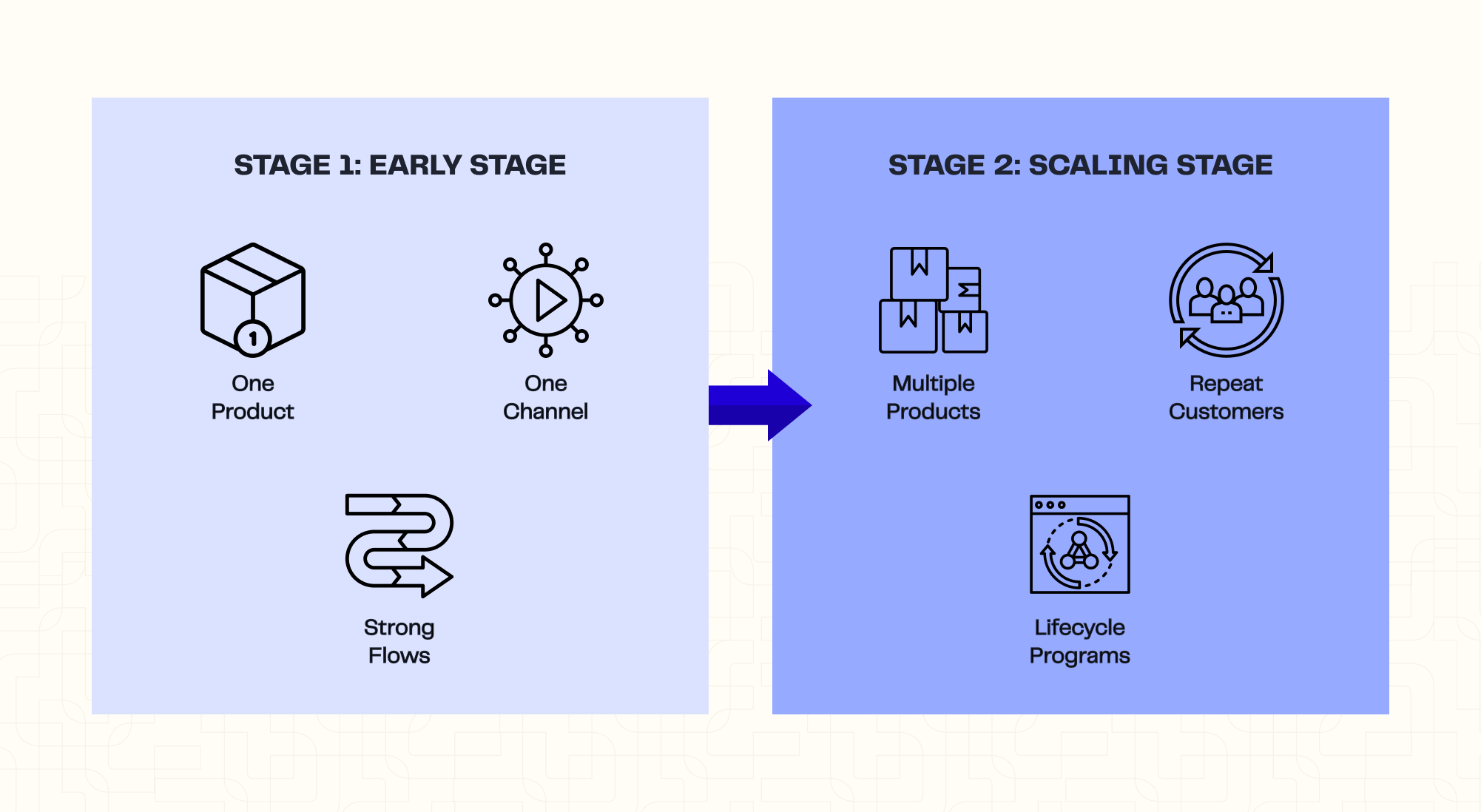
Early-stage brands (sub-scale)
At an early stage, retention carries most of the load.
The focus stays on getting a product to convert, building a steady acquisition channel, and turning that traffic into revenue through flows and campaigns. Welcome flows, abandonment flows, and campaign cadence drive the bulk of results.
Noah is direct about this. Early on, retention is where you get results, and layering on additional programs does not help.
“You should not go start a loyalty program… when you're small, you don't have the luxury to do that.”
This is where many teams go wrong. They introduce lifecycle elements too early, which adds complexity without improving performance. Loyalty, membership, and advanced programs require time, coordination, and margin. Without a strong base, they dilute focus.
Scaling brands (product + channel working)
Lifecycle becomes relevant once the fundamentals are working. This usually shows up when a product converts consistently, acquisition brings in steady traffic, and repeat purchases start building. At that point, performance plateaus in ways that execution alone cannot fix.
Noah points to a common scenario. Brands keep sending campaigns, but don’t see customer value increase. The issue is often outside the channel.
That shift signals the need for lifecycle work. The focus moves toward understanding purchase patterns, identifying churn points, and shaping product and program decisions that increase customer value.
There is also a clear scale requirement.
“If you're not doing 10 million a year, you kinda just need to get one good product selling on one marketing channel.”
Once that base exists, the lifecycle starts to have a real impact because there is enough data and volume to act on.
How the transition actually works
Retention marketing tactics continue to drive day-to-day revenue. Whereas the lifecycle starts influencing what gets executed, when it happens, and how it ties back to customer behavior.
The transition becomes visible when execution is stable, and decisions start coming from patterns in customer data rather than isolated campaign performance.
How retention and lifecycle actually work together
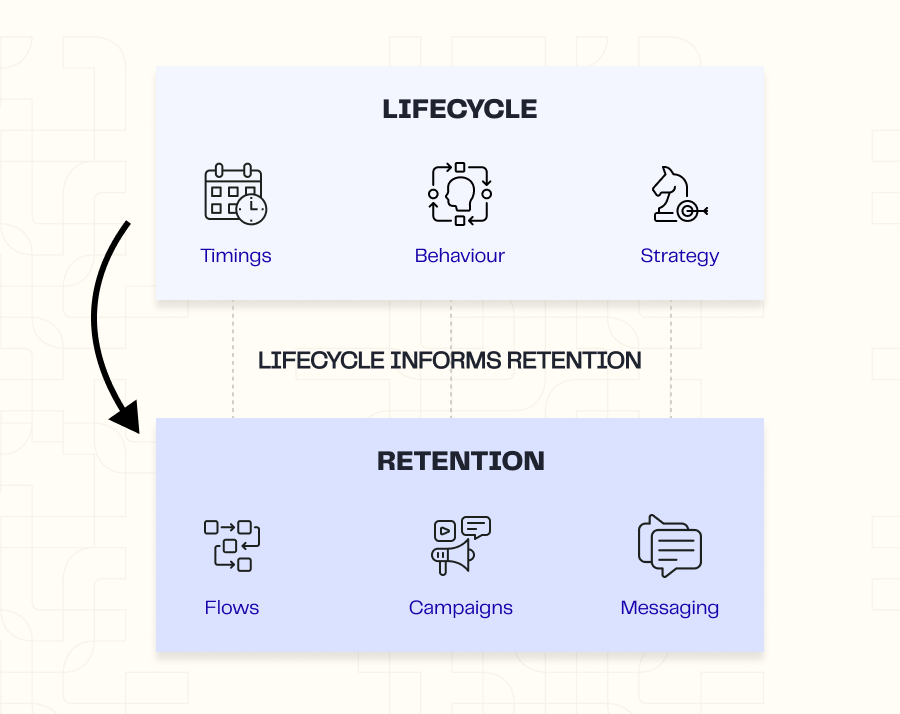
Retention and lifecycle are not separate systems. Instead, they work together. Lifecycle defines the direction, and retention runs it. The easiest way to think about the relationship is through Noah's framework:
“Lifecycle is the when and the what. Retention is the doing.”
Noah explains this through a simple lens. Lifecycle is about the “when” and “what,” while retention marketing strategies are about doing the work consistently across channels.
Lifecycle identifies patterns in customer behavior. It looks at when people are most likely to buy, where they drop off, and what they respond to. Those insights shape decisions across the journey.
Retention takes those decisions and turns them into execution. That includes flows, campaigns, messaging, and timing.
For example, lifecycle might highlight that customers drop off between month one and month three in a subscription. That insight on its own does nothing.
Retention audit turns it into:
- Targeted messaging during that window
- Adjusted offer structures
- Specific flows designed to keep customers engaged
Noah calls this out clearly when talking about churn. Keeping customers through early stages has a direct impact on long-term value, especially in subscription models.
The same applies across product journeys. Lifecycle might show that customers prefer buying within the same category. Retention then adapts campaigns and flows to reflect that behavior.
This relationship only works when both layers are connected. If lifecycle insights do not feed into execution, they stay unused. If retention runs without those inputs, it turns into repetitive campaigns with limited impact.
When aligned, lifecycle improves the quality of decisions, while retention improves the consistency of execution.
What changes when you start thinking in lifecycle terms
The shift shows up in how decisions get made and what inputs drive them. Here are the key changes you start to see:
- You bring in signals beyond campaigns: Decisions are no longer based only on opens, clicks, or campaign revenue. You start looking at support tickets, product feedback, and customer sentiment. For example, Tie Predict scores shoppers based on real-time behavior, helping you identify who is most likely to engage or buy next.
“You think about a lot of softer elements… customer support tickets, issues being resolved, NPS of product.”
- You connect product gaps to retention performance: Repeat purchases depend on what you are selling. If there is nothing new or relevant, campaigns alone will not increase customer value. Noah points out that this often comes down to simple gaps, like not releasing new products consistently.
“You actually do have to take a step back and say, "Hey, we need more insight into product development. We haven't released a new product in three months, and we're wondering why LTV is not going up."
- You rely less on channel attribution: Channel-level revenue becomes a directional input rather than the main decision driver. Consumer attribution varies across platforms and should not be treated as exact. The focus shifts toward contribution margin, repeat purchases, and overall customer value.
- You simplify execution by improving inputs: Instead of adding more campaign variations, you focus on timing, offers, and messaging based on real behavior. Noah highlights that small, consistent improvements in these areas drive long-term impact.
- You align teams around customer behavior: Marketing, product, and support start working from the same insights. Decisions across these functions begin to reflect how customers actually buy and engage.
Ready to turn retention and lifecycle into a single system?
Retention and lifecycle shouldn’t run in isolation. One drives execution while the other shapes what gets executed and when.
Most teams try to improve results by adding more campaigns, more segments, or more tools. That usually creates more activity without improving output. A better approach is to fix this in order:
- Get retention working first: Your welcome flow, abandonment flows, and campaign cadence should drive consistent revenue. Volume, timing, and offers should be tied to actual performance signals.
- Identify what is limiting customer value: Look at repeat purchase behavior, drop-off points, and product gaps. This tells you where lifecycle work is needed.
- Use lifecycle insights to guide execution: Adjust what you send, when you send it, and what you promote based on real customer behavior.
- Keep measurement tied to business outcomes: Track contribution margin, repeat purchases, and overall revenue impact. Use channel metrics for direction, not to make decisions.
This only works when you have clear visibility into who your customers are and how they behave across touchpoints. That is where Tie fits in.
Tie helps you identify anonymous visitors, connect their behavior across sessions, and push that data into your CRM. This gives you a more complete view of each customer, so your retention execution and lifecycle decisions are based on real behavior, rather than gaps in data.
When both layers are aligned, retention captures revenue in the short term and lifecycle increases it over time.
If you want to see how much revenue you are missing from unidentified traffic, book a demo with Tie and get a clear view of your data gaps.